

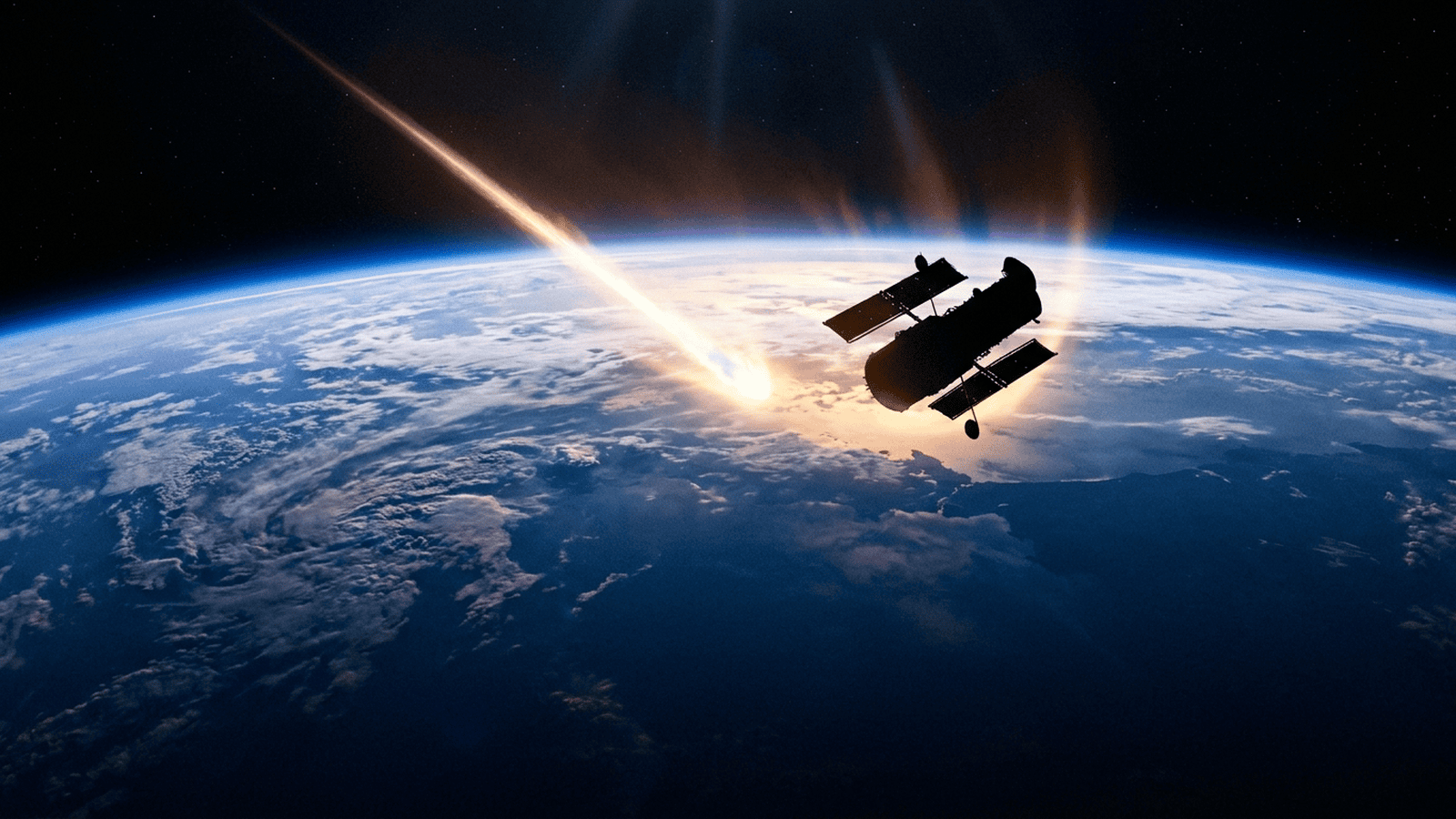
NASA’s Swift Observatory reentered Earth’s atmosphere over North Sumatra, Indonesia, after nearly 22 years in orbit. Built for a two-year mission, it observed more than 2,000 gamma-ray bursts and 1,400 exploding stars, and sent alerts to Hubble, Webb, and other facilities. Solar activity lowered its orbit, and NASA shut down its systems after determining it was too low to remain steady. A contracted rescue effort failed when the Link robot could not reach the telescope, so NASA decided in August to allow reentry. NASA and the U.S. Space Force tracked the return; NASA had put the estimated risk of harm to anyone on Earth at about one in 2,100. Scientists are still working to replace Swift’s observations.
TLDR: After nearly 22 years in orbit, Swift has completed a mission designed to last two years, providing thousands of observations and alerts to other telescopes. Its return was tracked by NASA and the U.S. Space Force after a rescue attempt failed, and scientists are now seeking ways to replace its work.
NASA’s Swift Observatory has returned to Earth after nearly 22 years in low-Earth orbit. The roughly 3,200-pound telescope reentered the atmosphere at 7:39 a.m. Eastern Time over North Sumatra, Indonesia, NASA said. Much of the observatory burned up, though some components may have survived and could be found across hemispheres.
The end followed a practical limit: solar activity lowered Swift’s orbit, and NASA determined in late October that the telescope had become too low to remain steady. Its systems were shut down. NASA and the U.S. Space Force tracked the reentry, reflecting a measured approach to an expected end for an aging spacecraft.
Swift’s purpose was to find powerful explosions in the universe, including gamma-ray bursts and supernovas. It was named for its ability to turn rapidly toward such events. NASA designed it for a two-year mission, but it continued operating until last month, delivering far more service than its original plan required.
Launched on Nov. 20, 2004, Swift recorded more than 2,000 gamma-ray bursts and 1,400 exploding stars. It also acted as an early alert system for the Hubble and Webb space telescopes. When Swift spotted an event, it sent alerts to those and other facilities so they could investigate more deeply. Its rapid response helped other observatories know where to direct their attention.
NASA described the observatory’s reach as extending well beyond explosions. Its observations helped broaden understanding of active galaxies powered by supermassive black holes, stars undergoing X-ray flares, comets, asteroids, and other objects. The telescope’s work gave researchers a way to study many kinds of activity across the universe, not only the bursts that first drew its attention.
That record gives the mission’s end a clear measure: a telescope built for a short assignment kept returning useful observations for decades. Its long run also made Swift part of the working system used by other space observatories. The alerts it sent helped researchers follow up on events with instruments designed for deeper study.
The effort to prevent the fall did not succeed. NASA contracted Katalyst Space in July to attempt a rescue. The company sent a three-armed robot, Link, to push Swift back into place, but Link ran into trouble shortly after launch and could not get within seven miles of the telescope. The robot itself fell back to Earth in September.
In August, the decision was made to allow Swift to reenter. That choice followed the failed rescue attempt and the observatory’s declining orbit. NASA had predicted reentry around 3:30 a.m. Eastern Time on Nov. 4, but gave an 11-hour window of uncertainty on either side. The actual reentry occurred at 7:39 a.m. Eastern Time, within that broad period.
The practical impact was a planned shutdown, a tracked reentry, and the possibility that surviving pieces could be found. NASA had said the risk of harm to anyone on Earth was unlikely, estimating the odds at about one in 2,100. The observatory’s expected path and timing were uncertain within the stated window. The available account does not identify a process for reporting or recovering possible debris, or describe fees, public forms, or compliance deadlines.
Swift’s departure also leaves work to be replaced. Scientists are still trying to determine how to replace the observations it provided. John Nousek, an astronomer at Pennsylvania State University who led the control team, said the end was expected for a spacecraft in low-Earth orbit. He expressed hope that lessons from Swift’s successes would inform new generations of missions and speed discoveries about the universe.
The next steps are the search for ways to replace Swift’s work and the use of lessons from its mission in future space projects. NASA and the U.S. Space Force tracked the reentry, and NASA’s stated risk estimate offers the available reassurance. The account does not describe further oversight or a debris-recovery plan. Swift’s mission has ended, but the scientific work it supported continues, and finding a replacement for its observations remains ahead.

Olivia Kendall serves as the Senior Correspondent for Geopolitics, Defense, and Foreign Policy at Just Right News, where she provides a principled, conservative perspective on the complex forces shaping the global stage. With a career dedicated to deconstructing the intricacies of international relations, Kendall has become a trusted voice for readers who value national sovereignty, a robust military, and a foreign policy that prioritizes American interests above all else.
A native of Washington, D.C., Kendall’s professional journey is deeply rooted in her upbringing within the nation’s capital. Growing up in the epicenter of American political life, she developed an early and profound understanding of how policy is crafted and, more importantly, how it often fails to account for the values of the American heartland. This unique vantage point allowed her to witness firsthand the rise of globalist bureaucracies, fueling her commitment to reporting that champions the constitutional foundations of the United States. Her background as a British White American further informs her worldview, providing her with a keen appreciation for the Western tradition and the enduring importance of the “Special Relationship” in maintaining global stability.
Now based in Arlington, Virginia, Kendall operates from the doorstep of the Pentagon and the heart of the nation’s defense establishment. Her proximity to the decision-makers in the military and intelligence communities allows her to provide boots-on-the-ground reporting that is both timely and deeply informed. For Kendall, Arlington is more than just a base of operations; it is a daily reminder of the sacrifices made by the men and women in uniform. This connection to the defense community drives her rigorous coverage of military readiness and her advocacy for a “peace through strength” approach to diplomacy.
At Just Right News, Kendall is perhaps best known for her acclaimed feature series, “The World’s Shadow on America.” In this ongoing project, she explores the direct correlation between international developments and the daily lives of American citizens. Whether she is analyzing the encroachment of foreign adversaries in domestic supply chains or the impact of international treaties on local economies, Kendall’s work serves as a vital bridge between distant geopolitical shifts and their consequences at home. She rejects the notion that foreign policy is an abstract concern for elites, instead proving that what happens in the corridors of power in Brussels or Beijing has a tangible “shadow” that falls across every American doorstep.
Throughout her tenure, Kendall has remained a steadfast critic of international overreach and a vocal proponent of a clear-eyed, realistic foreign policy. She brings a sharp analytical mind to her beat, often challenging the prevailing narratives of the mainstream media to uncover the underlying truths that affect national security. Her reporting is characterized by a refusal to compromise on the truth and a dedication to the idea that a strong, secure America is the world’s best hope for liberty. As a Senior Correspondent, Olivia Kendall continues to lead the charge in providing the essential context and conservative insight necessary to navigate an increasingly volatile world.