

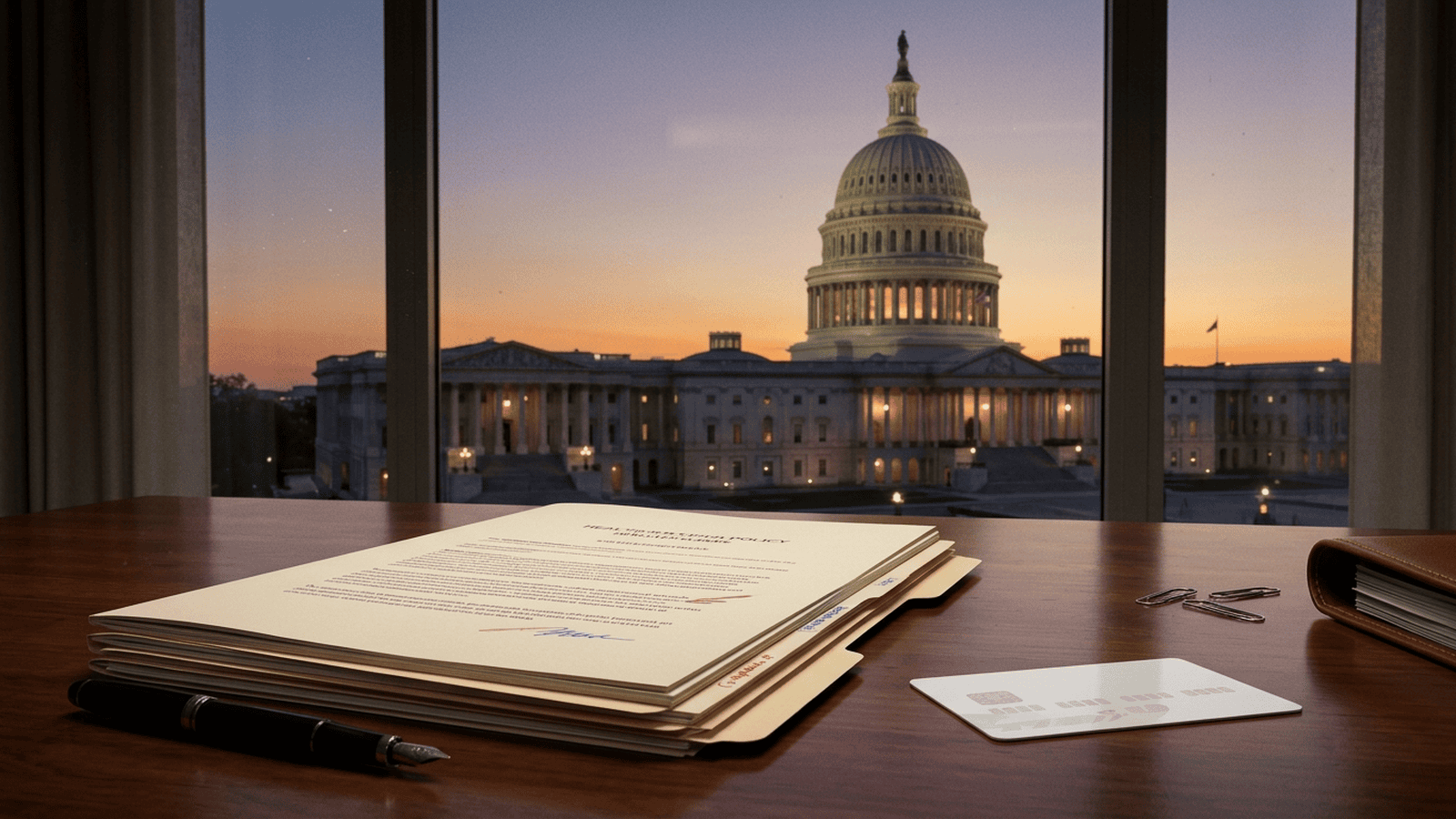
Democrats’ House and Senate victories give the party greater leverage to pursue health policy changes, including restoring expired Affordable Care Act subsidies and revisiting Medicaid cuts. Their stated rationale is that voters made health care affordability a priority. The agenda faces limits: President Trump can veto bills, and reversing or delaying changes enacted in 2025 would cost money. The new Congress is expected to begin in January, during the 2027 insurance enrollment period, which ends in most states on January 15. A spring funding debate may become another test. Committee control will also give Democrats subpoena power and a platform for investigations into federal health decisions and health industry practices.
TLDR: Democrats’ congressional gains create a path to debate ACA subsidies, Medicaid spending and health agency oversight, but do not ensure passage. January enrollment deadlines, spring funding talks, presidential approval and the cost of reversing enacted changes will shape what happens next.
Democrats’ decisive victories in the House and Senate are likely to redirect federal health policy toward restoring Affordable Care Act subsidies, revisiting Medicaid cuts and increasing oversight of the Trump administration. The results give Democrats greater control over legislation and congressional investigations, but they do not guarantee that their proposals will become law. President Trump remains able to veto bills, and the White House must sign legislation for it to take effect.
Democrats say voters’ concern about health care affordability gives them a mandate to reverse cuts to public health programs and pursue lower insurance premiums and drug prices. That is the party’s stated rationale for making health care an early priority. The election result also gives lawmakers a platform to press the issue in federal spending negotiations.
As of Wednesday afternoon, The Associated Press projected Democrats would win at least 237 of the House’s 435 seats and at least 54 Senate seats. Several races, including Senate contests in Alaska and Mississippi, remained unresolved. The incoming Congress is not scheduled to be sworn in until January, leaving Republicans in control during the lame-duck session through the end of the year.
Democrats are expected to seek a restoration of enhanced subsidies for Affordable Care Act plans. Those subsidies, created during the COVID-19 pandemic, lowered plan costs for millions of people. They expired last year after Trump and the Republican-controlled Congress did not extend them. House Democratic leader Hakeem Jeffries has said the party should bring them back to help families facing higher costs.
The timetable will be tight. Enrollment for 2027 coverage ends in most states on January 15, shortly after the new Congress is scheduled to begin. A Democratic-aligned advocate said lawmakers could renew the subsidies and extend the enrollment period if they act quickly. Whether those steps can pass is uncertain, and a subsidy proposal could become part of a larger budget deal that also addresses other health priorities.
Premiums add urgency to the debate. KFF researchers project that benchmark Affordable Care Act plan premiums will rise by an average of 13% for 2027. The excerpt does not specify what any renewed subsidies would cost taxpayers. An analyst quoted in the reporting said reversing or delaying changes enacted in 2025 would cost money, while noting that the White House would have to approve any legislation.
Medicaid is another likely point of conflict. Republicans presented their program overhaul under the One Big Beautiful Bill Act as a major achievement. The changes include new work requirements for many adults enrolled in Medicaid, the state-federal program for people with low incomes and people with disabilities. Democrats may seek to reverse or delay cuts, but the scope and timing of any legislation remain unsettled.
A short-term federal funding bill is expected in December, and health program provisions set to expire are among the issues facing the lame-duck Congress. After the new lawmakers take office, Medicaid spending could become part of a spring funding fight. The change in congressional control gives Democrats more leverage in those talks, but it does not remove the need for an agreement with Trump.
The election also expands Democrats’ oversight role. Control of congressional committees brings subpoena power, and Democrats have signaled plans to scrutinize the Department of Health and Human Services and the administration’s health decisions. Potential subjects include drug-pricing arrangements, insurance companies’ prior authorization denials, Medicare Advantage and the use of artificial intelligence in medical decisions. Democrats have also indicated interest in examining scientific decisions involving flavored vapes and the herbicide glyphosate, including possible links to political contributions.
More ambitious proposals may also receive attention. Some Democrats have discussed expanding Medicare, which now serves people age 65 and older, to cover all Americans. Other possibilities include adding dental and hearing benefits, lowering the Medicare eligibility age to 60 or younger, and federal action involving the 10 states that have not fully expanded Medicaid. These ideas would require legislation, and the excerpt gives no firm timetable or financing plan for them. The reporting notes that health industry groups would likely oppose a broad expansion and that its implications for the federal budget, taxes and medical care have not been fully addressed.
The next steps are therefore practical and political. The lame-duck Congress will handle government funding and health provisions due to expire; the new Congress will face the January enrollment deadline and possible spring spending negotiations. Democrats can investigate and advance bills, while the president retains veto power and the White House’s signature remains necessary for legislation. Those deadlines and oversight proceedings will determine which proposals move forward and how their costs are handled.

Miles Harrington serves as the Senior Correspondent for Federal Systems & Executive Power at Just Right News, where he brings a disciplined, constitutionalist lens to the inner workings of the American government. With a focus on the mechanics of the federal bureaucracy and the limits of executive authority, Harrington has established himself as a vital voice for readers who value transparency, accountability, and the preservation of the separation of powers.
A native of Richmond, Virginia, Harrington’s perspective is deeply rooted in the traditions of the Old Dominion. Growing up in a city defined by its historical significance and its role as a center of American jurisprudence, he developed an early appreciation for the foundational principles of the Republic. His upbringing in Richmond—a place where the legacy of the Founding Fathers is woven into the landscape—instilled in him a belief that the federal government should remain within its constitutional bounds. This background informs his skepticism of centralized overreach and his commitment to reporting on the ways in which the administrative state impacts the lives of everyday citizens.
In his current role, Harrington specializes in the complexities of federal systems. He doesn’t just report on the headlines of the day; he digs into the structural shifts within the executive branch that often go unnoticed by the mainstream press. Whether he is analyzing the implications of a new federal regulation or investigating the expansion of agency jurisdiction, his work is characterized by a rigorous adherence to the facts and a dedication to the rule of law.
Harrington is perhaps best known for his signature feature series, “How Washington Works.” Through this ongoing project, he demystifies the often-opaque processes of the nation’s capital, pulling back the curtain on the “Deep State” and the unelected officials who wield significant influence over national policy. By breaking down complex legislative maneuvers and executive orders, he empowers Just Right News readers to understand the true levers of power in Washington. His reporting serves as a necessary check on the federal government, ensuring that the actions of those in power are held up to the light of public scrutiny.
Now based in Washington, D.C., Harrington operates at the epicenter of the political world, yet he remains intentionally distanced from the “Beltway bubble.” His proximity to the halls of power allows him to maintain a robust network of sources across the federal landscape, but his heart remains in the principled conservatism of his Virginia roots. He views his role not merely as a reporter, but as a steward of the public trust, dedicated to providing the clarity and context that conservative voters need to navigate an increasingly complex political environment.
Through his sharp analysis and unwavering commitment to the truth, Miles Harrington continues to be a cornerstone of the Just Right News team. His work ensures that the principles of limited government and executive restraint remain at the forefront of the national conversation, providing a crucial service to those who believe in a government that is truly of, by, and for the people.