

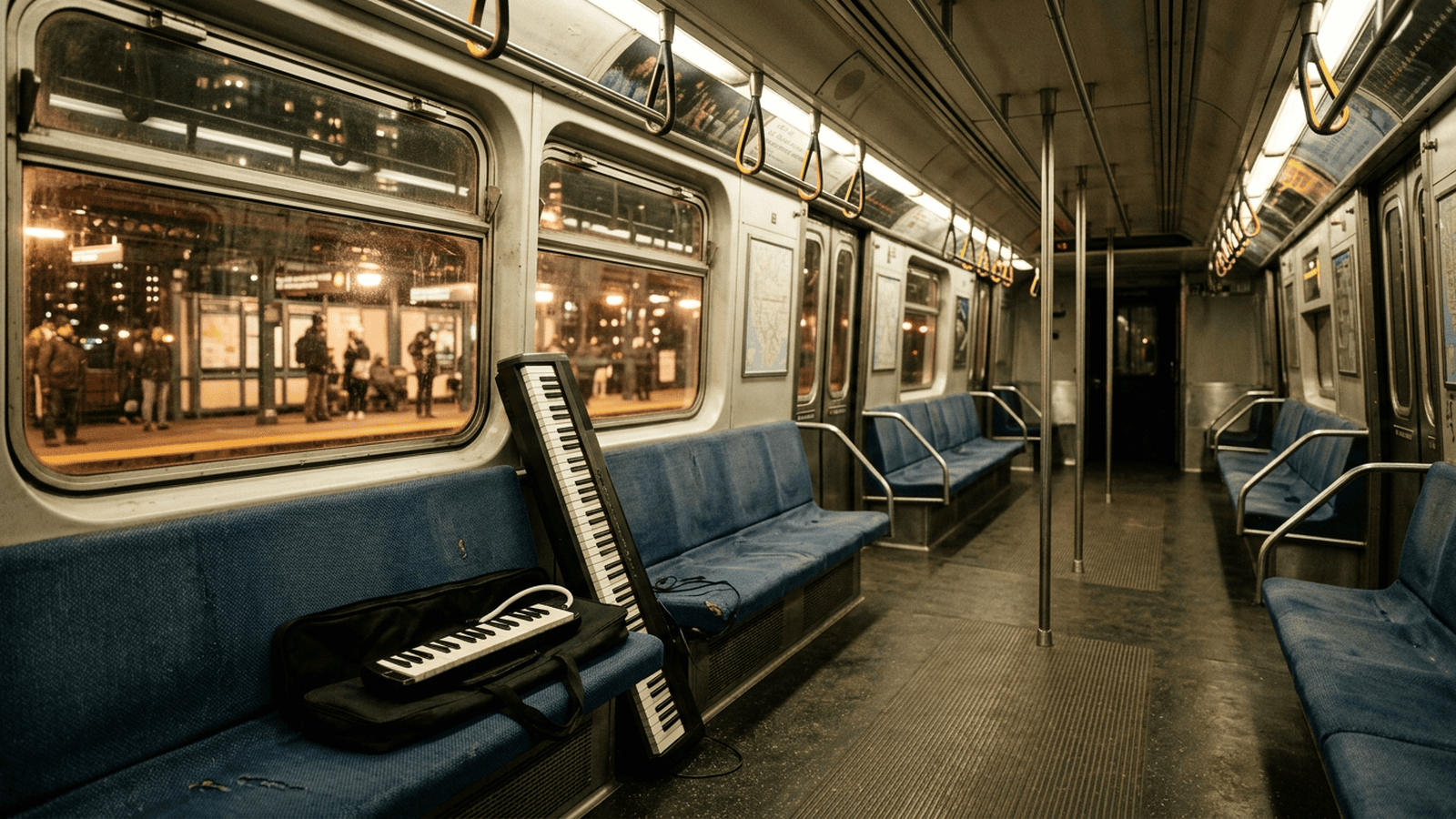
Jon Batiste’s music joins jazz, classical, folk and pop in what he calls “social music,” built around bringing people together. A subway performance in Manhattan showed that idea in practice, turning an ordinary train ride into a shared celebration. At Electric Lady Studios, Batiste improvised without writing or rehearsing, then heard the created music fully when he listened to playback. His career includes seven years as bandleader on “The Late Show,” an Oscar for work on “Soul,” and five Grammys in 2022, including album of the year for “We Are.” The interview describes no government policy, fees, forms, enforcement rules or deadlines; its focus is Batiste’s creative work and the people it reaches.
TLDR: Batiste blends musical traditions and improvises to make work he describes as a way to bring people together. The interview traces that approach from subway performances to a career that includes an Oscar, eight Grammys and two Emmys.
Jon Batiste’s music makes a practical case for creative independence. It does not have to stay inside familiar categories to reach people. The 39-year-old musician blends jazz, classical, folk and pop, drawing on sounds from different eras and places. He calls the result “social music.” In the interview, he describes its purpose as bringing people together.
That purpose is the clearest explanation of his approach. Batiste sees music as a way to create belonging and an unexpected feeling of connection. People can share a moment, he suggests, even when they come from different backgrounds or listen to different kinds of music. The idea is simple, but his performances put it into practice.
On a Tuesday night in Manhattan, Batiste and his band played in the New York City subway. The group moved from a station to a platform and then onto a train. There, music turned an ordinary ride into a brief celebration. Batiste called the gathering a “love riot.”
The setting mattered. The musicians brought their work to people going about their daily lives, rather than asking them to come to a concert hall. A subway car, described in the interview as somber, became a place where riders could respond together. Batiste said he enjoys seeing how different songs affect different people. The shared connection, rather than a polished stage or one narrow style, was the point.
Batiste first imagined the love riots while studying at Juilliard. The subway became a testing ground for that vision. The experiment needed no formal audience or concert hall. It asked people to share a public space while musicians supplied the soundtrack. Batiste described the experience as a form of faith: a chance to trust that people might connect through music.
The same openness shapes his studio work. At Electric Lady Studios in Greenwich Village, Batiste improvised at the piano without writing down or rehearsing what he played. He said that while playing, he focuses on feeling and staying in a flow. Only when he listened to the playback did he fully hear what he had created.
That process means trusting instinct instead of following a fixed plan. The finished music may not be clear even to its creator until the performance is over. The interview presents that uncertainty as part of Batiste’s method, not a flaw to correct. His hands, expression and body respond as the music takes shape.
Batiste says playing the piano feels like a calling and gives him room to express what is inside him. His imagination reaches across styles and history, from Beethoven and blues to early hymns, drums and cymbals. He is not saying that every sound belongs together automatically. Instead, he follows ideas and finds out where they lead.
That approach has carried well beyond the subway and the studio. Batiste served as bandleader on “The Late Show” for seven years while continuing to make his own music. He contributed jazz to the score of Pixar’s “Soul,” earning an Oscar. In 2022, the year he left the show, he won five Grammys, including album of the year for “We Are.” The interview says he now has eight Grammys and two Emmys, and performs to sold-out venues around the world.
His public success sits alongside a private account of how he sees himself. Batiste describes himself as deeply introverted. As a child, he spent time sitting in a magnolia tree to understand stillness, and he barely spoke until he was about ten. The interview recounts that instructors once sent him to a psychologist because they misunderstood him. Batiste said the psychologist helped him see that being different was all right. He chose to make music his way.
The interview describes no policy change, government program or enforcement plan. It identifies no new costs, paperwork, rules or deadlines for audiences, musicians or venues. There is no official oversight process or compliance timeline to follow. The practical impact it does describe is cultural: Batiste’s performances invite subway riders and concert audiences to share a musical experience, while leaving his creative choices in his hands.
Batiste’s example suggests that discipline and freedom can work together without requiring every artist to follow one formula. His music crosses boundaries, but its purpose remains clear: connection. Whether he is improvising in a studio or playing for subway riders, he keeps creating on his own terms and lets listeners meet him in the moment.

Tom Blake serves as the Senior Correspondent for Labor, Wages, and Automation at Just Right News, where he brings a grounded, principled perspective to the most pressing economic issues facing the American heartland. As the lead voice behind the acclaimed feature series “The Price of Work,” Tom focuses his reporting on the intersection of traditional industry and the rapidly evolving technological landscape, always prioritizing the dignity of the individual worker and the health of the American family.
Tom’s deep understanding of the labor market is not merely academic; it is rooted in his upbringing in Detroit, Michigan. Growing up in the shadow of the automotive industry, he witnessed firsthand the triumphs and tribulations of the American blue-collar workforce. He saw how the stability of a manufacturing job could build a community and, conversely, how the erosion of those industries could tear the social fabric apart. This background instilled in him a lifelong respect for the trades and a healthy skepticism toward economic policies that prioritize globalist interests over the well-being of local communities.
Now based in Pittsburgh, Pennsylvania, Tom continues to report from the front lines of the shifting economy. Pittsburgh, a city that has reinvented itself while maintaining its gritty, industrious spirit, provides the perfect vantage point for his beat. From the steel mills that remain to the high-tech robotics labs reshaping the city’s future, Tom explores how automation is changing the nature of employment. His reporting often highlights the tension between innovation and tradition, arguing that while progress is inevitable, it must not come at the expense of the American worker’s ability to provide for their family through honest, meaningful labor.
In his role at Just Right News, Tom has become a vital voice for those who feel overlooked by mainstream economic coverage. He rejects the notion that the decline of American manufacturing is an unavoidable casualty of the modern era. Instead, his work often examines how regulatory overreach, rising energy costs, and the unchecked rise of automation impact the take-home pay of everyday citizens. Through “The Price of Work,” Tom delves into the true cost of economic shifts, looking beyond the raw data to tell the stories of the people behind the statistics.
Tom’s reporting is characterized by a commitment to the conservative values of self-reliance, fiscal responsibility, and the preservation of the American dream. He believes that a strong nation is built on a foundation of stable jobs and fair wages, and his work seeks to hold both government and corporate entities accountable to that standard. Whether he is interviewing a shop floor manager about the implementation of new AI technology or analyzing the impact of wage inflation on small businesses, Tom provides a clear-eyed analysis that resonates with readers who value hard work and common sense.
Through his dedicated coverage, Tom Blake remains a steadfast advocate for the American workforce, ensuring that the voices of those in the industrial heartland are heard loud and clear in the national conversation. His perspective is essential for anyone seeking to understand the complex realities of labor and automation in the twenty-first century.