

Homeland Security Secretary Markwayne Mullin said federal, state, and county responders are coordinating after Hurricane Isaias made landfall Friday night. The storm caused four deaths and left hundreds of thousands without power, according to the broadcast. FEMA prepositioned assets across states, the Coast Guard continued operations, and governors discussed sending help to affected areas. The administration’s stated aim is to coordinate lifesaving support and help restore power, while acknowledging that no storm can be fully anticipated. The broadcast did not specify assistance costs, resident paperwork, restoration deadlines, or a formal review schedule, leaving those details to emerge as response and recovery continue.
TLDR: Federal agencies, governors, and county responders are working together after Hurricane Isaias, with FEMA assets positioned across states and the Coast Guard active in nearby waters. The storm’s deaths and widespread outages remain serious, while officials continue response and recovery without a stated timeline for assistance or power restoration.
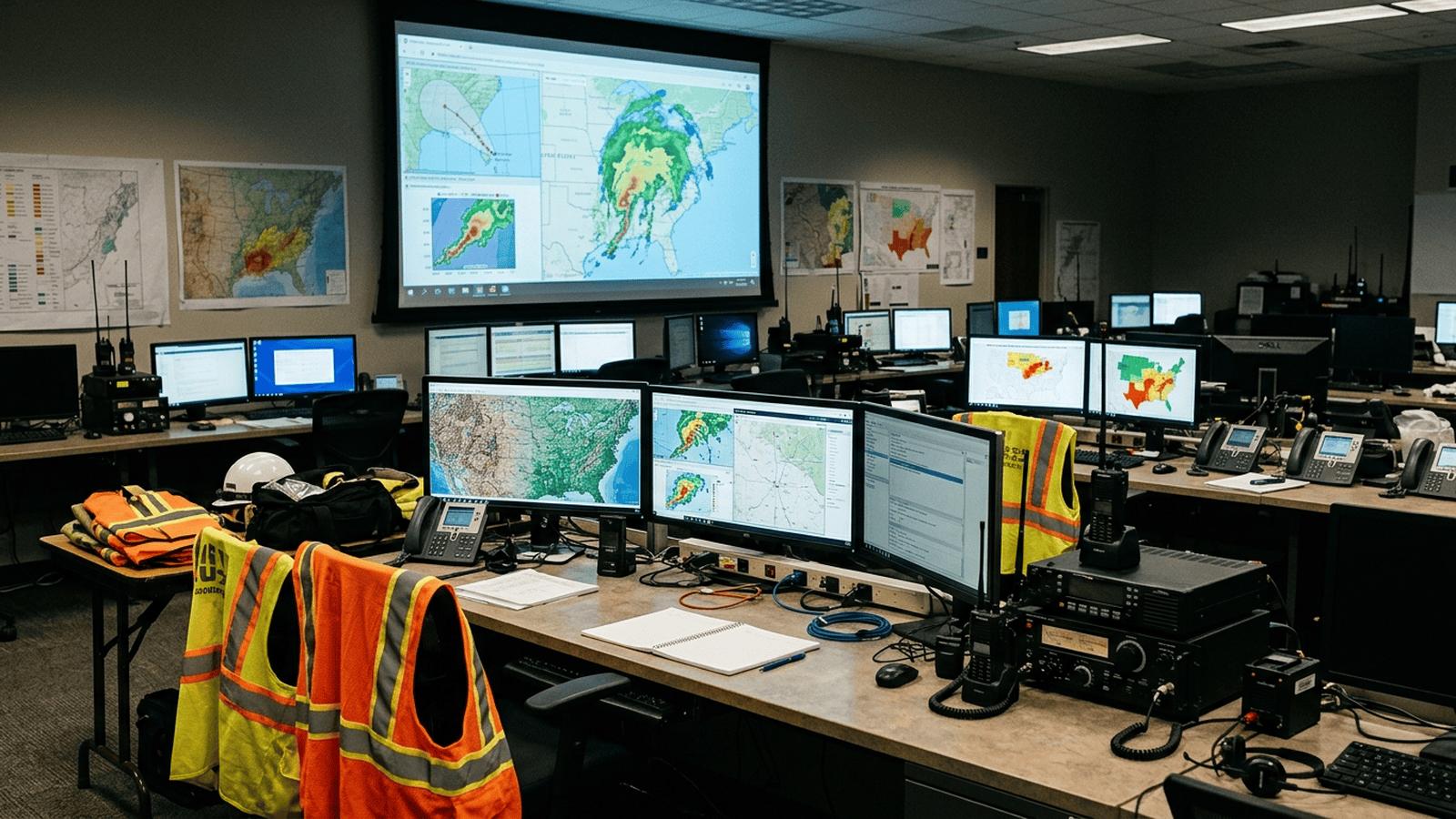
Federal and state officials are coordinating their response to Hurricane Isaias, with emergency assets positioned across states and responders working together as the storm moves through affected areas. Homeland Security Secretary Markwayne Mullin described the effort on the October 11 broadcast of “Face the Nation,” saying the administration had been in contact with governors and that FEMA was standing by. The response is a practical example of government agencies and state leaders organizing around a shared emergency.
The official rationale is to prepare across state lines, support local emergency responders, and move lifesaving help where it is needed. Mullin said FEMA director Cam Hamilton began prepositioning assets in every state and coordinating with state responders. He described that work as part of a larger effort to be ready for needs as the storm moved. The broadcast did not identify each asset or say where every item had been placed. It did make clear that federal and state agencies were planning together rather than waiting for a single location to request help.
The hurricane made landfall Friday night. The broadcast reported four deaths and hundreds of thousands of people without power. Mullin said the president had approved federal support and had been involved from the start. He also said he had spoken with governors in affected and potentially affected states. The interview did not give a precise count of the states involved or describe the amount of federal support. It did present communication with governors as part of the response while officials worked to assess storm impacts.
Mullin pointed to cooperation among governors as a strength of the response. He cited Georgia Governor Brian Kemp’s relationship with Florida Governor Ron DeSantis and said governors were discussing how to send assets to areas without power. That coordination places immediate needs ahead of jurisdictional boundaries. Local control remains important, while shared work gives states a way to support neighbors facing the same storm. The secretary’s description focused on governors coordinating among themselves, alongside federal agencies and county first responders. The transcript did not specify which assets were being moved or when each transfer would happen.
Federal agencies also have roles on the ground and in nearby waters. Mullin said FEMA was standing by for lifesaving responses and that the Coast Guard was operating in inland waters, near the Mississippi River’s mouth, and offshore. He reported that boat rescues were continuing, though activity had shifted more toward recovering boats than rescuing people. Those details show how emergency operations can change as conditions develop. The broadcast offered no full count of rescues or recovered boats. It did describe the Coast Guard’s work as continuing while responders dealt with changing needs in several types of locations.
Mullin did not say that every need had been met. He acknowledged that no one can be fully prepared for a storm like Isaias, while describing coordination among the White House, governors, and county first responders as close. His account gives a picture of organized work, not a claim that the storm caused no disruption. The reported deaths and widespread power outages make clear that the emergency has imposed real costs on families and communities. The interview did not detail damage to homes or businesses, so the full local effects were not established in the discussion.
For residents and local governments, the immediate impact includes power loss and the need for emergency response. State and county responders are working with federal agencies, while governors coordinate the movement of assets to affected places. The broadcast gave no dollar amount for federal support, no forms or application process for residents, and no deadline for assistance or restoration. Those details were not specified in the discussion. It also gave no estimate for how long outages would last or when particular communities might receive help. Residents and local officials therefore heard about the response structure, but not a schedule or specific process for individual assistance.
This approach asks states and local responders to work within a larger operation rather than act alone. Sharing assets and coordinating decisions across state lines can help officials respond to a regional emergency, according to the account Mullin gave. The interview did not set out a formal process for deciding which areas receive assets first. Nor did it describe enforcement steps, a cost-sharing arrangement, or a public timetable for reviewing the response. The practical policy picture remains limited to coordination and readiness: FEMA was standing by, the Coast Guard was active, and governors were discussing how to move assets where power was out.
The next steps are continued response and recovery as Isaias moves across the country, with FEMA, the Coast Guard, and state and local teams engaged. The broadcast provided no schedule for further briefings or formal review, and no additional deadlines for assistance or restoration. Mullin said governors were in good shape and described agencies as working closely together. That is the administration’s assessment as the response proceeds, not a guarantee that all storm-related needs have been resolved. The reported deaths, outages, and continuing boat operations point to an emergency still requiring work. The transcript established who was coordinating and what some agencies were doing, while leaving the timing and scale of further assistance unspecified.

Dylan Brooks serves as the Senior Correspondent for Statehouses and Local Governance at Just Right News, where he brings a principled, constitutionalist lens to the often-overlooked machinery of state-level politics. As the lead voice behind the acclaimed feature series “Fifty Laboratories of Power,” Dylan has dedicated his career to the idea that the most impactful governance happens closest to home. His reporting consistently champions the Tenth Amendment, exploring how individual states can serve as testing grounds for innovative, conservative policy solutions that prioritize personal liberty and fiscal responsibility.
A native of Des Moines, Iowa, Dylan’s journalistic philosophy was forged in the heart of the American Midwest. Growing up in a community where local school board meetings and town halls were the bedrock of civic life, he developed a deep appreciation for the “retail politics” of the heartland. This upbringing instilled in him a fundamental belief that the American experiment is best preserved when power is decentralized. He carries the values of his Iowa roots into every assignment, maintaining a healthy skepticism of federal overreach and a steadfast commitment to the concerns of everyday citizens over the interests of the administrative state.
Now based in Madison, Wisconsin, Dylan operates from one of the nation’s most pivotal political battlegrounds. His location in a state capital known for its rigorous policy debates allows him to provide Just Right News readers with a front-row seat to the legislative process. From Madison, he tracks the ripple effects of statehouse decisions on local municipalities, ensuring that the connection between high-level policy and community impact is never lost. His work often highlights the success of conservative governors and legislatures in fostering economic growth, protecting parental rights, and securing the integrity of local institutions.
As an African American man in the conservative media landscape, Dylan offers a vital perspective on how limited government and free-market principles empower individuals and families. He frequently reports on how deregulation and school choice initiatives provide new avenues for success in underserved communities, challenging the monolithic narratives often presented by legacy media outlets. Dylan’s work is characterized by a commitment to the facts and a refusal to shy away from the complex realities of modern governance.
Throughout his tenure at Just Right News, Dylan has become a trusted authority for readers who value a rigorous, principled approach to the news. Whether he is dissecting a complex state budget or profiling a local grassroots movement, his goal remains the same: to provide the American public with the information they need to hold their local leaders accountable. By focusing on the “Fifty Laboratories of Power,” Dylan Brooks ensures that the vital work being done in statehouses across the country receives the national attention it deserves, always through a lens that respects the traditions and sovereignty of the American people.