

Trump’s proposed halt to attacks on energy infrastructure and a Russian diesel arrangement could affect fuel costs, but neither an energy ceasefire nor its benefits for American households is confirmed.
President Donald Trump’s announcement of an immediate Russia-Ukraine “energy ceasefire” put fuel and infrastructure back into the cost-of-living conversation Sunday, but the claim remained unconfirmed by Moscow and Kyiv, Reuters reported. For households facing costs for driving, heating and shipping, the practical question is whether any change in energy flows will reach consumers—and when. The available reporting does not yet answer it.
Trump said attacks on each side’s energy facilities would stop effective immediately. Ukrainian President Volodymyr Zelenskyy offered a conditional account: Ukraine would halt strikes on Russian oil refineries if Russia stopped hitting Ukrainian energy infrastructure. He said de-escalation required “real guarantees.” The gap between Trump’s announcement and Zelenskyy’s stated condition underscores that a public declaration is not the same as a verified agreement.
That distinction matters beyond the battlefield. Refineries, power facilities and fuel supply routes are infrastructure with consequences for transport and energy markets. Disruption can add pressure to the costs of moving goods and operating vehicles; a durable reduction in attacks could ease some of that pressure. But any benefit for drivers, renters or homeowners would depend on whether the arrangement holds and how changes in supply and prices pass through. No evidence in the available reports establishes that American household bills have fallen as a result.
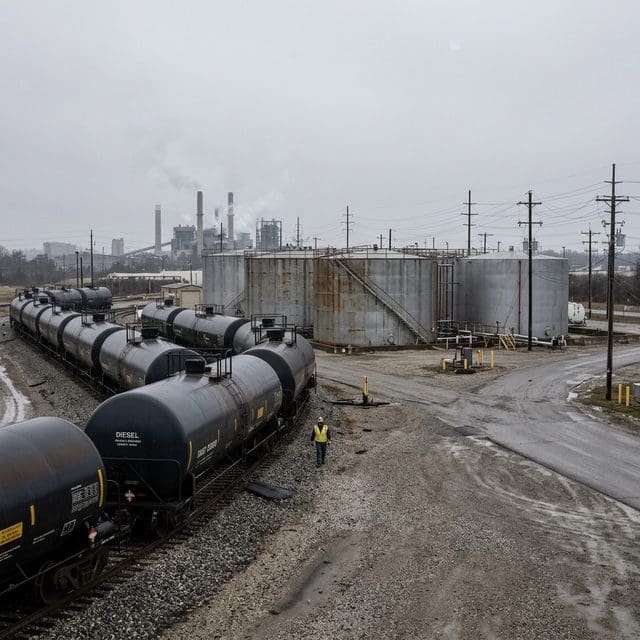
A separate development has firmer reported details. The Associated Press reported that Russia would supply more than 300,000 tons of diesel immediately, 500,000 tons in November, 1 million tons immediately thereafter, and another 3 million tons within a short period. The U.S. Treasury Department issued a temporary license on Oct. 9 allowing Russian diesel to enter global markets, AP reported. Those reported volumes and the license clarify the potential fuel flow, but do not establish its final destination, retail price effect or duration.
Trump had said on Oct. 9 that he struck a deal with Russia for millions of tons of diesel to lower U.S. energy prices, according to PBS NewsHour. The license creates a pathway for the fuel to reach global markets; it does not by itself guarantee lower prices at American pumps or lower transportation costs. Nor does the reported supply arrangement confirm that Russia and Ukraine have accepted a mutual halt to attacks.
For housing affordability, the connection is indirect but material: energy and transport costs can influence the price of construction materials, deliveries and household commutes. Yet the source material provides no new figures on rents, mortgage rates, home prices, homelessness or transit fares. It would be premature to treat the diplomatic announcement as a housing-cost intervention or to claim it changes those expenses.
The immediate test is whether both governments confirm reciprocal restraint and whether energy infrastructure remains protected. Reuters reported no immediate confirmation from either capital. Zelenskyy’s demand for guarantees points to the difficulty of translating a presidential announcement into enforceable restraint. An attack that interrupts energy production or distribution could quickly undermine any expected supply benefit.
Saudi Arabia and the United Arab Emirates have been mentioned as possible venues for a Trump-Putin summit, according to Reuters sources cited by the Daily Star. No venue or meeting date was confirmed, and neither country was identified as a participant in the proposed ceasefire. A possible meeting may offer a diplomatic channel, but it is not evidence of an agreement.
For households, the distinction between a claim, a licensed fuel shipment and a sustained change in supply is more than diplomatic detail. It determines whether energy-related costs actually ease—or whether the announcement remains a promise with no measurable effect on the monthly budget.

Deborah Cole serves as a Senior Correspondent for Just Right News, where she spearheads the network’s coverage of Housing, Infrastructure, and Mobility. With a career defined by a commitment to rigorous reporting and a focus on the fundamental pillars of American community life, Deborah brings a principled perspective to the complex issues that dictate how and where we live. Her work is grounded in the belief that sound policy, fiscal responsibility, and respect for private property are the essential foundations of a prosperous society.
Originally from Boston, Massachusetts, Deborah’s upbringing in one of the nation’s oldest and most historically significant cities deeply influenced her professional trajectory. Growing up amidst the architectural legacy and dense urban planning of New England, she developed an early appreciation for the importance of durable infrastructure and the role of local tradition in shaping neighborhoods. Her perspective is informed by the classic American values of her hometown—hard work, community cohesion, and a healthy skepticism of top-down bureaucratic mandates that often overlook the unique needs of individual citizens.
Today, Deborah operates from her base in Austin, Texas, a city that serves as a primary laboratory for her reporting. Austin’s rapid expansion and its status as a hub for innovation and migration provide her with a front-row seat to the most pressing challenges in modern infrastructure and housing. From the Lone Star State, she chronicles the tensions between rapid growth and the preservation of the American Dream, often highlighting how market-driven solutions and deregulation can address the housing shortages that plague many of the country’s metropolitan areas.
At Just Right News, Deborah is perhaps best known for her signature feature series, “Where We Live.” Through this platform, she explores the intersection of public policy and private life, moving beyond mere statistics to tell the stories of families, small business owners, and local developers. Her reporting frequently highlights the importance of mobility—not just in terms of transportation and transit, but as a vehicle for economic opportunity and social stability. She remains a staunch advocate for the taxpayer, consistently scrutinizing government spending on large-scale projects and advocating for transparency in how infrastructure dollars are allocated.
Deborah’s beat is more than just a collection of policy topics; it is an investigation into the physical and legal structures that allow families to flourish. Whether she is reporting on the impact of zoning laws on suburban development or the necessity of maintaining the nation’s highway systems, her work is characterized by a dedication to the facts and a respect for the constitutional principles that protect the rights of homeowners.
As a Senior Correspondent, Deborah Cole continues to be a vital voice for Just Right News, providing the audience with the clarity and context needed to navigate an ever-changing landscape. Her reporting ensures that the values of individual liberty and local sovereignty remain at the forefront of the national conversation regarding the future of our cities and towns. Through her tireless efforts, she remains committed to informing the public on the issues that hit closest to home.