

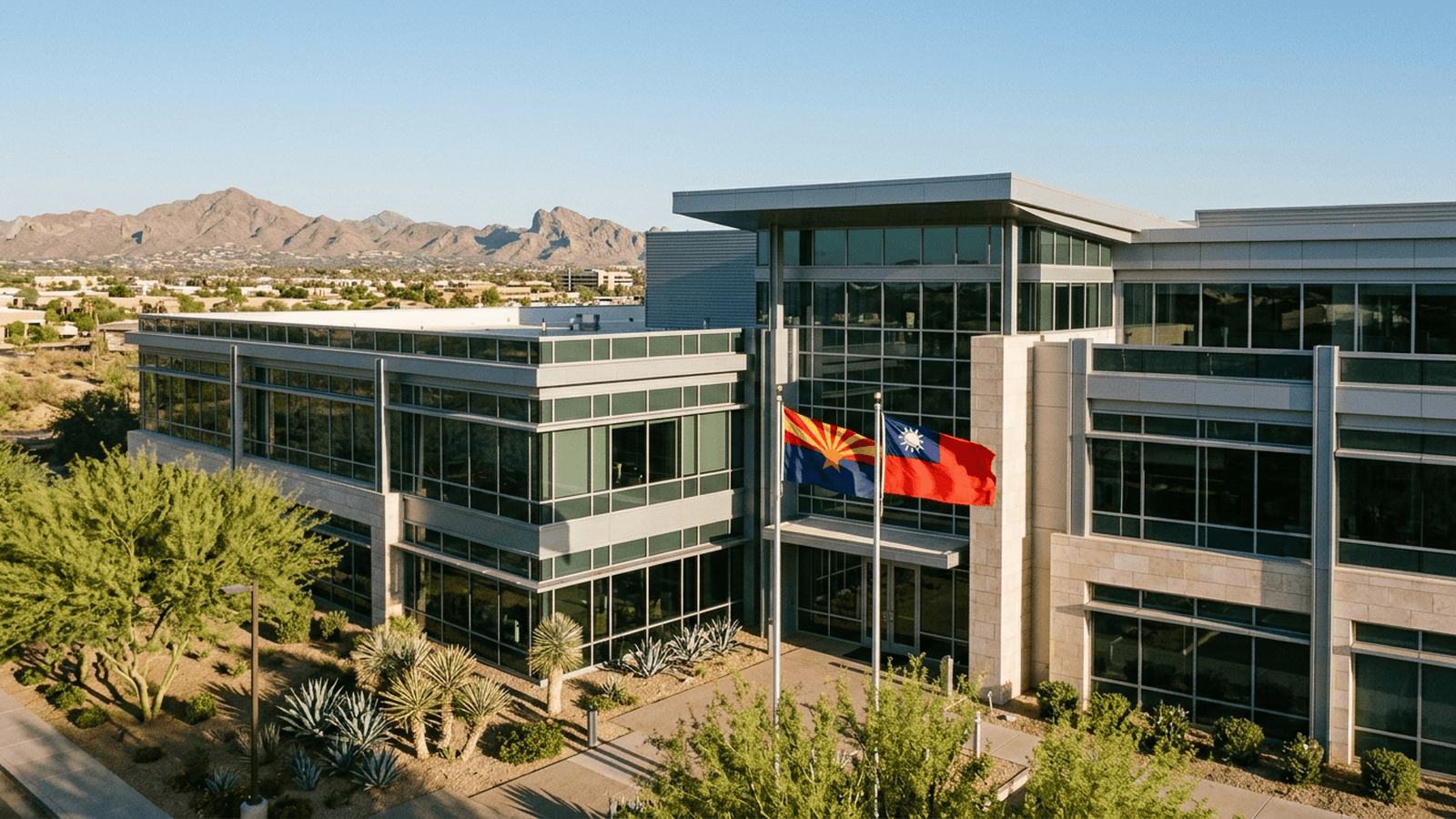
Arizona Gov. Katie Hobbs joined Taiwanese leaders to open an economic and cultural office in Phoenix, despite two letters from China’s consulate asking her to oppose it. Taiwanese authorities say the office will support businesses and residents and promote technology collaboration, especially in semiconductor manufacturing. The opening comes as TSMC has pledged $100 billion for expansion in northern Phoenix, bringing its total city investment to $265 billion. The account provides no details on fees, forms, enforcement requirements, operating deadlines, or a formal oversight process. The office is open, but its day-to-day services and any broader diplomatic effects have not been specified.
TLDR: Arizona opened a Taiwan representative office in Phoenix after China’s consulate urged Gov. Katie Hobbs to oppose the plan. The office is intended to help Taiwanese businesses and residents, with its precise operating details and any broader diplomatic effects still unspecified.
Arizona Gov. Katie Hobbs joined Taiwanese leaders Monday to open an economic and cultural office in Phoenix. The office is intended to help Taiwanese businesses and citizens in the region. Its opening went ahead despite requests from China’s government that Hobbs oppose the plan, putting Arizona’s local economic priorities into clear view.
Taiwanese authorities say the office will promote technology collaboration, especially in semiconductor manufacturing, and better serve a growing number of Taiwanese migrants in Phoenix. Those are the stated reasons for the office. Its role is practical: support businesses and residents while building links in an industry already expanding in Arizona.
The Phoenix location is Taiwan’s 14th representative office in the United States. Hobbs said Arizona officials should support the partnership and that the state would mobilize available resources for Taiwanese companies expanding there. The office therefore reflects a choice to maintain local economic engagement even as China objects to official interactions between Taiwan and U.S. governments.
The dispute was documented before the opening. After the office plans were announced in July, Hobbs received two letters from China’s consulate general in Los Angeles asking her to object, according to documents her office shared with The Associated Press. A July 3 letter urged the governor to oppose what it called an attempt by Taiwan’s authorities and to stop political actions it said could harm ties with Arizona. The consulate repeated its position in an Aug. 21 letter.
The letters did not change the outcome. Their existence shows that the office’s opening followed direct pressure on the governor, rather than a lack of objections from Beijing. Phoenix radio station KJZZ first reported the letters. Their contents and dates make the sequence straightforward: plans were announced, Chinese officials asked Hobbs to intervene, and Arizona proceeded with the opening.
China’s stated position is broad. Liu Chang, a spokesperson for China’s Embassy in the United States, said Monday that China opposes official interactions of any form between Taiwan and the United States, including at the federal and state levels. Beijing describes Taiwan as a breakaway province inseparable from China. Taiwan considers itself separate from the Chinese mainland and has its own government. These competing positions help explain why a local office has drawn a response from China, though the available account does not establish what diplomatic consequences, if any, will follow.
The office also arrives amid a significant business presence. Taiwanese chipmaker TSMC has pledged $100 billion to expand its operations in northern Phoenix. That commitment brings the company’s total investment in the city to $265 billion, described in the account as the largest foreign direct investment in U.S. history. The figures offer a concrete reason for Arizona officials to pay attention to the relationship: the company’s planned expansion is large, and the office is meant to encourage collaboration in the same technology sector.
Around 500 Taiwanese engineers are working to increase production at TSMC in Arizona, according to Jason Hsu, a former Taiwan lawmaker and senior fellow at the Hudson Institute. Phoenix Mayor Kate Gallego has also described a growing Taiwanese community in the city. She said several labor and delivery rooms have launched Mandarin-language programs. Those details connect the office’s stated business role with its stated service to Taiwanese residents, without establishing how many people will use the office or what services it will provide day to day.
The practical impact described so far is limited but clear. Taiwanese companies and citizens in the region are the intended beneficiaries, and the office is expected to support business activity and community needs. The account gives no opening or operating fees, required forms, enforcement rules, compliance duties, or deadlines. Those details are not specified, so they cannot be treated as established parts of the plan. The immediate tradeoff is political: Arizona proceeded with a local partnership despite China’s objections, while the account does not identify any new restrictions on residents or businesses.
The opening is a completed step, not evidence of a broader change in U.S. diplomatic policy. Scholars say local collaboration involving China and Taiwan has become more politicized as U.S.-China relations have deteriorated, but the account does not predict the consequences of Arizona’s decision. No further deadlines or formal oversight process are described. Any next steps, including how the office will carry out its stated role, remain part of the plan rather than confirmed details. The record currently shows an office opened, a stated economic and community purpose, and objections that did not stop it.
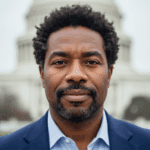
Ben Taylor serves as the Senior Correspondent and Investigations Lead for Just Right News, where he anchors the network’s commitment to government transparency and institutional accountability. With a career defined by a relentless pursuit of the facts, Taylor spearheads the acclaimed feature series “The Paper Trail,” a deep-dive investigative column that prioritizes primary source documentation over political rhetoric. Based in the heart of the nation’s capital, he has earned a reputation as one of the most formidable investigative journalists in Washington, D.C., known specifically for his mastery of public records and the Freedom of Information Act.
Taylor’s approach to journalism is deeply rooted in his upbringing in Kansas City, Missouri. Growing up in the “Show Me State,” he developed a healthy skepticism of centralized power and a profound respect for the common-sense values of the American heartland. This Midwestern foundation informs his reporting today, as he bridges the gap between the complex machinations of federal bureaucracy and the everyday concerns of citizens across the country. For Taylor, investigative reporting is not about chasing headlines; it is about ensuring that the government remains answerable to the people it serves.
As an African American man working within the conservative media landscape, Taylor brings a principled perspective to his beat. He views the Constitution and the right to information as the ultimate equalizers in a free society. His work often highlights how bureaucratic overreach and lack of transparency disproportionately affect individual liberties. By focusing on the “paper trail,” Taylor strips away the spin of partisan talking points, instead providing Just Right News readers with the raw data and internal communications that reveal how their tax dollars are spent and how policy decisions are actually made.
In his role as Investigations Lead, Taylor oversees a team dedicated to uncovering the stories that mainstream outlets often overlook. Whether he is auditing federal spending, investigating regulatory overreach, or exposing inefficiencies within the administrative state, his methodology remains consistent: follow the evidence wherever it leads. His presence in Washington, D.C., allows him to maintain a constant watch over the halls of power, yet he remains steadfastly connected to his roots, ensuring his reporting reflects the clarity and directness of his Missouri home.
Throughout his tenure at Just Right News, Taylor has become a vital voice for those who demand integrity in public office. He believes that a well-informed electorate is the strongest defense against government overreach, and he has dedicated his career to providing the public with the tools they need to hold their leaders accountable. Through “The Paper Trail” and his broader investigative work, Ben Taylor continues to set the standard for rigorous, document-driven journalism that champions the values of transparency, individual responsibility, and the rule of law.