

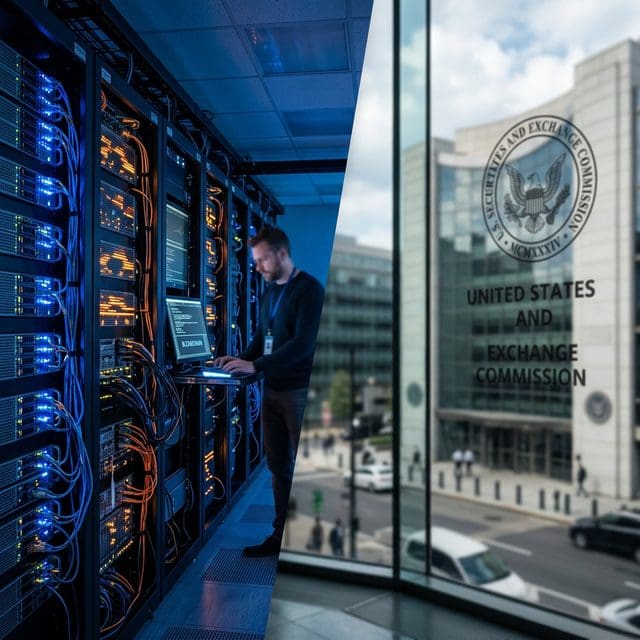
The SEC has introduced a modernized custody framework for investment advisers as U.S. spot Bitcoin ETFs recorded $102.7 million in net inflows to open October.
The landscape for American digital sovereignty took a significant step forward this week as the Securities and Exchange Commission (SEC) unveiled a proposed crypto-specific custody framework. The proposal, introduced on October 1, aims to modernize legacy rules that SEC Chair Paul Atkins noted have failed to keep pace with Bitcoin’s growth since its inception in 2008. By allowing state-chartered trust companies to act as custodians and providing a pathway for adviser-controlled custody when third-party options are unavailable, the framework seeks to remove the regulatory ambiguity that has long hampered institutional participation in the digital asset space.
While the proposal is currently entering a 60-day public-comment period, its implications for domestic financial independence are clear. Commissioner Hester Peirce clarified that the ‘self-custody’ provisions specifically address how advisers manage assets, rather than individual investor control. However, the move signals a shift toward integrating Bitcoin into the formal U.S. financial architecture under more transparent, specialized guidelines rather than shoehorning it into traditional securities law. This development is particularly timely following the stall of the CLARITY Act, which failed to reach the required 60-vote threshold in the Senate, leaving the SEC’s rulemaking as the primary driver of institutional market structure.
On the market front, institutional appetite for Bitcoin remains resilient despite broader macroeconomic headwinds. U.S. spot Bitcoin ETFs recorded $102.7 million in net inflows on October 1, successfully reversing a $148.7 million outflow at the end of September. This recovery follows a robust September that saw total inflows reach $2.65 billion, the second-highest monthly total since October 2025. The cumulative net inflows since the launch of these products now stand at approximately $57.7 billion, a staggering figure that underscores the shift in how capital allocators view digital assets.
The data highlights a growing concentration of capital within BlackRock’s IBIT, which gained $195.6 million in a single session, effectively carrying the market as other issuers struggled. Fidelity’s FBTC recorded a $60.7 million loss, while Grayscale’s GBTC saw $31.4 million in redemptions. Even smaller vehicles like Bitwise’s BITB and ARK 21Shares’ ARKB faced minor outflows of $6.9 million and $7.7 million, respectively. This divergence reinforces Bitcoin’s relative institutional strength compared to other digital assets; notably, U.S. spot Ether ETFs posted $55.4 million in net outflows during the same period, led by Fidelity’s FETH and Grayscale’s ETHE.
Technological maintenance of the network also saw critical updates this week. Developers released Electrum version 4.8.2 to patch a vulnerability in its Lightning Network implementation. The fix addresses a flaw in anchor channels that could have compromised wallet backups, requiring some users to replace older backup files to ensure fund safety. While the Bitcoin base-layer protocol remains stable and unchanged, this infrastructure-level patch underscores the ongoing decentralized engineering efforts required to secure the network’s secondary scaling layers and maintain the integrity of the ecosystem.
These developments occur against a challenging global macro backdrop that tests the ‘digital gold’ narrative. The U.S. 10-year Treasury yield recently hit 5.3338%, its highest level since 2002, while Brent crude returned to the $100 per barrel mark. High yields and persistent inflation typically increase the opportunity cost of holding non-yielding assets. Furthermore, Eurozone inflation rose to 3.8% in September, exceeding market forecasts and the ECB’s target. Nevertheless, the steady institutional flow into Bitcoin vehicles suggests that sophisticated actors are increasingly viewing the asset through the lens of digital scarcity and a hedge against the fiscal instability of the traditional global order, even as the SEC works to formalize the rails through which that capital flows.

Ryan Mitchell serves as a Staff Writer for Just Right News, where he anchors the desk for Cyber, Technology Policy, and Digital Sovereignty. In an era where the digital landscape has become as much a battlefield as any physical territory, Ryan provides a critical conservative lens on the forces shaping the future of American innovation and national security. His work is defined by a commitment to the idea that American leadership in the digital age is not just a matter of economic success, but a necessity for the preservation of global liberty.
Born and raised in Austin, Texas, Ryan’s perspective is deeply rooted in the Lone Star State’s tradition of independence and skepticism of centralized authority. Growing up in a city that transformed from a quiet state capital into a global technology hub, he witnessed firsthand the disruptive power of the tech industry. This upbringing instilled in him a firm belief in free-market principles and the necessity of protecting individual liberties from both government overreach and corporate overstep. His Texan background serves as a foundational compass, guiding his reporting toward stories that emphasize national resilience and the preservation of constitutional values in an increasingly virtual world.
Now based in San Francisco, California, Ryan operates from the epicenter of the very industry he scrutinizes. Living and working in the heart of Silicon Valley allows him to provide “boots on the ground” reporting that few conservative journalists can match. He navigates the cultural and political complexities of the Bay Area to bring Just Right News readers an inside look at the boardrooms and coding labs where the next generation of digital policy is forged. For Ryan, being stationed in San Francisco is a strategic choice; it allows him to challenge the prevailing ideological monoculture of the tech elite from within their own backyard, ensuring that the concerns of middle America are represented in the conversation about our digital future.
His beat—Cyber, Technology Policy, and Digital Sovereignty—covers the high-stakes world of data privacy, artificial intelligence, and the infrastructure of the modern web. Ryan is particularly focused on the concept of digital sovereignty, arguing that for a nation to remain truly free, it must maintain control over its own technological destiny and critical infrastructure. He frequently explores how international regulations and domestic policies impact the ability of American firms to compete without sacrificing the privacy or security of their citizens.
Central to his current body of work is his featured series, “The New Cold War.” Through this project, Ryan examines the escalating technological rivalry between the United States and its global adversaries. He delves into the complexities of state-sponsored hacking, the global race for semiconductor dominance, and the ideological struggle to define the rules of the internet. Ryan views this competition not merely as a commercial race, but as a fundamental defense of Western values against authoritarian digital models. Through his rigorous reporting and principled analysis, Ryan Mitchell ensures that the readers of Just Right News stay informed about the invisible forces defining the 21st century, always advocating for a future where technology serves the cause of freedom.