

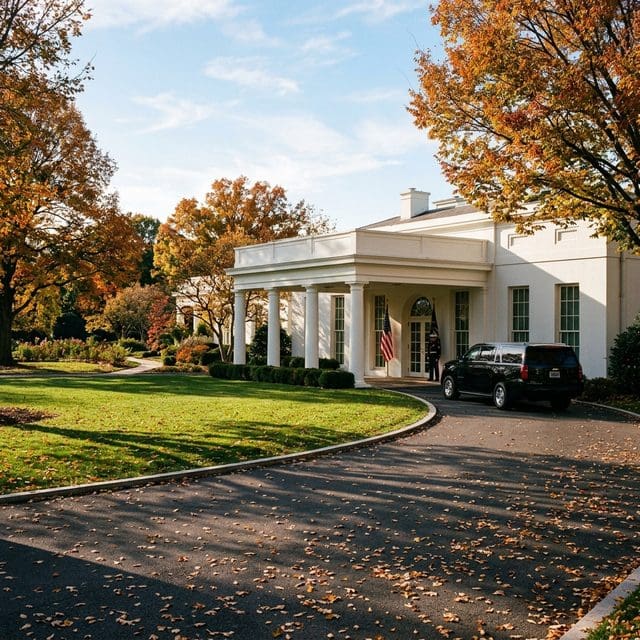
President Trump signed a voluntary AI oversight agreement with tech leaders while the Senate adjourned without passing safety legislation, leaving election-year policy debates to the campaign trail.
A flurry of executive and legislative activity marked the final days of the congressional session as the Senate adjourned on September 30, leaving a trail of unresolved policy debates. At the center of the week’s developments was the ‘White House Accord on Superintelligence,’ a voluntary agreement signed by President Trump and tech executives including Elon Musk, Mark Zuckerberg, and Sundar Pichai. The accord establishes internal controls and independent external audits for AI development, which the President described as ‘morally binding.’ Trump further signaled his intent to centralize AI policy by floating a 10-person oversight committee and promising an ‘AI czar’ within days.
While the administration moved forward with this executive framework, legislative efforts to codify AI safety stalled. Senators Mark Warner, Brian Schatz, and Andy Kim attempted to pass a measure creating a Commerce Department safety board, but the bill was blocked by unanimous consent on September 29. Simultaneously, Senators Adam Schiff and Alex Padilla initiated new inquiries, writing to tech executives to address risks posed by deceptive generative AI in political discourse. This pressure coincides with state-level moves, such as New Mexico Attorney General Raúl Torrez proposing safety checks on AI development following leads in California and New York.
On the regulatory front, the administration faced a significant legal setback regarding election administration. A federal judge ruled on September 28 that the executive branch cannot condition approximately $1.1 billion in annual FEMA counterterrorism grants on specific election changes. The vacated requirements would have forced states to adopt hand-marked ballots, 5% manual audits, and citizenship checks on voter rolls as a prerequisite for funding. The ruling also struck down a proposed 20% funding holdback for non-compliant jurisdictions, a move voting groups and election officials have monitored closely as they work to quell public fears regarding ballot security.
In the defense sector, Secretary Pete Hegseth announced plans to cut 20 percent of admiral and general positions at the Pentagon to reduce bureaucratic bloat. However, the Secretary also unveiled several new initiatives that critics suggest may contradict the intended savings. These moves come as Washington debates renewing airstrikes against Houthi rebels and navigates friction with European allies who were excluded from a recent Pentagon-led meeting. The administrative shift also saw the Education Department formally rescind Biden-era Title IX protections for LGBTQ students, reverting to the 2020 interpretation as of September 28.
Domestic labor and health issues also surfaced as the legislative calendar closed. Amazon warehouse workers at the SWF1 facility in New York launched an unfair labor practice strike on September 29, demanding safer working conditions. In Pennsylvania, health officials reported a fifth measles-related death amid the state’s worst outbreak in 35 years. Before departing, Congress passed the ACT for ALS Reauthorization Act, ensuring continued funding for critical therapies just ahead of the September 30 expiration deadline.
With the Senate now in recess until after the November midterms, the focus shifts to the campaign trail. Senate Minority Leader Chuck Schumer expressed confidence in a Democratic takeover, describing the contest as a ’50-50′ toss-up, while Republican Senator Thom Tillis estimated GOP retention odds at 60% to 70%. The political landscape remains volatile as candidates navigate the President’s influence and the administrative state continues to reshape policy through executive orders, such as the EPA’s new mandate to speed reviews for mosquito birth control initiatives and Energy Secretary Chris Wright’s upcoming measures aimed at lowering diesel prices.
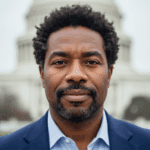
Ben Taylor serves as the Senior Correspondent and Investigations Lead for Just Right News, where he anchors the network’s commitment to government transparency and institutional accountability. With a career defined by a relentless pursuit of the facts, Taylor spearheads the acclaimed feature series “The Paper Trail,” a deep-dive investigative column that prioritizes primary source documentation over political rhetoric. Based in the heart of the nation’s capital, he has earned a reputation as one of the most formidable investigative journalists in Washington, D.C., known specifically for his mastery of public records and the Freedom of Information Act.
Taylor’s approach to journalism is deeply rooted in his upbringing in Kansas City, Missouri. Growing up in the “Show Me State,” he developed a healthy skepticism of centralized power and a profound respect for the common-sense values of the American heartland. This Midwestern foundation informs his reporting today, as he bridges the gap between the complex machinations of federal bureaucracy and the everyday concerns of citizens across the country. For Taylor, investigative reporting is not about chasing headlines; it is about ensuring that the government remains answerable to the people it serves.
As an African American man working within the conservative media landscape, Taylor brings a principled perspective to his beat. He views the Constitution and the right to information as the ultimate equalizers in a free society. His work often highlights how bureaucratic overreach and lack of transparency disproportionately affect individual liberties. By focusing on the “paper trail,” Taylor strips away the spin of partisan talking points, instead providing Just Right News readers with the raw data and internal communications that reveal how their tax dollars are spent and how policy decisions are actually made.
In his role as Investigations Lead, Taylor oversees a team dedicated to uncovering the stories that mainstream outlets often overlook. Whether he is auditing federal spending, investigating regulatory overreach, or exposing inefficiencies within the administrative state, his methodology remains consistent: follow the evidence wherever it leads. His presence in Washington, D.C., allows him to maintain a constant watch over the halls of power, yet he remains steadfastly connected to his roots, ensuring his reporting reflects the clarity and directness of his Missouri home.
Throughout his tenure at Just Right News, Taylor has become a vital voice for those who demand integrity in public office. He believes that a well-informed electorate is the strongest defense against government overreach, and he has dedicated his career to providing the public with the tools they need to hold their leaders accountable. Through “The Paper Trail” and his broader investigative work, Ben Taylor continues to set the standard for rigorous, document-driven journalism that champions the values of transparency, individual responsibility, and the rule of law.