

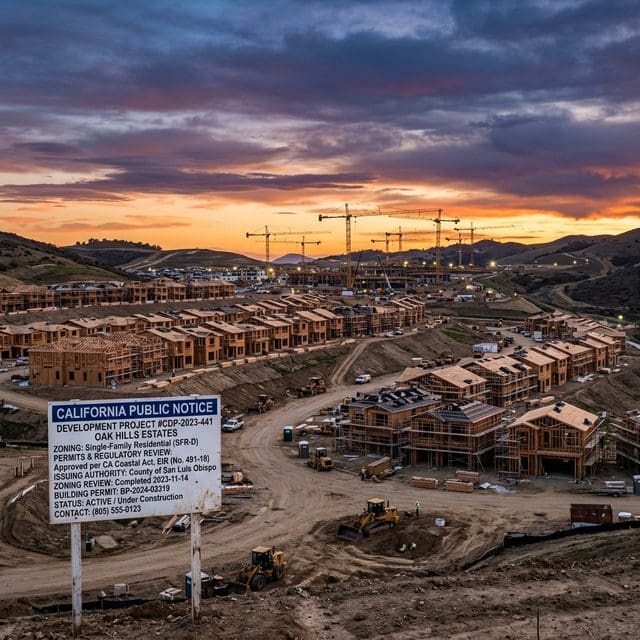
Xavier Becerra and Steve Hilton clashed over housing supply and regulatory caps as institutional investors like Berkshire Hathaway increase their dominance in the residential market.
The California gubernatorial race reached a critical juncture on September 30 as candidates Xavier Becerra and Steve Hilton presented starkly different visions for the state’s housing and infrastructure future. In their only scheduled fall debate, the two men addressed the primary concern of the California taxpayer: the crushing cost of living. The exchange highlighted a fundamental disagreement over whether the solution to the housing crisis lies in expanded government assistance or a radical reduction in bureaucratic overreach.
Xavier Becerra, the current U.S. Secretary of Health and Human Services, pledged to at least double homebuilding across the state. His platform focuses on streamlining the permitting process and expanding down-payment assistance programs to help middle-class families enter the market. Becerra also signaled a move to limit Wall Street competition for single-family homes, a policy aimed at protecting individual buyers from being outbid by institutional capital. On the issue of homelessness, Becerra vowed to clear encampments while expanding mental health and addiction services, though he blamed the Trump administration for previously blocking federal funding for local homelessness agencies.
Steve Hilton, a former advisor to David Cameron, offered a counter-proposal centered on fiscal discipline and deregulation. Hilton proposed a hard cap on government fees and regulations, suggesting they should not exceed $50,000 for a new home. In a move to preserve local sovereignty and suburban character, Hilton stated he would stop the construction of high-density apartment buildings in suburban areas. Instead, he proposed the creation of ten entirely new cities to accommodate the state’s growing population. Hilton was sharply critical of the current administration’s record, attacking Becerra for his past praise of Governor Gavin Newsom’s homelessness efforts, which Hilton characterized as insufficient.
While the political debate focused on future policy, the private sector is already adjusting to a volatile economic landscape. Berkshire Hathaway has significantly increased its bet on the American housing market, purchasing an additional $136 million in Lennar Corp stock. This brings Warren Buffett’s conglomerate to an 11% stake, totaling approximately 25.9 million shares. This massive accumulation puts Berkshire in a position to potentially overtake Vanguard Group as the largest shareholder of the nation’s leading homebuilder. However, the market remains under pressure; Lennar stock saw an intraday drop of nearly 1.8% on October 1, following a third-quarter report that showed a 9% decline in new orders.
The broader economic reality for Americans remains defined by high mortgage rates and affordability constraints. With rates consistently reported above 7%, homebuilders like Lennar have been forced to rely on price cuts and financial incentives to maintain sales volume. Consequently, Lennar has lowered its 2026 delivery guidance to between 80,000 and 81,000 homes. This cooling in the construction sector comes as the Department of Housing and Urban Development (HUD) reopens its fiscal 2026 Continuum of Care competition, offering $4 billion nationally to address homelessness. Local agencies in Los Angeles and Pasadena are currently racing to meet application deadlines to secure these federal funds.
As the election approaches, the choice for voters remains a question of how to best unlock the housing market. Whether through Becerra’s managed growth and subsidy programs or Hilton’s deregulatory caps and new-city initiatives, the outcome will dictate the state’s infrastructure and mobility for a generation. For now, the intersection of high interest rates and institutional consolidation continues to shape the reality of where and how Americans live.

Deborah Cole serves as a Senior Correspondent for Just Right News, where she spearheads the network’s coverage of Housing, Infrastructure, and Mobility. With a career defined by a commitment to rigorous reporting and a focus on the fundamental pillars of American community life, Deborah brings a principled perspective to the complex issues that dictate how and where we live. Her work is grounded in the belief that sound policy, fiscal responsibility, and respect for private property are the essential foundations of a prosperous society.
Originally from Boston, Massachusetts, Deborah’s upbringing in one of the nation’s oldest and most historically significant cities deeply influenced her professional trajectory. Growing up amidst the architectural legacy and dense urban planning of New England, she developed an early appreciation for the importance of durable infrastructure and the role of local tradition in shaping neighborhoods. Her perspective is informed by the classic American values of her hometown—hard work, community cohesion, and a healthy skepticism of top-down bureaucratic mandates that often overlook the unique needs of individual citizens.
Today, Deborah operates from her base in Austin, Texas, a city that serves as a primary laboratory for her reporting. Austin’s rapid expansion and its status as a hub for innovation and migration provide her with a front-row seat to the most pressing challenges in modern infrastructure and housing. From the Lone Star State, she chronicles the tensions between rapid growth and the preservation of the American Dream, often highlighting how market-driven solutions and deregulation can address the housing shortages that plague many of the country’s metropolitan areas.
At Just Right News, Deborah is perhaps best known for her signature feature series, “Where We Live.” Through this platform, she explores the intersection of public policy and private life, moving beyond mere statistics to tell the stories of families, small business owners, and local developers. Her reporting frequently highlights the importance of mobility—not just in terms of transportation and transit, but as a vehicle for economic opportunity and social stability. She remains a staunch advocate for the taxpayer, consistently scrutinizing government spending on large-scale projects and advocating for transparency in how infrastructure dollars are allocated.
Deborah’s beat is more than just a collection of policy topics; it is an investigation into the physical and legal structures that allow families to flourish. Whether she is reporting on the impact of zoning laws on suburban development or the necessity of maintaining the nation’s highway systems, her work is characterized by a dedication to the facts and a respect for the constitutional principles that protect the rights of homeowners.
As a Senior Correspondent, Deborah Cole continues to be a vital voice for Just Right News, providing the audience with the clarity and context needed to navigate an ever-changing landscape. Her reporting ensures that the values of individual liberty and local sovereignty remain at the forefront of the national conversation regarding the future of our cities and towns. Through her tireless efforts, she remains committed to informing the public on the issues that hit closest to home.