

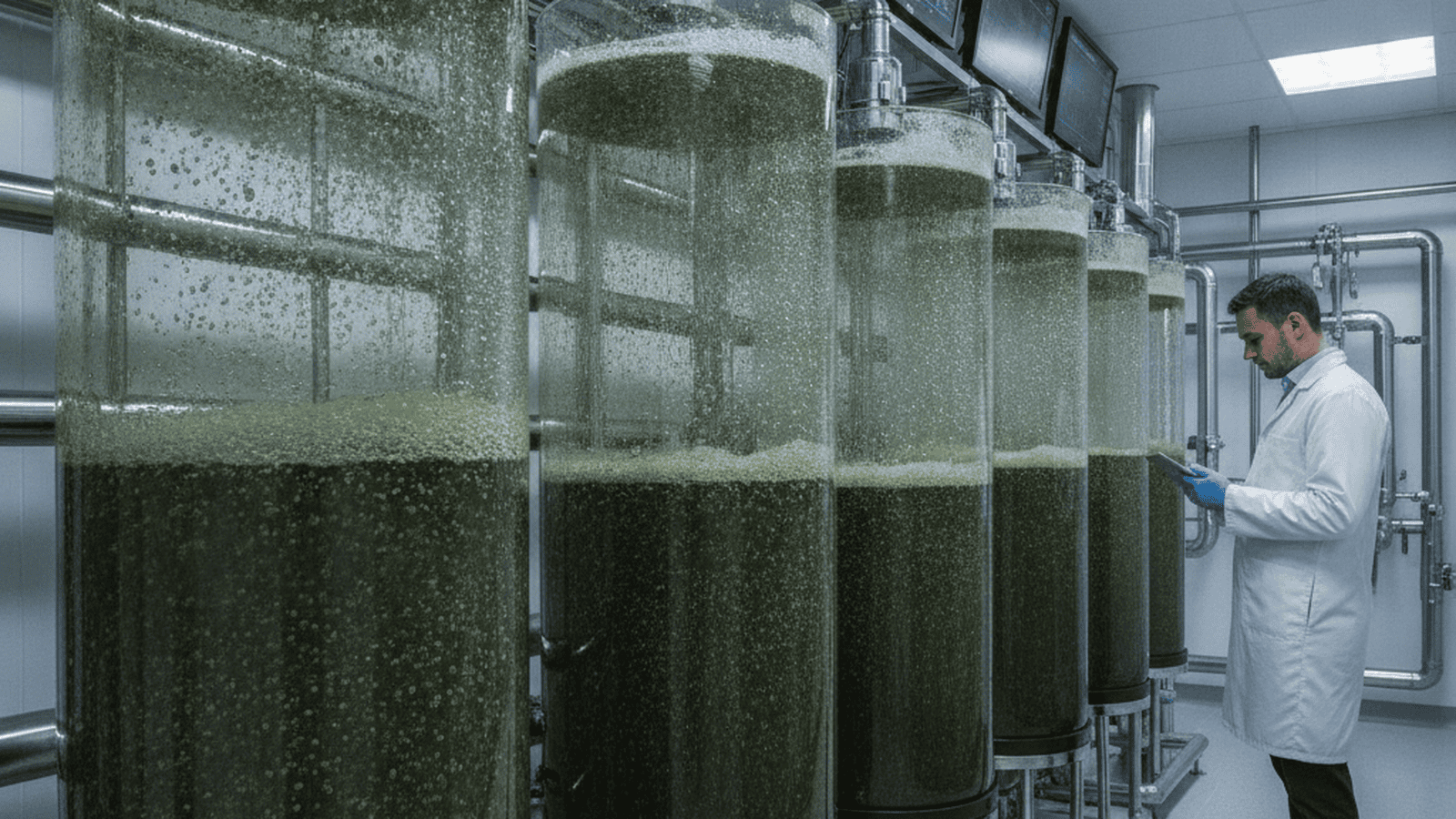
Researchers at Windfall Bio have developed a proprietary microbial solution that captures methane emissions and converts them into high-value organic fertilizer. This technology addresses both the urgent need for methane mitigation and the global demand for sustainable agricultural inputs.
TLDR: A California-based startup has successfully deployed specialized microbes to transform methane emissions from industrial and agricultural sources into nutrient-rich organic fertilizer. By capturing one of the most potent greenhouse gases at the source, the technology offers a dual-benefit solution for climate mitigation and sustainable food production.
Methane represents one of the most significant challenges in the global effort to curb climate change. While carbon dioxide remains the most prevalent greenhouse gas, methane possesses a warming potential more than 80 times greater than CO2 over a 20-year period. Addressing methane leaks from landfills, oil and gas operations, and livestock has historically been difficult due to the dilute nature of the gas and the high cost of traditional capture technologies. Most existing solutions involve flaring, which converts methane to CO2, or expensive cryogenic separation, which is often economically unfeasible for smaller emission sources.
In a significant advancement for climate-focused biotechnology, the California-based firm Windfall Bio has developed a nature-based solution to this problem. Their researchers have identified and optimized specific strains of methanotrophs—naturally occurring bacteria that consume methane as their primary energy source. Unlike previous attempts to utilize these microbes in large, centralized bioreactors that require sterile conditions and high energy inputs, this new approach utilizes a decentralized, low-cost system that can be deployed directly at the source of emissions.
The process begins by introducing the proprietary microbial “mems” into a substrate, which is then exposed to methane-rich air. As the bacteria consume the methane, they simultaneously pull nitrogen from the atmosphere, incorporating these elements into their cellular structure through a process known as biological nitrogen fixation. This biological activity transforms the gas into a solid, nutrient-dense organic matter. The resulting product is a high-quality fertilizer that can be used immediately in agricultural applications, creating a circular economy model for waste gas. This effectively turns a potent pollutant into a valuable commodity for farmers.
Field trials have demonstrated that this microbial system is highly efficient even at low concentrations of methane. Traditional thermal oxidation or chemical catalysts often require high-purity methane streams to remain viable, but the biological approach thrives in the variable environments found on dairy farms and at wastewater treatment plants. By converting a liability—methane emissions—into an asset—fertilizer—the technology provides a clear economic incentive for industries to adopt climate-friendly practices without relying solely on government subsidies or carbon credits.
The scalability of this solution is a primary focus for the private-sector lab. Because the system does not require expensive infrastructure, high-pressure vessels, or specialized technicians to operate, it can be integrated into existing waste management workflows with minimal disruption. This modularity allows for rapid deployment across diverse sectors, including agriculture, waste management, and energy production. If adopted at scale, this technology could potentially mitigate millions of tons of methane emissions annually, providing a significant lever in the fight against rapid global warming.
Furthermore, the organic fertilizer produced by the methanotrophs offers a sustainable alternative to synthetic fertilizers. Most commercial fertilizers are produced using the Haber-Bosch process, which is energy-intensive and relies heavily on natural gas. Synthetic fertilizer production is itself a major source of carbon emissions and environmental runoff that causes oceanic dead zones. By replacing these products with microbially derived nutrients, the technology provides a secondary layer of environmental benefit, reducing the overall carbon footprint and ecological impact of the global agricultural supply chain.
Future research at the lab is focused on further optimizing the nitrogen-fixation rates of the microbes to increase the potency and consistency of the final fertilizer product. Scientists are also exploring the potential for these bacteria to consume other volatile organic compounds, which could expand the technology’s utility in industrial air purification and odor control. As global regulations on methane emissions continue to tighten, biological solutions like these represent a critical bridge between industrial productivity and environmental stewardship.

Mark Davis serves as the Senior Correspondent for Energy, Climate, and Resource Economics at Just Right News. In an era where the conversation around the environment is often dominated by alarmism and top-down mandates, Mark provides a vital, market-oriented perspective on the complex forces shaping our world. As the lead voice behind the acclaimed feature series “Power and the Planet,” he explores the intersection of environmental policy, global energy markets, and the fundamental economic principles that sustain modern civilization.
Mark’s pragmatic approach to resource management was forged in the high desert of his hometown, Albuquerque, New Mexico. Growing up in a region defined by both its breathtaking natural beauty and its rugged, resource-dependent landscape, he developed an early appreciation for the delicate balance between conservation and utilization. New Mexico’s unique position as a hub for both traditional energy production and cutting-edge scientific research provided Mark with a front-row seat to the evolution of the American energy sector. This upbringing instilled in him a deep-seated belief that true environmental stewardship is inseparable from economic prosperity and technological innovation.
Now based in Boulder, Colorado, Mark operates from the heart of the nation’s climate research community. While Boulder is often seen as a bastion of environmental idealism, Mark utilizes his post to provide a necessary counterweight, grounded in the realities of resource economics. He understands that energy policy does not exist in a vacuum; it has tangible consequences for the American taxpayer, the stability of the national power grid, and the strength of the domestic manufacturing sector. By reporting from the front lines of the climate debate, he is able to challenge prevailing narratives with hard data and a commitment to the principles of the free market.
Throughout his tenure at Just Right News, Mark has distinguished himself by focusing on the “Resource Economics” aspect of his beat. He frequently highlights the hidden costs of rapid energy transitions and advocates for an “all-of-the-above” energy strategy that prioritizes American energy independence. His work often shines a light on the geopolitical implications of resource scarcity, arguing that a secure nation must first be an energy-secure nation. Whether he is analyzing the impact of federal land-use regulations or investigating the supply chains required for new technologies, Mark remains focused on how policy decisions affect the lives and livelihoods of everyday citizens.
In “Power and the Planet,” Mark continues to bridge the gap between complex scientific concepts and the economic realities facing the country. He rejects the false choice between a healthy environment and a thriving economy, instead seeking out solutions that leverage American ingenuity and private-sector competition. For Mark, reporting on the climate is not about following the latest trends, but about ensuring that the conversation remains tethered to the foundational values of liberty, property rights, and fiscal responsibility. His contributions ensure that Just Right News readers receive a comprehensive, clear-eyed view of the challenges and opportunities defining the future of our planet.