

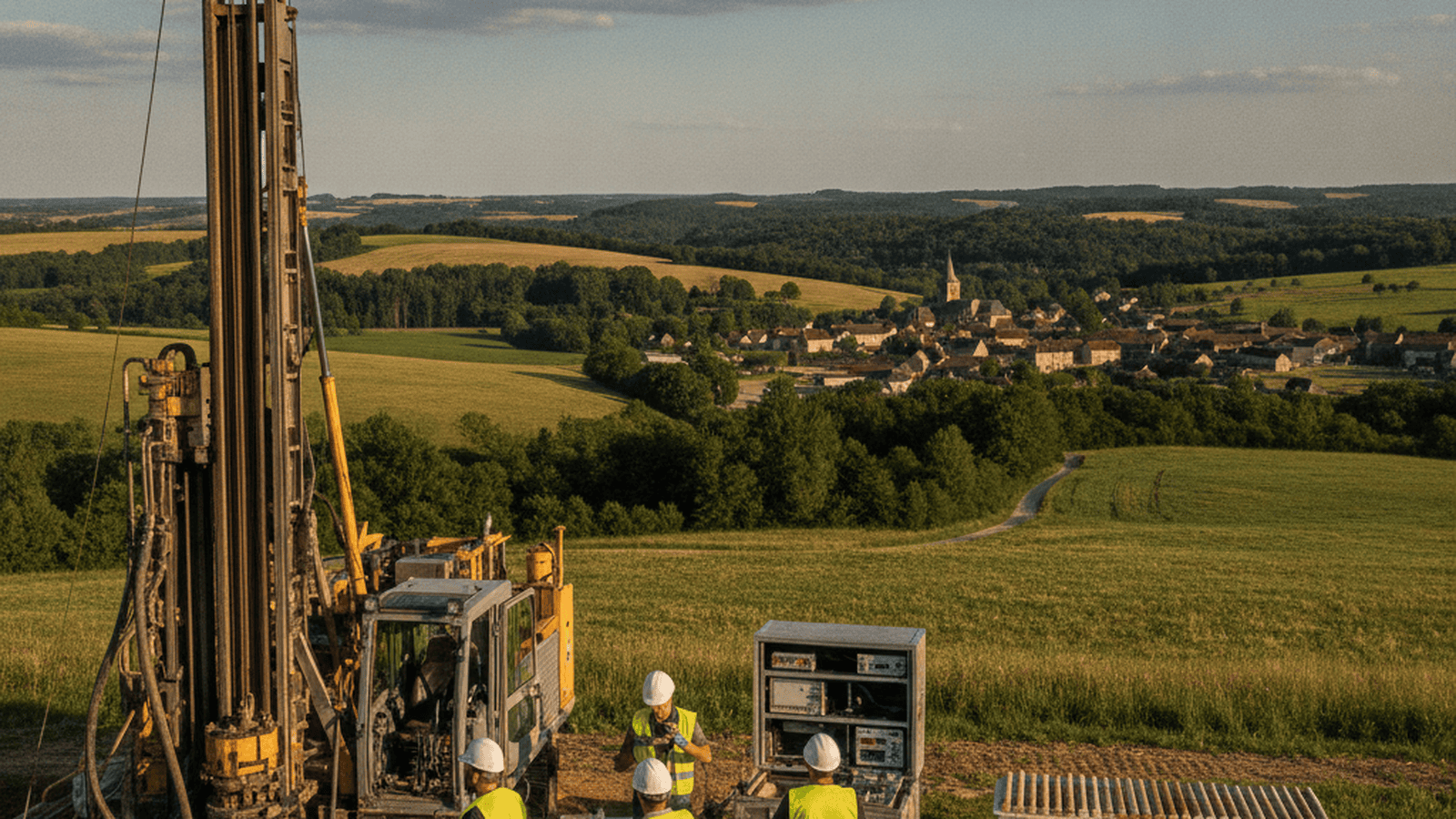
Researchers in France’s Lorraine region discovered a massive deposit of naturally occurring “white” hydrogen while surveying for methane. This find could represent one of the largest carbon-free energy reserves in the world, offering a low-cost alternative to manufactured hydrogen.
TLDR: Geologists in France have identified a massive underground reservoir of natural “white” hydrogen, estimated at up to 46 million tons. This discovery in the Lorraine region could revolutionize the energy sector by providing a carbon-neutral fuel source that requires no energy-intensive electrolysis to produce.
Geologists conducting routine surveys in the Lorraine region of northeastern France have identified what appears to be a massive reservoir of naturally occurring hydrogen. The discovery occurred during a mission led by researchers from the University of Lorraine and the French National Centre for Scientific Research. While the team was initially searching for methane deposits, their sensors began recording unexpectedly high concentrations of hydrogen gas dissolved in the groundwater at significant depths. This find has sparked intense interest from energy economists looking for low-carbon alternatives to fossil fuels.
The presence of “white hydrogen”—hydrogen that exists naturally in the Earth’s crust—has long been theorized, but large-scale deposits are rarely documented. In the Lorraine basin, the concentration of the gas increased the deeper the researchers drilled. At 200 meters, the concentration was negligible, but it rose to 15 percent at 1,100 meters and exceeded 20 percent at 1,250 meters. These readings suggest that at depths of 3,000 meters, the hydrogen concentration could surpass 90 percent, indicating a highly pure source.
Geological analysis indicates that the hydrogen is produced through a continuous chemical reaction involving water and iron-rich minerals. When water molecules interact with iron carbonates in the subsurface rocks, the oxygen is stripped away, leaving pure hydrogen gas. This process, known as serpentinization or oxidation, creates a renewable flow of gas that could theoretically be harvested for decades. Unlike green hydrogen, which requires electricity to split water, or grey hydrogen, which is derived from natural gas, white hydrogen requires no industrial processing to create.
Preliminary estimates suggest the Lorraine deposit could contain between 6 million and 46 million metric tons of hydrogen. If these figures are confirmed, the site would represent the largest known reserve of natural hydrogen in the world. For comparison, the global production of hydrogen currently stands at approximately 90 million tons per year, most of which is produced using carbon-intensive methods. A single large-scale natural source could significantly disrupt the economics of the clean energy market by providing a steady supply of carbon-neutral fuel.
The logistical advantages of white hydrogen are substantial for the European energy sector. Because the gas is already in its molecular form, the primary cost of acquisition involves drilling and extraction rather than chemical synthesis. This could lower the price of hydrogen to roughly one dollar per kilogram, making it competitive with fossil fuels. Furthermore, the Lorraine region possesses existing industrial infrastructure that could be repurposed for gas transport and storage, reducing the need for new, expensive pipelines.
Despite the promise of the find, technical challenges remain before commercial extraction can begin. Researchers must still verify that the hydrogen is distributed evenly across the basin and determine the most efficient way to bring the gas to the surface without contamination. Current drilling technology must be adapted to handle the specific pressures and chemical properties of high-concentration hydrogen at extreme depths. Ensuring the integrity of the wellbores is critical to prevent the gas from leaking into the atmosphere during the extraction process.
Future expeditions will involve drilling a specialized borehole to reach 3,000 meters, allowing for direct sampling of the highest-concentration zones. This data will help scientists understand the total volume of the reservoir and the rate at which the gas is being replenished by geological activity. If successful, the Lorraine project could serve as a blueprint for identifying similar geological formations globally, potentially unlocking a new category of carbon-neutral energy. The discovery marks a significant milestone in the quest to find sustainable, primary energy sources that do not rely on solar or wind variability.

Mark Davis serves as the Senior Correspondent for Energy, Climate, and Resource Economics at Just Right News. In an era where the conversation around the environment is often dominated by alarmism and top-down mandates, Mark provides a vital, market-oriented perspective on the complex forces shaping our world. As the lead voice behind the acclaimed feature series “Power and the Planet,” he explores the intersection of environmental policy, global energy markets, and the fundamental economic principles that sustain modern civilization.
Mark’s pragmatic approach to resource management was forged in the high desert of his hometown, Albuquerque, New Mexico. Growing up in a region defined by both its breathtaking natural beauty and its rugged, resource-dependent landscape, he developed an early appreciation for the delicate balance between conservation and utilization. New Mexico’s unique position as a hub for both traditional energy production and cutting-edge scientific research provided Mark with a front-row seat to the evolution of the American energy sector. This upbringing instilled in him a deep-seated belief that true environmental stewardship is inseparable from economic prosperity and technological innovation.
Now based in Boulder, Colorado, Mark operates from the heart of the nation’s climate research community. While Boulder is often seen as a bastion of environmental idealism, Mark utilizes his post to provide a necessary counterweight, grounded in the realities of resource economics. He understands that energy policy does not exist in a vacuum; it has tangible consequences for the American taxpayer, the stability of the national power grid, and the strength of the domestic manufacturing sector. By reporting from the front lines of the climate debate, he is able to challenge prevailing narratives with hard data and a commitment to the principles of the free market.
Throughout his tenure at Just Right News, Mark has distinguished himself by focusing on the “Resource Economics” aspect of his beat. He frequently highlights the hidden costs of rapid energy transitions and advocates for an “all-of-the-above” energy strategy that prioritizes American energy independence. His work often shines a light on the geopolitical implications of resource scarcity, arguing that a secure nation must first be an energy-secure nation. Whether he is analyzing the impact of federal land-use regulations or investigating the supply chains required for new technologies, Mark remains focused on how policy decisions affect the lives and livelihoods of everyday citizens.
In “Power and the Planet,” Mark continues to bridge the gap between complex scientific concepts and the economic realities facing the country. He rejects the false choice between a healthy environment and a thriving economy, instead seeking out solutions that leverage American ingenuity and private-sector competition. For Mark, reporting on the climate is not about following the latest trends, but about ensuring that the conversation remains tethered to the foundational values of liberty, property rights, and fiscal responsibility. His contributions ensure that Just Right News readers receive a comprehensive, clear-eyed view of the challenges and opportunities defining the future of our planet.