

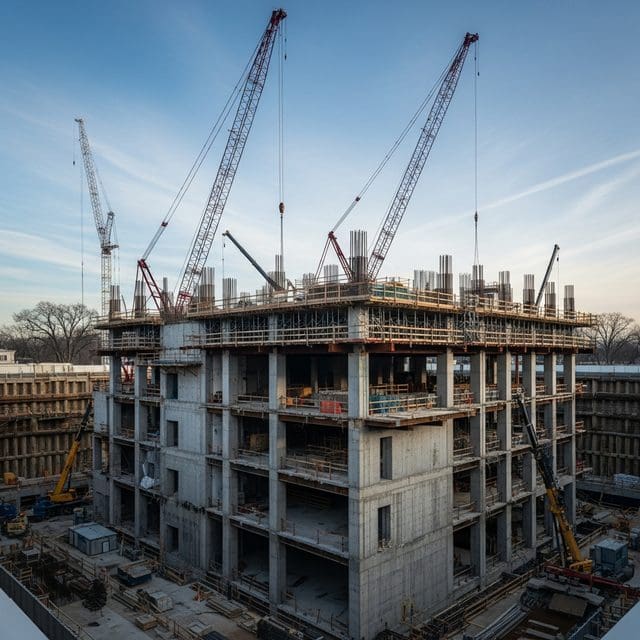
Solicitor General D. John Sauer filed an emergency application asking the Supreme Court to block a lower-court injunction halting the $400 million East Wing project, citing national security and executive authority.
The Trump administration filed an emergency application with the U.S. Supreme Court on August 14, seeking to overturn a lower-court injunction that halted construction on a $400 million ballroom project at the White House East Wing. Solicitor General D. John Sauer requested that the justices intervene before the D.C. Circuit’s order takes effect on August 21, framing the dispute as a critical test of separation of powers. The administration contends that the project is not merely a social venue, but an integral component of the executive branch’s security infrastructure.
The project involves a 90,000-square-foot facility that is currently 65% complete. According to court filings, the construction includes a five-story-deep superstructure reaching 70 feet high. Sauer argued that the facility is “absolutely necessary” for the president’s protection, citing recent assassination attempts and describing the structure as a shield for a military installation situated beneath it. By framing the ballroom as part of an “integrated military complex,” the administration is attempting to elevate the dispute beyond simple zoning or preservation laws into the realm of national security and commander-in-chief authorities.
This legal escalation follows a 2–1 decision by the U.S. Court of Appeals for the D.C. Circuit, which held that the executive branch lacks the unilateral authority to raze and replace portions of the White House without specific authorization from Congress. The appellate majority, led by Judges Patricia Millett and Bradley Garcia, maintained that the power to decide on such massive construction projects rests with the legislative branch. In his dissent, Judge Neomi Rao signaled support for executive discretion in matters of facility security, a position the administration has now adopted in its petition to the high court.
In the Supreme Court application, Sauer characterized the lower court’s ruling as “judicial overreach” that threatens to turn a single district judge into the sole arbiter of White House safety requirements. He warned against a precedent of “construction-by-injunction,” arguing that requiring congressional approval for security renovations grants the legislative branch “undue influence” over core executive functions. The administration further dismissed the claims of historic-preservation plaintiffs, describing their objections to the demolition of the original East Wing as “subjective displeasure” rather than concrete legal injury.
The ballroom conflict sits alongside several other significant developments involving federal authority and executive mandates. On the same day the filing was submitted, the Trump administration referred dozens of hospitals and clinics to the Department of Justice for alleged fraudulent billing related to transgender health procedures. Simultaneously, the President ordered the U.S. Navy to revert from electromagnetic catapult systems to traditional steam catapult systems on aircraft carriers, reflecting a broader trend of executive intervention in technical and administrative standards. In a separate legal victory for the administration’s allies, a Nevada judge dismissed criminal charges against six Republicans accused of being fake electors in the 2020 election, citing insufficient evidence.
As the August 21 deadline approaches, the Supreme Court must decide whether to allow the project to continue while the broader legal merits are debated. The outcome will likely define the boundaries of executive power regarding the management of federal property and the degree to which a president can bypass the traditional appropriations process by citing security necessities. For now, the half-finished superstructure stands as a physical manifestation of the ongoing tug-of-war between the branches of government over the limits of the administrative state and the sanctity of the Beltway’s most famous residence.

Miles Harrington serves as the Senior Correspondent for Federal Systems & Executive Power at Just Right News, where he brings a disciplined, constitutionalist lens to the inner workings of the American government. With a focus on the mechanics of the federal bureaucracy and the limits of executive authority, Harrington has established himself as a vital voice for readers who value transparency, accountability, and the preservation of the separation of powers.
A native of Richmond, Virginia, Harrington’s perspective is deeply rooted in the traditions of the Old Dominion. Growing up in a city defined by its historical significance and its role as a center of American jurisprudence, he developed an early appreciation for the foundational principles of the Republic. His upbringing in Richmond—a place where the legacy of the Founding Fathers is woven into the landscape—instilled in him a belief that the federal government should remain within its constitutional bounds. This background informs his skepticism of centralized overreach and his commitment to reporting on the ways in which the administrative state impacts the lives of everyday citizens.
In his current role, Harrington specializes in the complexities of federal systems. He doesn’t just report on the headlines of the day; he digs into the structural shifts within the executive branch that often go unnoticed by the mainstream press. Whether he is analyzing the implications of a new federal regulation or investigating the expansion of agency jurisdiction, his work is characterized by a rigorous adherence to the facts and a dedication to the rule of law.
Harrington is perhaps best known for his signature feature series, “How Washington Works.” Through this ongoing project, he demystifies the often-opaque processes of the nation’s capital, pulling back the curtain on the “Deep State” and the unelected officials who wield significant influence over national policy. By breaking down complex legislative maneuvers and executive orders, he empowers Just Right News readers to understand the true levers of power in Washington. His reporting serves as a necessary check on the federal government, ensuring that the actions of those in power are held up to the light of public scrutiny.
Now based in Washington, D.C., Harrington operates at the epicenter of the political world, yet he remains intentionally distanced from the “Beltway bubble.” His proximity to the halls of power allows him to maintain a robust network of sources across the federal landscape, but his heart remains in the principled conservatism of his Virginia roots. He views his role not merely as a reporter, but as a steward of the public trust, dedicated to providing the clarity and context that conservative voters need to navigate an increasingly complex political environment.
Through his sharp analysis and unwavering commitment to the truth, Miles Harrington continues to be a cornerstone of the Just Right News team. His work ensures that the principles of limited government and executive restraint remain at the forefront of the national conversation, providing a crucial service to those who believe in a government that is truly of, by, and for the people.