

Federal health officials are struggling to contain simultaneous Cyclospora and Salmonella outbreaks that have sickened thousands, devastating restaurant traffic and raising questions about the security of the American fresh produce supply chain.
The American dinner table is facing a crisis of confidence as federal regulators scramble to trace the source of two major foodborne illness outbreaks. According to the latest data from the Food and Drug Administration (FDA), a massive Cyclospora outbreak linked to iceberg lettuce has now reached staggering proportions. While official dashboard updates on August 5 confirmed 6,358 illnesses and 278 hospitalizations, broader market reports from Bloomberg suggest the total number of affected individuals has surpassed 10,000 across 15 states. The human cost is mounting, with at least two deaths currently attributed to the parasite.
The impact on the private sector has been immediate and severe. Sweetgreen, a prominent salad chain, recently slashed its full-year sales outlook, citing a sharp decline in customer traffic as diners avoid fresh greens. The company now anticipates comparable sales to drop by as much as 8%, doubling its previous loss projections. This consumer retreat underscores the fragility of the agricultural supply chain when federal oversight fails to prevent contamination at the source. Investors are taking note, as restaurant stocks across the S&P 500 face downward pressure despite the broader index reaching new highs driven by the artificial intelligence boom.
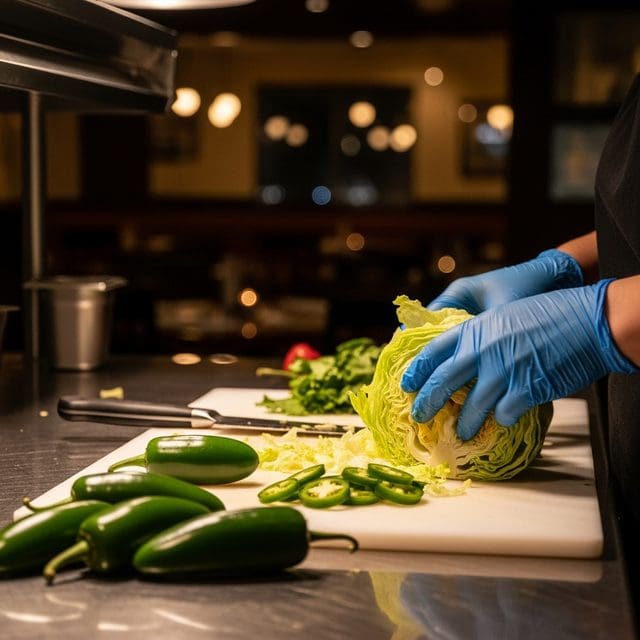
Simultaneously, the FDA is investigating a Salmonella Javiana outbreak tied to jalapeños that has spread to 27 states. As of early August, 345 illnesses and 36 hospitalizations have been confirmed, with onset dates ranging from June 19 to July 20, 2026. Investigators noted that 93% of interviewed patients reported eating at Mexican-style restaurants prior to falling sick. The implicated peppers were distributed nationwide to various food service companies and restaurants, highlighting the difficulty of isolating contaminated batches once they enter the commercial stream. A new Cyclospora investigation was also added to the FDA dashboard on August 5, involving 10 cases with no identified product yet, indicating the situation is still actively developing.
While the FDA manages these active crises, the Environmental Protection Agency (EPA) faces growing scrutiny over long-term agricultural safety. The agency recently approved three new herbicides, even as concerns mount regarding PFAS—so-called ‘forever chemicals’—contaminating food crops and rural waterways. For American farmers already dealing with shifting trade policies and geopolitical instability, these regulatory hurdles add another layer of operational uncertainty. This uncertainty is reflected in recent reports of increased C-suite anxiety across the agricultural and energy sectors, even as energy companies posted a 42.5% revenue gain in the second quarter of 2026.
International agricultural tensions are also rising, providing a stark contrast to the domestic situation. In India, the Samyukta Kisan Morcha (SKM) has called for nationwide protests, alleging that paddy farmers face losses exceeding ₹3 trillion due to the Union government’s failure to legally guarantee a Minimum Support Price (MSP). Meanwhile, in Kerala, local officials are attempting to pivot toward organic and sustainable models, recently announcing the 2025 State Farm Awards to incentivize rooftop farming and organic coconut cultivation. These global movements reflect a growing demand for local sovereignty over food systems as centralized regulators struggle to maintain safety standards.
Back in the United States, the convergence of labor strikes and food safety failures points to a strained infrastructure. Over 2,000 Teamsters in Contra Costa County have announced an August 19 strike date, while Teamsters at Open Kitchens only recently ratified a contract after a six-week walkout. As the FDA continues to monitor the 10,000-case threshold for Cyclospora, the burden remains on the private sector to restore consumer trust. For the American family, the simple act of ordering a salad or a side of peppers has become a calculated risk that federal regulators have yet to mitigate through effective prevention or swift containment.

Eric Nolan serves as the Senior Correspondent for Food, Water, and Environmental Health at Just Right News, where he brings a principled, common-sense perspective to the most fundamental issues facing the American public. With a career dedicated to uncovering the truth behind the policies that govern our natural resources, Eric has become a trusted voice for readers who value traditional stewardship over bureaucratic overreach. His reporting is defined by a commitment to the idea that true environmentalism is rooted in the protection of the American family and the preservation of the nation’s agricultural heritage.
Raised in Fresno, California, Eric’s worldview was shaped in the heart of the San Joaquin Valley. Growing up in one of the world’s most productive agricultural hubs, he witnessed firsthand the vital connection between the land, the water, and the dinner table. In Fresno, he saw the resilience of farmers and the devastating impact that distant, top-down regulations can have on local communities. This upbringing instilled in him a deep respect for the producers who feed the country and a lifelong skepticism toward the alarmist narratives often pushed by mainstream media. For Eric, environmental health is not an abstract political talking point; it is a matter of ensuring that the people who work the land have the freedom and the resources to do so effectively.
Now based in Eugene, Oregon, Eric operates from a unique vantage point in the Pacific Northwest. Living in a region often defined by intense environmental debate, he provides a necessary counter-narrative to the prevailing trends of the area. From his base in Eugene, he monitors the shifting tides of federal and state policies, ensuring that the voices of rural citizens and property owners are not drowned out by urban activism. His reporting often bridges the gap between the rugged realities of the outdoors and the legislative halls where decisions are made, offering a grounded perspective that prioritizes local sovereignty and practical solutions.
As the lead for the acclaimed feature series “Earth on the Table,” Eric explores the intricate journey of the American food supply. He tackles critical issues such as water rights, soil health, and food security through a lens of national stability and individual liberty. He believes that a healthy environment and a thriving economy are not mutually exclusive, but rather two sides of the same coin of national prosperity. His work consistently highlights how innovation and private-sector ingenuity are the most effective tools for ensuring clean water and a safe food supply, rather than the expansion of the administrative state.
At Just Right News, Eric’s reporting serves as a vital resource for those who seek accountability and transparency. Whether he is investigating the impact of federal land management on local economies or examining the safety of the national food infrastructure, his work remains anchored in the values of heritage and hard work. Eric Nolan continues to be a leading voice in environmental journalism, championing the belief that the best way to protect our natural resources is to empower the people who live and work closest to them.