

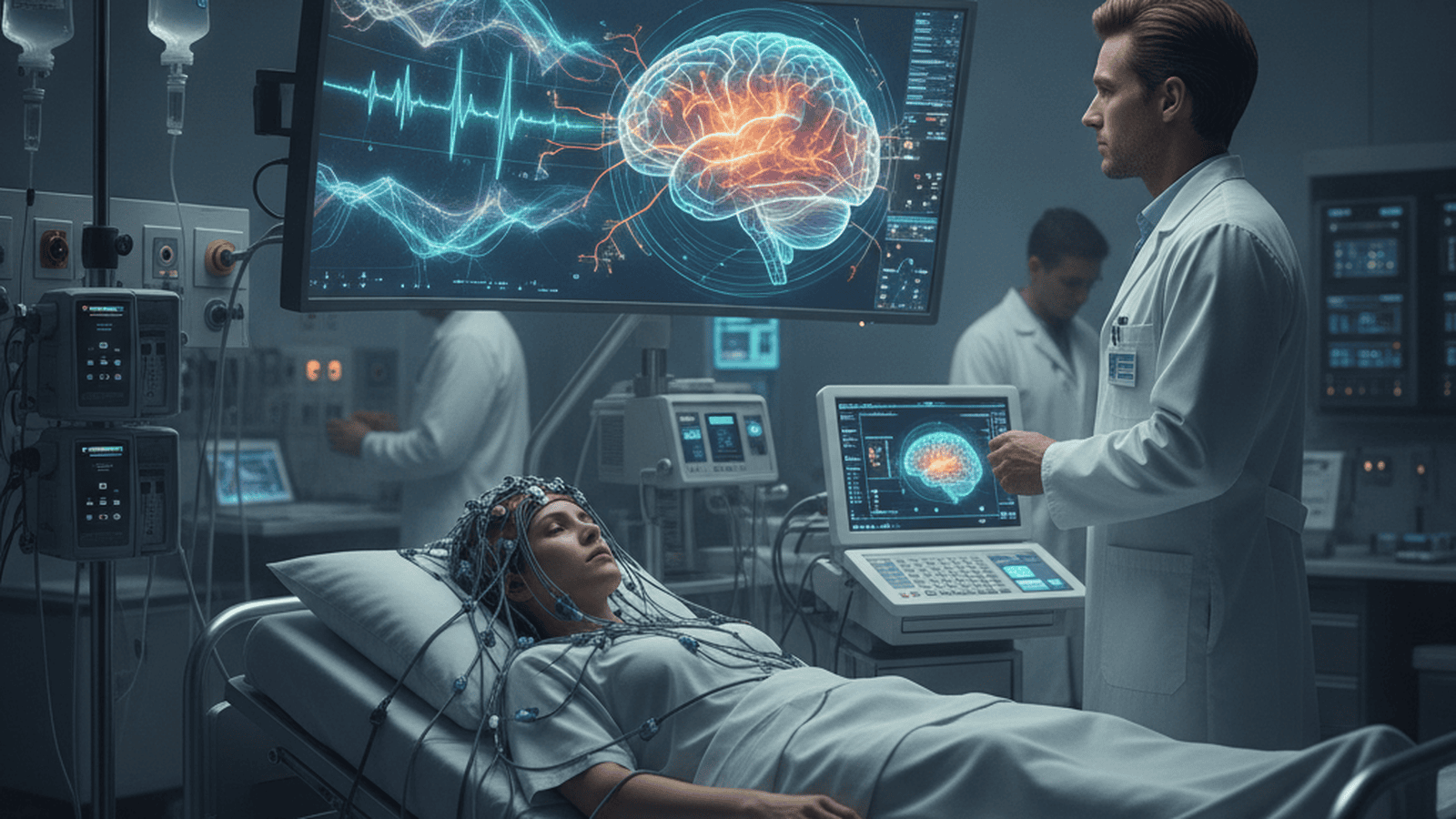
A study led by Columbia University researchers has identified brain activity patterns that reveal “hidden consciousness” in approximately 25% of unresponsive patients with brain injuries. By using EEG technology and machine learning, the team discovered that these patients can follow mental commands despite a lack of physical movement.
TLDR: Researchers have discovered that nearly one in four unresponsive patients with severe brain injuries exhibit “hidden consciousness.” By analyzing EEG data, the team identified brain-wave patterns showing these individuals understand commands despite physical paralysis. This breakthrough suggests a higher potential for recovery and necessitates new clinical protocols for ICU care.
A groundbreaking study led by researchers at Columbia University Vagelos College of Physicians and Surgeons has fundamentally challenged our understanding of the “vegetative state.” By investigating patients in intensive care units at New York-Presbyterian Hospital, the team discovered that approximately one in four individuals who appear entirely unresponsive to physical stimuli actually possess “hidden consciousness.” This condition, known as cognitive motor dissociation (CMD), occurs when a patient’s brain can process language and follow instructions internally, even though the physical pathways required to move the body are severed or damaged.
The research, which involved 241 patients with acute brain injuries, utilized electroencephalography (EEG) to monitor neural activity in real-time. During the study, patients were given verbal commands such as “imagine opening and closing your hand.” While these patients showed no outward signs of movement, machine learning algorithms analyzed their brain-wave patterns to detect signatures of mental effort. The results were startling: 25% of the participants demonstrated brain activity that mirrored healthy individuals performing the same mental tasks. This figure is significantly higher than previous estimates, which placed the prevalence of hidden consciousness between 10% and 15%.
To understand the physiological basis of this phenomenon, the researchers employed advanced magnetic resonance imaging (MRI) to map the brain’s structural connectivity. They found a distinct difference between patients with CMD and those without. Those with hidden consciousness maintained intact neural circuits between the thalamus—the brain’s primary relay station—and the prefrontal cortex, the area responsible for high-level planning and intention. However, the pathways connecting these planning centers to the motor cortex and spinal cord were severely compromised. Essentially, the “command center” of the brain was functioning, but the “output cables” were broken, leaving the patients trapped within their own bodies.
The clinical implications of these findings are transformative. The study tracked the long-term outcomes of the participants and found that patients identified with CMD were twice as likely to achieve functional recovery compared to those who showed no neural response to commands. This suggests that detecting hidden consciousness is not just a matter of academic interest but a vital prognostic tool. It provides a clearer picture of a patient’s potential for rehabilitation and offers hope to families facing agonizing decisions about continuing life support.
Furthermore, the discovery raises significant ethical considerations for intensive care medicine. If a quarter of unresponsive patients are aware of their surroundings, current protocols for pain management and bedside communication must be re-evaluated. The research team is now focused on making EEG-based consciousness detection more accessible. By refining machine learning models, they hope to provide smaller, non-specialized hospitals with the tools to identify CMD, ensuring that more patients receive the specialized care and rehabilitation they require.
Looking ahead, the researchers are exploring ways to bridge the gap between mental intention and physical action. Potential treatments, including targeted pharmacological interventions and deep-brain stimulation, are being investigated to help restore communication. As our ability to peer into the silent mind improves, the medical community is moving toward a more nuanced and compassionate approach to brain injury. This study serves as a powerful reminder that the absence of evidence for consciousness is not necessarily evidence of its absence, and that many patients currently labeled as “unresponsive” may simply be waiting for a way to be heard.

Susan Carter serves as a Senior Correspondent for Just Right News, where she leads the network’s comprehensive coverage of Health, Medicine, and Public Policy. With a career dedicated to dissecting the complexities of the American healthcare system, Susan brings a principled perspective to the most pressing debates of the day. Her reporting is characterized by a commitment to individual liberty, fiscal responsibility, and a healthy skepticism of government overreach, making her a vital voice for audiences seeking clarity in an increasingly regulated landscape.
Raised in Minneapolis, Minnesota, Susan’s professional outlook is deeply informed by the values of the American heartland. Growing up in the Twin Cities, she witnessed firsthand the importance of community-driven solutions and the resilience of the individual. This Midwestern foundation instilled in her a firm belief that the best answers to public policy challenges often come from local innovation and personal responsibility rather than top-down federal mandates. Her background allows her to translate complex legislative jargon into stories that resonate with families who value common sense and local autonomy.
Now based in Baltimore, Maryland, Susan operates from a unique vantage point at the intersection of medical innovation and urban policy. Living and working in a city renowned for its world-class medical institutions and significant public health challenges, she has a front-row seat to the realities of the modern healthcare landscape. Her proximity to these hubs of research and policy allows her to scrutinize how government intervention affects the quality of care and the freedom of medical professionals. In Baltimore, she sees the tangible results of policy decisions, using the city as a lens through which to examine the broader national health debate and the impact of federal spending on local communities.
As the lead for the acclaimed feature series “The Cost of Care,” Susan dives deep into the economic realities facing patients and providers alike. Her work focuses on the necessity of price transparency, the benefits of market competition, and the preservation of the sacred doctor-patient relationship. She is a staunch advocate for the idea that a well-informed public is the best defense against bureaucratic inefficiency. Through this series, she has exposed the hidden drivers of rising medical expenses, always seeking to empower the individual consumer over the massive institution.
Susan’s reporting on public policy is characterized by a commitment to rigorous inquiry and a focus on constitutional limits. Whether she is analyzing new pharmaceutical regulations, investigating the impact of federal health mandates, or exploring the future of medical technology, her goal remains the same: to provide Just Right News audiences with the facts they need to navigate a complex world. By blending her Midwestern sensibilities with the insights gained from her base in Maryland, Susan Carter has become a trusted authority for those who believe that personal freedom and public health are inextricably linked. Her work continues to challenge the status quo, advocating for a system that respects the taxpayer and prioritizes the patient.