

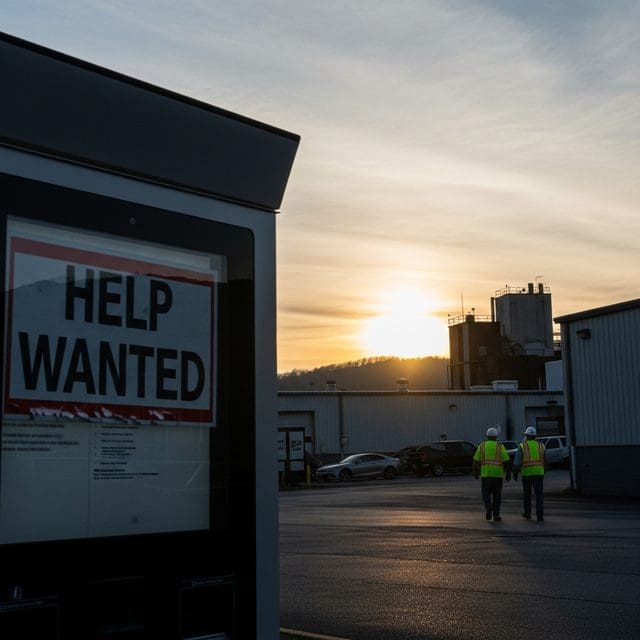
Tepid June job growth and a sharp decline in hospitality employment signal a softening labor market as automation and federal AI priorities begin to redefine the American workforce.
The American labor market is showing visible signs of a summer chill as the June 2026 employment report reveals tepid growth across the board. Most concerning for the service-oriented workforce is the leisure and hospitality sector, which shed 61,000 jobs last month. This decline indicates that the post-pandemic hiring surge has not only peaked but is actively reversing as economic momentum weakens under the weight of persistent inflation and shifting corporate priorities. While the Federal Reserve continues its regulatory oversight, recently terminating enforcement actions with entities like Community Bankshares and BNP Paribas on July 2, the broader economic signal for the average worker remains one of caution.
Ground-level struggles for stable wages continue to manifest in the industrial heartland. In Glen Dale, West Virginia, 201 drivers and warehouse workers at Highline Warren recently voted to join Teamsters Local 697. This move reflects a growing sentiment among industrial workers that collective bargaining remains a necessary tool to secure a foothold in an increasingly volatile economy. However, the push for higher wages is meeting stiff resistance from a shifting technological landscape. The Trump administration’s recent pivot toward prioritizing AI power and global competitiveness over traditional security alliances suggests that the future of the American worker is being weighed against the efficiency of the machine. This is further evidenced by reports that OpenAI is considering handing a 5% equity stake to the U.S. government, signaling a deepening integration between the state and the tech giants driving the automation of manual and clerical tasks.
For the worker in the heartland, this means the dignity of labor is increasingly competing with the cold logic of algorithmic productivity. Even as some sectors, such as healthcare, see clinicians at Mass General Brigham Home Care authorize a seven-day strike starting July 8 after negotiations stalled, the broader trend points toward a labor market where human capital is being devalued in favor of technological supremacy. The administration’s continued assertion of intent to remove Federal Reserve governor Lisa Cook, despite a Supreme Court ruling affirming the Fed’s independence, adds a layer of political uncertainty to the fiscal environment that dictates wage growth and job stability.
International developments provide a stark contrast to the domestic cooling. In Nigeria’s Delta State, the government has moved to institutionalize a 13th-month salary for civil servants as a permanent benefit and ramp up teacher recruitment, a move aimed at stabilizing the local middle class. Meanwhile, in the United Kingdom, the National Union of Journalists, led by Assistant General Secretary Seamus Cooley, continues to navigate the complexities of worker safety and justice. These global shifts highlight a universal truth: whether in the Niger Delta or the Ohio River Valley, the stability of the family unit depends on predictable, fair compensation for honest work. In Australia, the Labor Party is currently navigating the fallout of expense scandals that have kept politicians away from public events, reminding workers that the political class often remains insulated from the economic pressures facing the rank-and-file.
As birth rates fall globally, reshaping the macroeconomy, the temptation for industry to lean on automation or offshore labor remains high. Yet, there is a silver lining for those willing to look toward the trades. Current market data identifies 12 ‘boring’ jobs, ranging from specialized logistics to technical trades, that are currently desperate for workers and pay upwards of $47 an hour. The challenge for the coming year will be ensuring that these essential roles remain accessible to the American people rather than being sacrificed at the altar of global AI dominance. The dignity of the manual trades must be preserved as the bedrock of the American economy, even as the digital tide rises.

Tom Blake serves as the Senior Correspondent for Labor, Wages, and Automation at Just Right News, where he brings a grounded, principled perspective to the most pressing economic issues facing the American heartland. As the lead voice behind the acclaimed feature series “The Price of Work,” Tom focuses his reporting on the intersection of traditional industry and the rapidly evolving technological landscape, always prioritizing the dignity of the individual worker and the health of the American family.
Tom’s deep understanding of the labor market is not merely academic; it is rooted in his upbringing in Detroit, Michigan. Growing up in the shadow of the automotive industry, he witnessed firsthand the triumphs and tribulations of the American blue-collar workforce. He saw how the stability of a manufacturing job could build a community and, conversely, how the erosion of those industries could tear the social fabric apart. This background instilled in him a lifelong respect for the trades and a healthy skepticism toward economic policies that prioritize globalist interests over the well-being of local communities.
Now based in Pittsburgh, Pennsylvania, Tom continues to report from the front lines of the shifting economy. Pittsburgh, a city that has reinvented itself while maintaining its gritty, industrious spirit, provides the perfect vantage point for his beat. From the steel mills that remain to the high-tech robotics labs reshaping the city’s future, Tom explores how automation is changing the nature of employment. His reporting often highlights the tension between innovation and tradition, arguing that while progress is inevitable, it must not come at the expense of the American worker’s ability to provide for their family through honest, meaningful labor.
In his role at Just Right News, Tom has become a vital voice for those who feel overlooked by mainstream economic coverage. He rejects the notion that the decline of American manufacturing is an unavoidable casualty of the modern era. Instead, his work often examines how regulatory overreach, rising energy costs, and the unchecked rise of automation impact the take-home pay of everyday citizens. Through “The Price of Work,” Tom delves into the true cost of economic shifts, looking beyond the raw data to tell the stories of the people behind the statistics.
Tom’s reporting is characterized by a commitment to the conservative values of self-reliance, fiscal responsibility, and the preservation of the American dream. He believes that a strong nation is built on a foundation of stable jobs and fair wages, and his work seeks to hold both government and corporate entities accountable to that standard. Whether he is interviewing a shop floor manager about the implementation of new AI technology or analyzing the impact of wage inflation on small businesses, Tom provides a clear-eyed analysis that resonates with readers who value hard work and common sense.
Through his dedicated coverage, Tom Blake remains a steadfast advocate for the American workforce, ensuring that the voices of those in the industrial heartland are heard loud and clear in the national conversation. His perspective is essential for anyone seeking to understand the complex realities of labor and automation in the twenty-first century.