

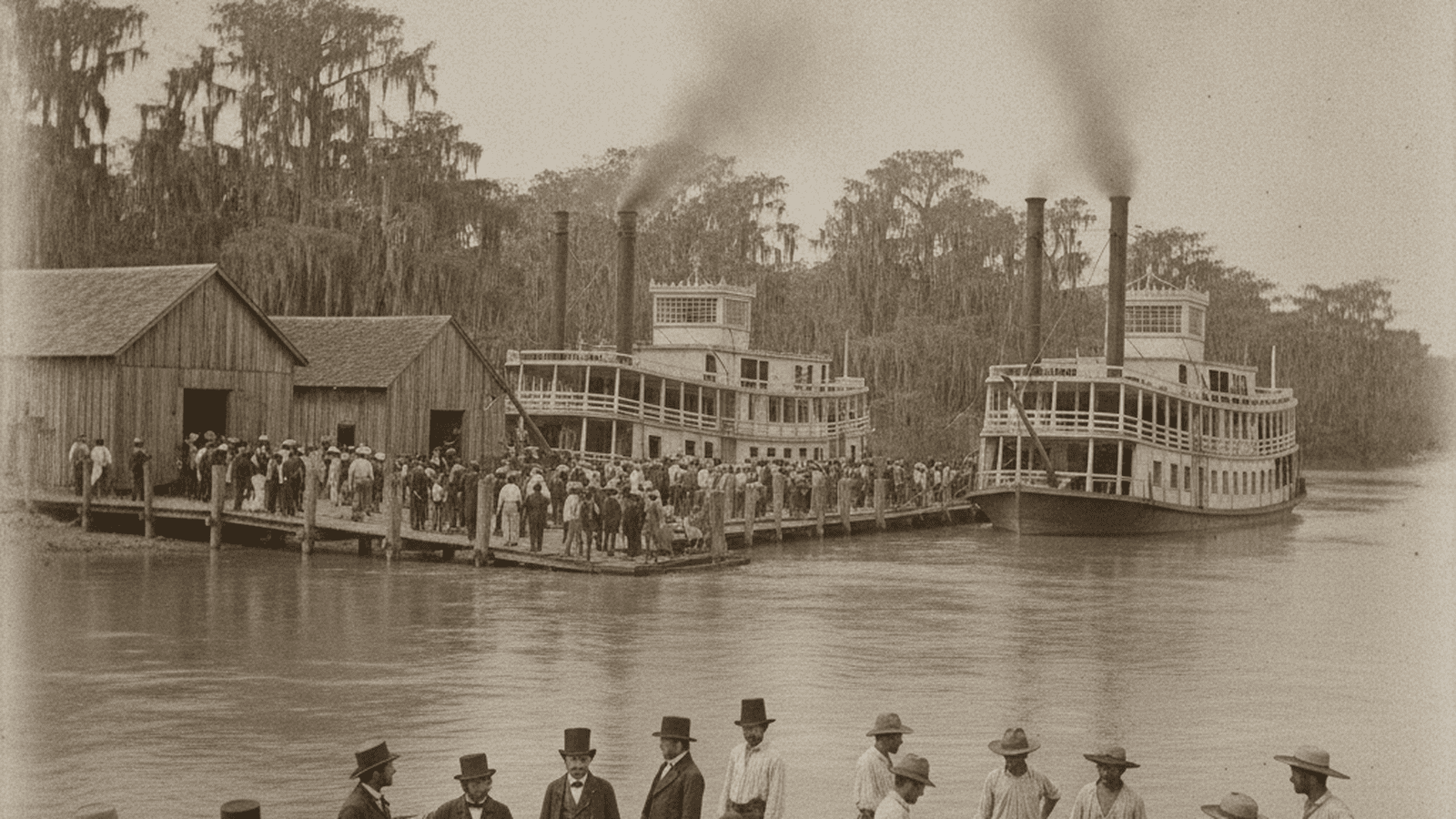
In 1844, a massive voter fraud scheme in Plaquemines Parish, Louisiana, swung the state’s electoral votes toward James K. Polk. The scandal, orchestrated by Democratic operatives using steamboats to transport illegal voters, led to a statewide anti-corruption drive and the adoption of a new United States state constitution in 1845.
TLDR: The 1844 Plaquemines Fraud saw Democratic operatives transport hundreds of unauthorized voters by steamboat to swing Louisiana for James K. Polk. The resulting scandal sparked a major anti-corruption movement, leading to the Louisiana Constitutional Convention of 1845, which implemented stricter residency laws and voter registration reforms.
The presidential election of 1844 stands as a watershed moment in American political history, defined by the high-stakes rivalry between the Whig Party’s legendary statesman Henry Clay and the “dark horse” Democratic nominee James K. Polk. The national debate was dominated by the controversial issues of Texas annexation and westward expansion, making every electoral vote a precious commodity. In Louisiana, the political atmosphere was electric, but the eventual outcome would be forever tainted by a scandal of unprecedented proportions: the Plaquemines Fraud. This orchestrated effort to subvert the democratic process not only handed the state to Polk but also catalyzed a fundamental restructuring of Louisiana’s legal and constitutional framework.
The epicenter of the controversy was Plaquemines Parish, a marshy, sparsely populated region stretching south from New Orleans toward the Gulf of Mexico. On election day, Democratic operatives, reportedly acting under the strategic guidance of the influential political boss John Slidell, executed a brazen scheme to inflate the vote count. They chartered two large steamboats, the Agnes and the Planter, and filled them with hundreds of supporters from the docks of New Orleans. Many of these individuals were foreign-born sailors, transient laborers, or residents of other districts who possessed no legal right to vote in Plaquemines. As the vessels churned down the Mississippi River, they stopped at various polling precincts, where the passengers disembarked to cast multiple illegal ballots for the Democratic ticket.
The statistical anomalies that emerged from the parish were staggering. In previous elections, Plaquemines typically recorded fewer than 350 total votes. However, in 1844, the parish reported a massive surge of over 1,000 ballots, with an overwhelming 90 percent cast in favor of James K. Polk. This artificial spike was sufficient to overcome the Whig majority in other parts of the state, swinging Louisiana’s six electoral votes to the Democrats. The Whig Party, led by supporters of Henry Clay, was outraged. They denounced the tactic as “pipe-laying”—a term derived from a New York scandal involving the hiring of laborers for “laying water pipes” who were actually brought in to vote illegally. The Whigs argued that the election had been stolen through a coordinated conspiracy that mocked the rule of law.
While the national results were certified and Polk was inaugurated as the eleventh President of the United States, the fallout in Louisiana was far from over. The blatant nature of the fraud created a crisis of legitimacy that the state’s political establishment could not ignore. Public indignation crossed party lines, as many citizens feared that if such a scheme could go unpunished, the very concept of representative government was at risk. This widespread demand for accountability fueled a powerful reform movement, leading to the call for a state constitutional convention in 1845.
The delegates who gathered for the 1845 convention were tasked with a singular mission: to insulate Louisiana’s electoral system from the corrupting influence of urban political machines. The resulting constitution was a direct response to the Plaquemines scandal. It introduced significantly more stringent residency requirements, mandating that a voter must reside in a parish for a specific duration before becoming eligible to participate in an election. Furthermore, the convention laid the groundwork for the state’s first formal voter registration systems and established the office of the Registrar of Voters. These reforms were designed to ensure that every ballot cast could be traced to a legitimate, verified resident.
The 1845 reforms marked a significant transition in Southern political administration, moving away from the informal and often chaotic voting practices of the early antebellum era. By codifying stricter standards for electoral integrity, Louisiana set a precedent for other states struggling with the growing pains of a developing democracy. The legacy of the Plaquemines Fraud remains a cautionary tale of how the pursuit of partisan advantage can threaten the foundations of the republic, and how institutional reform is often born from the ashes of public scandal.

Dylan Brooks serves as the Senior Correspondent for Statehouses and Local Governance at Just Right News, where he brings a principled, constitutionalist lens to the often-overlooked machinery of state-level politics. As the lead voice behind the acclaimed feature series “Fifty Laboratories of Power,” Dylan has dedicated his career to the idea that the most impactful governance happens closest to home. His reporting consistently champions the Tenth Amendment, exploring how individual states can serve as testing grounds for innovative, conservative policy solutions that prioritize personal liberty and fiscal responsibility.
A native of Des Moines, Iowa, Dylan’s journalistic philosophy was forged in the heart of the American Midwest. Growing up in a community where local school board meetings and town halls were the bedrock of civic life, he developed a deep appreciation for the “retail politics” of the heartland. This upbringing instilled in him a fundamental belief that the American experiment is best preserved when power is decentralized. He carries the values of his Iowa roots into every assignment, maintaining a healthy skepticism of federal overreach and a steadfast commitment to the concerns of everyday citizens over the interests of the administrative state.
Now based in Madison, Wisconsin, Dylan operates from one of the nation’s most pivotal political battlegrounds. His location in a state capital known for its rigorous policy debates allows him to provide Just Right News readers with a front-row seat to the legislative process. From Madison, he tracks the ripple effects of statehouse decisions on local municipalities, ensuring that the connection between high-level policy and community impact is never lost. His work often highlights the success of conservative governors and legislatures in fostering economic growth, protecting parental rights, and securing the integrity of local institutions.
As an African American man in the conservative media landscape, Dylan offers a vital perspective on how limited government and free-market principles empower individuals and families. He frequently reports on how deregulation and school choice initiatives provide new avenues for success in underserved communities, challenging the monolithic narratives often presented by legacy media outlets. Dylan’s work is characterized by a commitment to the facts and a refusal to shy away from the complex realities of modern governance.
Throughout his tenure at Just Right News, Dylan has become a trusted authority for readers who value a rigorous, principled approach to the news. Whether he is dissecting a complex state budget or profiling a local grassroots movement, his goal remains the same: to provide the American public with the information they need to hold their local leaders accountable. By focusing on the “Fifty Laboratories of Power,” Dylan Brooks ensures that the vital work being done in statehouses across the country receives the national attention it deserves, always through a lens that respects the traditions and sovereignty of the American people.