

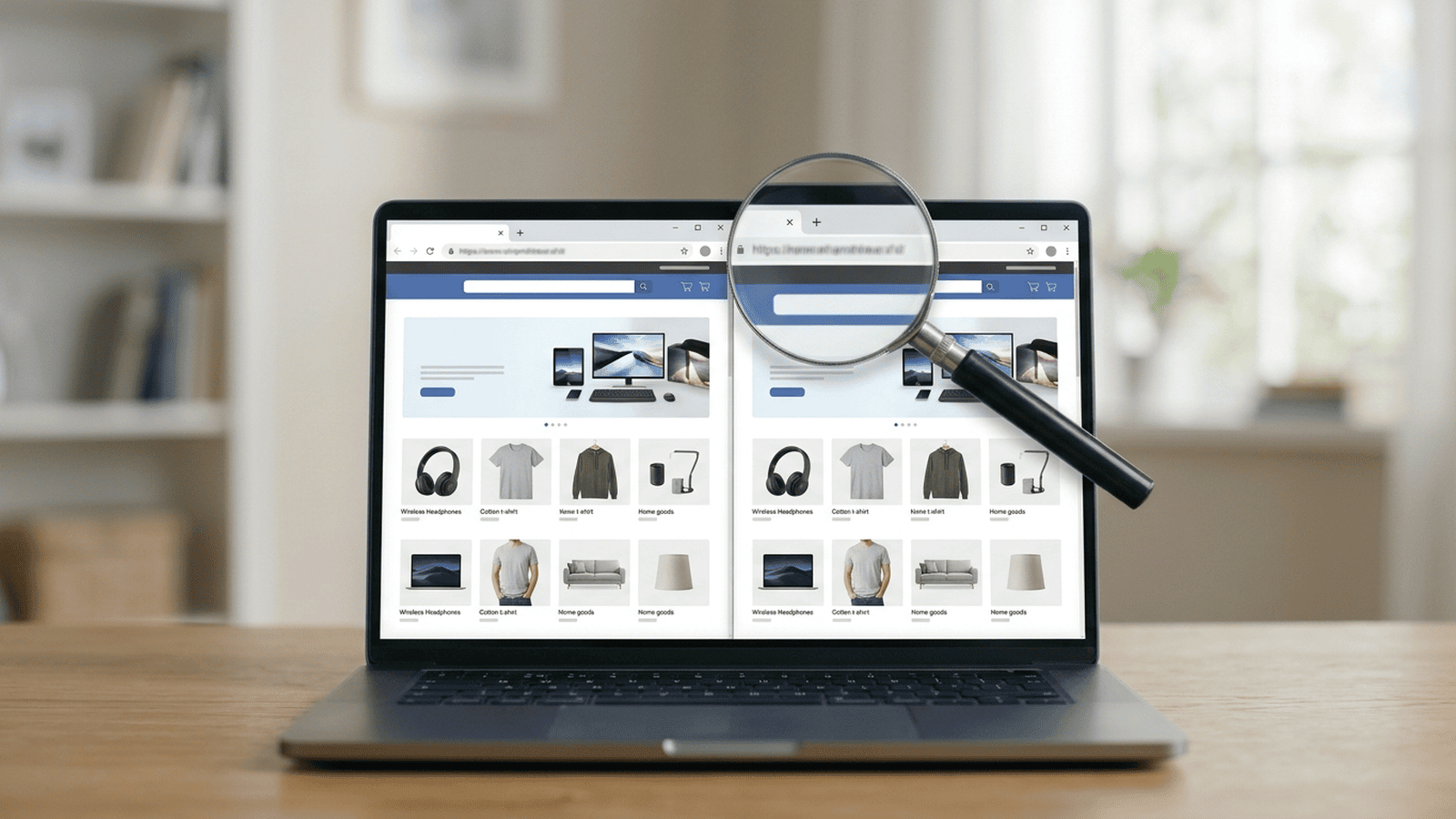
AI shopping bots can direct buyers to fake stores that imitate well-known brands, according to research cited in a CBS News report. Scammers use AI to build convincing copies in hours or even minutes, and platforms can struggle to keep up with the growing number of sites. Spokeo identified 65 copycat stores mimicking 60 brands by Nov. 15, while Podqi found that more than 18% of answers from tested AI tools drew on fake, infringing or invalid sites. The report describes no new government rules, fees or deadlines. Consumers who use shopping bots can check the destination address before buying, and platforms continue trying to avoid sending users to fraudulent stores.
TLDR: AI shopping assistants can recommend fake stores that closely copy real brands, and research found a meaningful share of tested answers relied on invalid or fraudulent sites. Buyers can verify a store’s web address before purchasing; no new government rules or deadlines are described.
AI shopping tools may point buyers toward fake online stores this Black Friday, according to research cited in a CBS News report. Scammers are using artificial intelligence to create convincing copies of real retailers, while shopping bots can struggle to tell the copies from legitimate sites. The risk reaches consumers who ask AI agents to find products or make purchases for them.
The reported reason these copies are spreading is straightforward: AI makes building websites much easier and faster. Harrison Tang, co-founder of data aggregator Spokeo, said scammers can reproduce a brand’s logo, marketing language, product images and descriptions in hours. Microsoft research cited in the report found that criminals can create fraudulent shopping sites in minutes, rather than the days or weeks once required. That lower barrier means a scammer can make a store look familiar without having the real retailer’s permission or connection to the brand.
That speed makes it harder for platforms to keep fraudulent pages out of search results. Tang said platforms try not to direct users to such sites, but the number appearing can make them difficult to track. A convincing page may look official, yet small differences can separate it from the real store. As new copies appear, a platform’s results may not reflect a completed review of every page, and a link that looks polished is not proof of a genuine seller.
Spokeo’s online shopping scam study had identified 65 distinct stores mimicking 60 brand names as of Nov. 15. The report names copycat sites associated with UGG, L.L. Bean, Converse and Stella McCartney. Other brands with duplicate online stores include Figs, Bombas and Fairlife. The examples show that the problem is not limited to one kind of product or one group of shoppers. The count is a snapshot from the study date, not a total of every fake store operating online.
Research from Podqi, a firm that monitors intellectual property infringement, found that AI search tools can inadvertently send shoppers to scam stores. The group asked ChatGPT, Google’s Gemini and Perplexity where particular brands could be purchased online. More than 18% of the bots’ answers drew on a fake, infringing or invalid website, according to the research described in the report. The finding concerns the answers tested in that research; it does not mean that every recommendation from those tools leads to a scam.
One example involved Stussy, a streetwear brand. Perplexity referred shoppers to us-stussy.com and mistakenly described it as the brand’s official website and a place for guaranteed authentic items. The address leads to a fake store; the real address is stussy.com. The incident shows that a confident answer from an AI tool does not by itself confirm that a retailer is genuine. It also illustrates how a bot can repeat a false claim in a way that may sound certain to a shopper.
A second example concerns Converse. A fake store used converseshop.us.com, while the real store address is converse.com. Tang advised shoppers to examine a site’s web address as an initial way to look for signs of fraud. The report says the .us domain is reserved for U.S. residents and is commonly used in phishing attempts, according to Tang; the domain alone should not be treated as proof that a site is legitimate. A shopper can compare the address with the retailer’s known official address before entering payment details.
These differences can be easy to miss. Fake stores may copy the appearance and language of genuine retailers closely enough to fool careful shoppers, as well as automated systems. Bots, the report notes, are not as well trained as some people at spotting phony websites. The growing use of AI agents to shop on behalf of consumers therefore adds another point where an incorrect recommendation can lead to a fraudulent seller. Shoppers may see a bot’s answer as a shortcut, but the examples show that the link still needs to be checked.
The practical impact is greater scrutiny during online shopping. Consumers using AI tools to find or buy products may need to check the destination themselves, including the web address, instead of relying only on the bot’s recommendation. The report describes no new government rule, fee, form, enforcement program or compliance deadline. It also gives no estimate of losses or details about remedies for people who buy from fake stores, so those matters remain unspecified in the report. It does not set out any new paperwork or payment requirement for shoppers, either.
The next step described is continued attention by shopping platforms, which try to avoid directing users to fraudulent sites but face a steady flow of new copies. No formal oversight schedule or deadline appears in the material. For now, checking the address before completing a purchase is a practical safeguard, while the reported research shows that AI recommendations still require independent verification. The report does not say how quickly platforms can identify or remove each copy, so consumers cannot rely on a stated review timetable.

James Foster serves as the Senior Correspondent for Inequality and the Social Safety Net at Just Right News, where he brings a principled and nuanced perspective to the most pressing economic challenges facing the nation. With a career dedicated to exploring the intersection of policy and personal responsibility, Foster has become a leading voice in documenting how government programs and economic shifts impact the American family. His reporting is characterized by a commitment to the “human element,” moving beyond cold statistics to highlight the stories of resilience, work, and community that define the modern American experience.
Foster’s perspective is deeply rooted in his upbringing in Birmingham, Alabama. Growing up in a city with a rich industrial heritage and a history of economic transformation, he witnessed firsthand the importance of the dignity of work and the strength of local institutions. In Birmingham, he saw how the most effective safety nets were often those woven by neighbors, faith-based organizations, and local civic groups. This background instilled in him a lifelong skepticism of “one-size-fits-all” solutions from distant bureaucracies, favoring instead the localized, community-driven support systems that he frequently champions in his writing.
Now based in Atlanta, Georgia, Foster operates from one of the most dynamic and rapidly evolving metropolitan hubs in the South. His location provides a front-row seat to the stark contrasts of the modern economy. From the gleaming towers of Atlanta’s financial districts to the struggling neighborhoods on the city’s periphery, Foster finds the stories that illustrate the complexities of upward mobility. His reporting from the Sun Belt serves as a microcosm for the national debate on poverty, highlighting how inflation, housing costs, and labor market shifts affect the working class in real-time.
As the lead for the acclaimed feature series “America’s Balancing Act,” Foster explores the delicate tension between providing a necessary hand up and fostering long-term independence. The series has become a cornerstone of Just Right News, offering a deep dive into the unintended consequences of social welfare policies. Foster’s work often focuses on the “cliff effect” and other systemic hurdles that can inadvertently discourage employment, arguing that true compassion is measured by how many people are empowered to leave the safety net, rather than how many are added to it.
Throughout his tenure, Foster has remained dedicated to the mission of Just Right News, providing a clear-eyed, conservative analysis of social issues. He believes that a free society thrives when individuals are empowered and the private sector is allowed to innovate. Whether he is interviewing small business owners about the challenges of a changing workforce or documenting the success of private charitable initiatives, Foster’s goal is to provide readers with the truth about the state of the American Dream. His work serves as a vital reminder that while the challenges of inequality are great, the solutions are often found in the strength of the American spirit and the preservation of traditional values.