

Leifras is adjusting some sports-school fees while Northeastern researchers study early development, offering two narrow but distinct views of how institutions invest in people.
Two recent developments in education point to different parts of the human-capital equation: the cost and quality of organized youth activities, and research into the earliest stages of development. Neither offers a sweeping verdict on what works. Together, they show how providers and universities are making decisions with practical consequences for families and children.
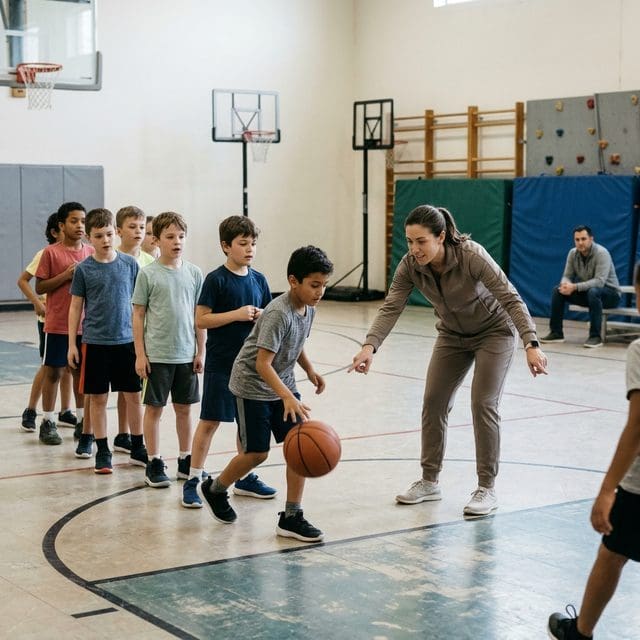
Leifras, a sports-school operator, said Nov. 27 that it has already raised participation fees for certain sports-school events. The company said adjustments were made event by event but did not disclose the amounts. It also did not quantify how much the changes might add to revenue or improve profitability.
The fee adjustments are part of a broader effort, according to the company, that includes managing operating expenses, adding day-to-day coaching and member-support services, and potentially improving operating and procurement practices. Leifras said it would assess the financial effect by examining event attendance, revenue and operating expenses. The cited release did not announce a change to its financial forecasts.
For families, the immediate trade-off is familiar: organized sports can provide coaching and structured activity, but higher fees may make participation harder to afford. The company’s emphasis on coaching and support suggests it is seeking to pair price changes with a stronger service offering. Whether families see enough added value to keep enrolling will depend in part on attendance, a measure Leifras says it will monitor. The available information does not show how customers have responded so far.
The announcement also illustrates a basic constraint for education and training providers: programs need to sustain their operations while keeping the services useful to participants. Cost control can help, but the release does not detail which expenses may change or what specific coaching and member-support additions are planned. Those details will matter in judging whether the strategy improves the experience or mainly shifts more of the cost to families.
At Northeastern University, researchers are pursuing a longer-term question about human development. The BEANIE study follows babies born to mothers who took part in an earlier study, BEAN. Researchers use MRI scans, newborn neurobehavioral testing and saliva samples to examine how prenatal factors may shape early brain and body development.
The team is especially interested in how maternal stress and emotion affect nutrients and hormones during and immediately after pregnancy. One focus is MRI estimates of iron stored in an infant’s brain. The study’s methods are designed to gather information about early development; the material provided does not report results showing that any particular prenatal factor causes a specific outcome.
The infants scanned at Northeastern’s Boston campus are generally between two and four weeks old. Researchers do not use sleep medication because the scans are not medically necessary and medication could alter the results. Instead, they capture multiple brain images while babies sleep naturally. One infant shown in a research image dated Oct. 5, 2026, was seven weeks old.
The two efforts operate on different timelines and answer different questions. Leifras is weighing the economics of current programs and the services offered to members. Northeastern is gathering evidence that could help researchers understand the conditions surrounding early development. Neither announcement, on its own, establishes whether a particular educational model produces better long-term outcomes.
That distinction matters when families and policymakers assess investments in children. A price increase is not proof of better instruction, just as an ongoing research project is not yet a basis for conclusions about development. For now, the clearest measure of Leifras’ approach will be whether participation and finances hold up alongside the promised services; the value of Northeastern’s work will depend on what its research ultimately finds.
Daniel Owens serves as a Senior Correspondent for Just Right News, where he leads the newsroom’s coverage of Education, Workforce, and Upward Mobility. In an era where the national conversation often overlooks the practical foundations of success, Owens brings a principled perspective to the forefront of the media landscape. His work is defined by a commitment to the idea that a strong society is built on the pillars of quality education, a robust work ethic, and the removal of bureaucratic barriers to individual achievement.
Born and raised in Cleveland, Ohio, Owens’s worldview was shaped by the industrial landscape of the Midwest. Growing up in a city known for its grit and resilience, he witnessed firsthand the transformative power of steady employment and the devastating effects of economic stagnation. This background instilled in him a deep respect for the American worker and a healthy skepticism toward top-down government solutions that often fail to reach the communities they intend to help. As an African American man who has navigated the path to professional success, Owens approaches his beat with a nuanced understanding of how meritocracy and personal responsibility intersect with opportunity. He frequently draws on his roots to highlight the importance of family stability and community-led initiatives in fostering the next generation of leaders.
At Just Right News, Owens is the architect of the acclaimed feature series, “The Learning Curve.” Through this platform, he explores the evolving landscape of American schooling, from the rise of the school choice movement to the revitalization of trade schools and vocational training. He frequently challenges the status quo of higher education, advocating for a return to academic rigor and the practical alignment of degrees with market demands. For Owens, education is not merely about obtaining credentials; it is about equipping young people with the tools necessary to lead self-sufficient, meaningful lives. His reporting on “The Learning Curve” has become essential reading for parents and policymakers who believe that educational competition and parental rights are the keys to a brighter future.
Now based in Raleigh, North Carolina, Owens finds himself at the heart of one of the nation’s most dynamic regions for innovation and growth. Raleigh’s unique blend of traditional values and a fast-paced economy provides the perfect backdrop for his reporting on the modern workforce. From the tech hubs of the Research Triangle to the rural communities of the South, he tracks how shifts in the economy are impacting families and local industries. His reporting often highlights the success stories of entrepreneurs and workers who are thriving by embracing the values of hard work and innovation.
Throughout his career, Daniel Owens has remained a steadfast voice for the student seeking a better path and the worker striving for a better life. His reporting for Just Right News serves as a vital resource for readers who value common-sense solutions to the challenges of the 21st-century economy. By focusing on the intersection of policy and the human spirit, Owens continues to provide a roadmap for how individuals and communities can achieve lasting upward mobility.