

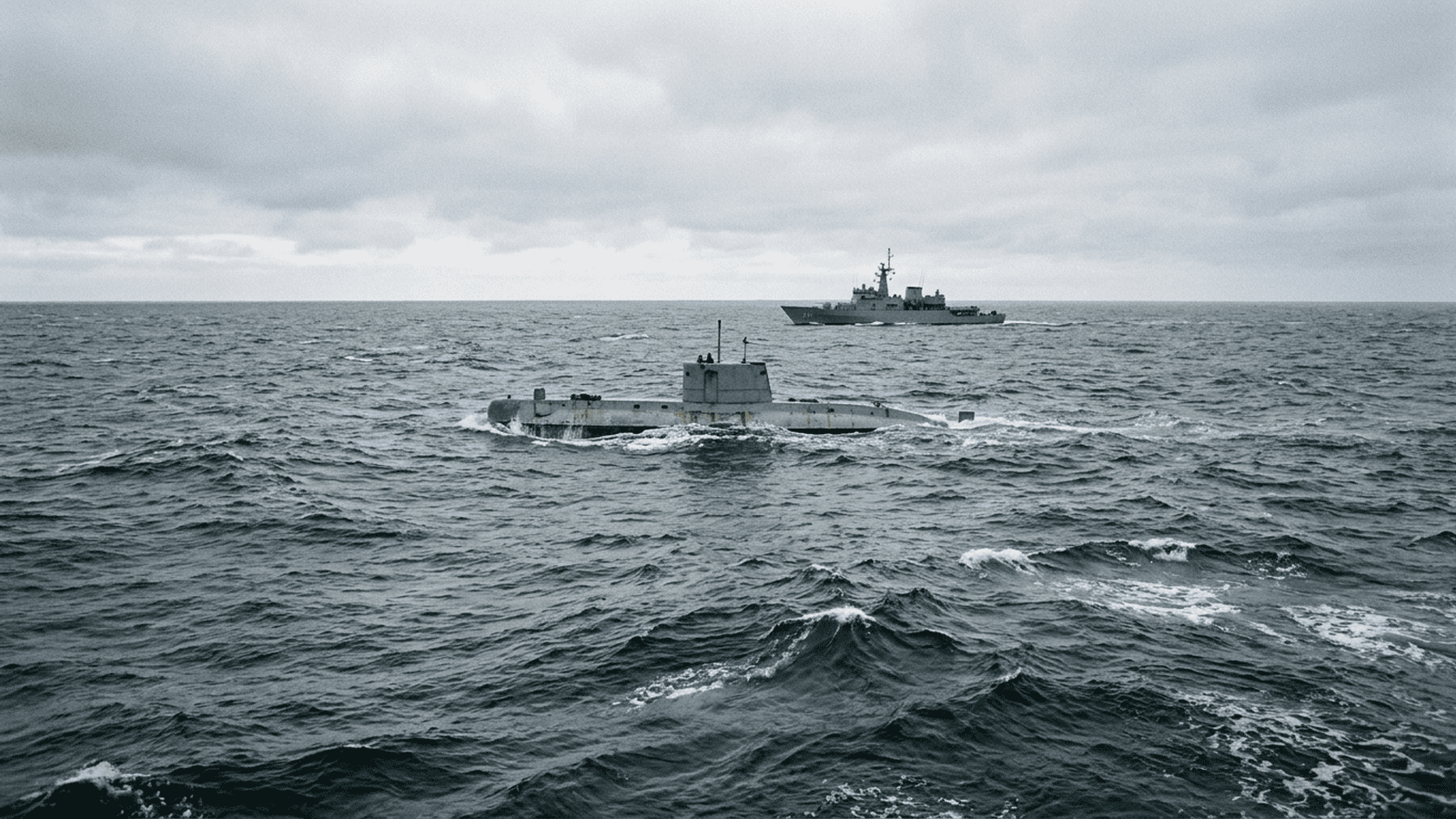
French forces intercepted a flagless semi-submersible in the Atlantic on November 17 and arrested two crew members, although no drugs were found aboard. Prosecutor Vanessa Perree said the craft’s location, clandestine nature and items found onboard informed the arrests. The operation involved cooperation with the Colombian navy and the U.S. Joint Interagency Task Force South. It followed a separate November 12 interception in which French forces seized nearly 330 pounds of cocaine from a similar vessel. The national organized crime prosecutor’s office is overseeing both investigations, and the available account does not specify charges against the two newly arrested crew members, a court deadline or any new rules.
TLDR: French forces seized a suspected trafficking semi-submersible in the Atlantic and arrested two crew members, though investigators found no drugs aboard. The national organized crime prosecutor’s office is overseeing the case alongside a separate recent interception that yielded nearly 330 pounds of cocaine.
French forces intercepted a flagless semi-submersible in the Atlantic on November 17, and two crew members were arrested. No drugs were found aboard. The seizure still disrupted a suspected trafficking operation, according to organized crime prosecutor Vanessa Perree, who said the vessel’s location, clandestine nature and onboard items informed the arrests.
The official rationale is straightforward: French forces are working to disrupt drug-trafficking networks and their logistics. Perree said the vessel’s seizure dealt a serious blow to those logistics. Armed Forces Minister Catherine Vautrin said the intervention in the French Antilles disrupted a criminal network and its associated operations.
The operation was conducted with the Colombian navy and the U.S. Joint Interagency Task Force South. That cooperation matters because semi-submersibles can be difficult for law enforcement to detect. They do not travel fully underwater, but traffickers use them because they can sometimes evade detection. The joint operation also places the interception within a wider effort involving authorities from several countries. The available account does not describe the specific roles each partner played or detail how the vessel was tracked.
The absence of drugs aboard is a central fact, not a detail to be brushed aside. Authorities did not report finding cocaine or another drug on the vessel. The arrests instead followed the combined circumstances described by Perree: the craft’s location, its lack of a flag, its clandestine character and items discovered onboard. Those facts formed the stated basis for taking the two crew members into custody.
The seizure came days after French forces intercepted a similar craft carrying cocaine. On November 12, the navy seized nearly 330 pounds of cocaine from that vessel. Authorities said the rest of its cargo, amounting to several tons, sank with the semi-submersible. Four Colombians were arrested in that separate operation and face charges that include unauthorized importation of narcotics by an organized gang.
The cases are distinct. Perree said the national organized crime prosecutor’s office is overseeing both investigations. The new interception was the second semi-submersible stopped by Caribbean-based French forces in recent weeks. The recent operations show an ongoing enforcement effort, while the investigations will determine what the evidence supports in each case.
Semi-submersibles have been used for decades to move cocaine north from Colombia toward Central America or Mexico. In recent years, the vessels have traveled farther, crossing the Atlantic and Pacific. Their use makes cooperation among authorities relevant, but the reported facts in this case remain specific: a suspected craft was intercepted, no drugs were found aboard, and two crew members were arrested.
Recent seizures elsewhere underline why authorities monitor these vessels. Portuguese authorities seized a record cocaine haul from a semi-submersible off the Azores in January, before the vessel sank. In March 2025, Portuguese officers confiscated nearly 6.5 tons of cocaine from a craft in the same region. Those episodes do not establish what the French vessel carried; they provide context for the attention paid to semi-submersible routes.
For the two crew members arrested in the November 17 interception, the immediate reported impact is custody and an investigation. The source does not specify charges against them, a court deadline, any fees, or paperwork requirements. It also does not describe a new rule or a change to individual rights. The practical enforcement details available are the seizure, the arrests, the international cooperation and the prosecutor’s office oversight.
The facts also mark limits on what can be claimed. The minister described a criminal network as disrupted, and Perree characterized the seizure as a blow to traffickers’ logistics. But the available account does not say that drugs were recovered in this interception or identify the two crew members as convicted traffickers. The investigation remains the process for examining the evidence and establishing what actions can be supported.
The next steps are the ongoing investigations overseen by the national organized crime prosecutor’s office. No public deadline or further enforcement schedule is given in the account. Continued oversight is a necessary step in determining the significance of the evidence and the proper legal outcome. The seizure interrupted a suspected route; the investigation will establish what the case proves.

James Foster serves as the Senior Correspondent for Inequality and the Social Safety Net at Just Right News, where he brings a principled and nuanced perspective to the most pressing economic challenges facing the nation. With a career dedicated to exploring the intersection of policy and personal responsibility, Foster has become a leading voice in documenting how government programs and economic shifts impact the American family. His reporting is characterized by a commitment to the “human element,” moving beyond cold statistics to highlight the stories of resilience, work, and community that define the modern American experience.
Foster’s perspective is deeply rooted in his upbringing in Birmingham, Alabama. Growing up in a city with a rich industrial heritage and a history of economic transformation, he witnessed firsthand the importance of the dignity of work and the strength of local institutions. In Birmingham, he saw how the most effective safety nets were often those woven by neighbors, faith-based organizations, and local civic groups. This background instilled in him a lifelong skepticism of “one-size-fits-all” solutions from distant bureaucracies, favoring instead the localized, community-driven support systems that he frequently champions in his writing.
Now based in Atlanta, Georgia, Foster operates from one of the most dynamic and rapidly evolving metropolitan hubs in the South. His location provides a front-row seat to the stark contrasts of the modern economy. From the gleaming towers of Atlanta’s financial districts to the struggling neighborhoods on the city’s periphery, Foster finds the stories that illustrate the complexities of upward mobility. His reporting from the Sun Belt serves as a microcosm for the national debate on poverty, highlighting how inflation, housing costs, and labor market shifts affect the working class in real-time.
As the lead for the acclaimed feature series “America’s Balancing Act,” Foster explores the delicate tension between providing a necessary hand up and fostering long-term independence. The series has become a cornerstone of Just Right News, offering a deep dive into the unintended consequences of social welfare policies. Foster’s work often focuses on the “cliff effect” and other systemic hurdles that can inadvertently discourage employment, arguing that true compassion is measured by how many people are empowered to leave the safety net, rather than how many are added to it.
Throughout his tenure, Foster has remained dedicated to the mission of Just Right News, providing a clear-eyed, conservative analysis of social issues. He believes that a free society thrives when individuals are empowered and the private sector is allowed to innovate. Whether he is interviewing small business owners about the challenges of a changing workforce or documenting the success of private charitable initiatives, Foster’s goal is to provide readers with the truth about the state of the American Dream. His work serves as a vital reminder that while the challenges of inequality are great, the solutions are often found in the strength of the American spirit and the preservation of traditional values.