

A Ukrainian drone strike on Russian ships near Libya coincides with NATO concern over a missile incident in Poland and Estonia’s planned border closures, widening the alliance’s security challenge.
Ukraine’s reported strike on Russian ships near Libya has brought the war’s reach into the Mediterranean at a moment when NATO is also weighing a missile incident in Poland and Estonia is preparing to close its road crossings with Russia. The developments underscore the challenge for Washington and its allies: containing pressure on NATO’s eastern frontier while a conflict between Kyiv and Moscow produces consequences well beyond Ukraine.
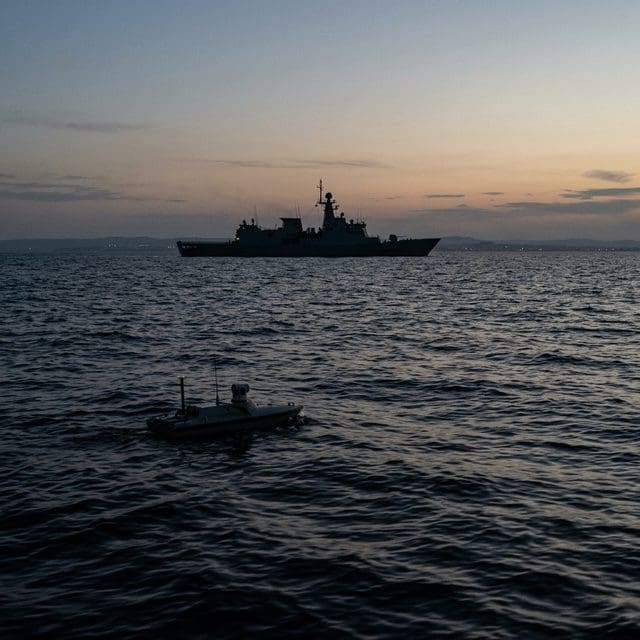
Ukrainian President Volodymyr Zelenskyy confirmed that Ukraine hit two Russian ships in Libya on Sunday, November 22, according to CBS News. Ukraine’s Security Service, the SBU, said seven naval drones were transported to the area and launched from a “mother ship,” rather than making the journey independently from Ukraine, ABC News reported Monday. The account points to a logistical operation outside the Black Sea, though the supplied reports do not establish the full circumstances of the strike or its military results.
The incident has prompted calls for an inquiry in Libya. The U.N. Support Mission in Libya called for an “immediate, independent and transparent investigation,” Al Jazeera reported. The eastern Libya-based administration also sought an international inquiry and said it would investigate jointly with Russia. Reports differ on casualty details, so no reliable toll is established in the available material.
The diplomatic response reflects Libya’s divided political landscape as well as the presence of Russian interests there. A joint investigation involving the eastern administration and Moscow could give Russia a role in shaping the account of an attack on its ships. For Ukraine, the reported use of a support vessel illustrates how maritime drone operations can extend pressure against Russian assets beyond the immediate front. The available reporting does not establish whether the strike changes Russia’s operational posture in the region.
NATO’s more direct security concern is on its own territory. Ambassadors were preparing to meet Monday over missile strikes in Poland last week. Secretary-General Mark Rutte called the incident a “grave violation” of Polish airspace, NPR reported. The supplied information does not detail the missiles’ origin or the meeting’s outcome, but the episode puts alliance airspace security and the risk of miscalculation squarely on the agenda.
Estonia, meanwhile, plans to suspend road crossings at all five border checkpoints with Russia starting December 1, for six months, Euronews reported. The decision follows an alleged Russian-backed arson attempt at Estonian drone maker Threod Systems on November 14. Moscow rejects the allegations. Estonia’s planned closure is a national security measure, not a NATO-wide decision, but it reflects the practical costs of mistrust on the alliance’s northeastern edge: tighter movement, heightened alert and less room for routine contact across the border.
Zelenskyy called for four-way talks involving Ukraine, Europe, the United States and Russia to begin “literally tomorrow,” while again urging NATO members to provide air-defense weapons, Asharq Al-Awsat reported. The two requests capture Kyiv’s immediate priorities: diplomatic engagement on terms that include its European partners, and continued military support against air threats.
For Washington, the stakes are not limited to any single incident. Alliance credibility depends on distinguishing threats that require a collective response from actions that demand investigation and restraint. That is especially important when an attack far from NATO territory, a disputed airspace incident in Poland and a border-security decision in Estonia unfold at once. The developments do not, on their own, establish a new Russian-NATO confrontation. They do show how quickly the war’s operational and diplomatic pressures can cross regions, forcing the United States and its allies to manage escalation while sustaining Ukraine’s defense.

Olivia Kendall serves as the Senior Correspondent for Geopolitics, Defense, and Foreign Policy at Just Right News, where she provides a principled, conservative perspective on the complex forces shaping the global stage. With a career dedicated to deconstructing the intricacies of international relations, Kendall has become a trusted voice for readers who value national sovereignty, a robust military, and a foreign policy that prioritizes American interests above all else.
A native of Washington, D.C., Kendall’s professional journey is deeply rooted in her upbringing within the nation’s capital. Growing up in the epicenter of American political life, she developed an early and profound understanding of how policy is crafted and, more importantly, how it often fails to account for the values of the American heartland. This unique vantage point allowed her to witness firsthand the rise of globalist bureaucracies, fueling her commitment to reporting that champions the constitutional foundations of the United States. Her background as a British White American further informs her worldview, providing her with a keen appreciation for the Western tradition and the enduring importance of the “Special Relationship” in maintaining global stability.
Now based in Arlington, Virginia, Kendall operates from the doorstep of the Pentagon and the heart of the nation’s defense establishment. Her proximity to the decision-makers in the military and intelligence communities allows her to provide boots-on-the-ground reporting that is both timely and deeply informed. For Kendall, Arlington is more than just a base of operations; it is a daily reminder of the sacrifices made by the men and women in uniform. This connection to the defense community drives her rigorous coverage of military readiness and her advocacy for a “peace through strength” approach to diplomacy.
At Just Right News, Kendall is perhaps best known for her acclaimed feature series, “The World’s Shadow on America.” In this ongoing project, she explores the direct correlation between international developments and the daily lives of American citizens. Whether she is analyzing the encroachment of foreign adversaries in domestic supply chains or the impact of international treaties on local economies, Kendall’s work serves as a vital bridge between distant geopolitical shifts and their consequences at home. She rejects the notion that foreign policy is an abstract concern for elites, instead proving that what happens in the corridors of power in Brussels or Beijing has a tangible “shadow” that falls across every American doorstep.
Throughout her tenure, Kendall has remained a steadfast critic of international overreach and a vocal proponent of a clear-eyed, realistic foreign policy. She brings a sharp analytical mind to her beat, often challenging the prevailing narratives of the mainstream media to uncover the underlying truths that affect national security. Her reporting is characterized by a refusal to compromise on the truth and a dedication to the idea that a strong, secure America is the world’s best hope for liberty. As a Senior Correspondent, Olivia Kendall continues to lead the charge in providing the essential context and conservative insight necessary to navigate an increasingly volatile world.