

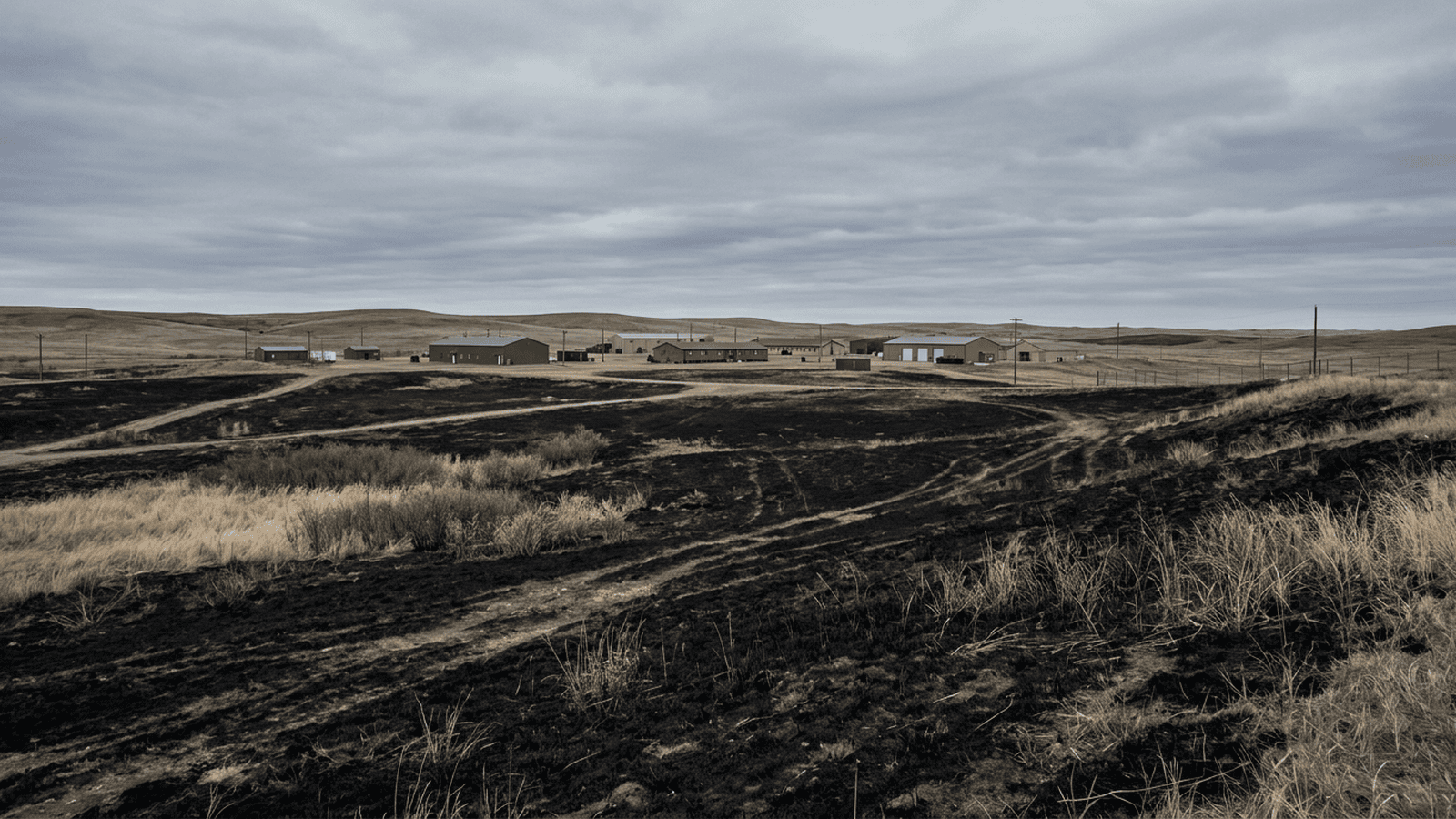
The Canadian Armed Forces has confirmed that Pvt. William Douglas Dal Bianco died Friday, becoming the fifth soldier killed after a wind-driven grass fire reached troops during training at Canadian Forces Base Wainwright on Oct. 17. About 84 soldiers were conducting attack training, and 24 remain hospitalized. Maj. Gen. Wade Rutland said officials had believed the fire was contained and let training continue before the wind shifted. Military police are investigating, and a separate military board of inquiry will examine the circumstances and recommend ways to prevent similar incidents. No findings, new safety rules, deadlines, fees, or changes to training have been announced in the available account.
TLDR: Pvt. William Douglas Dal Bianco died Friday from injuries in the Oct. 17 Wainwright base fire, bringing the confirmed death toll to five. Military police and a separate board of inquiry are examining the event, while 24 soldiers remain hospitalized.
A fifth Canadian soldier has died from injuries suffered when a grass fire swept through troops during a training exercise at Canadian Forces Base Wainwright in Alberta. The Canadian Armed Forces said Saturday that Pvt. William Douglas Dal Bianco died Friday at an Ontario hospital. He had been receiving treatment since the fire on Oct. 17.
About 84 soldiers from the 3rd Battalion, Princess Patricia’s Canadian Light Infantry, were conducting attack training when wind pushed flames toward them. The fire occurred on a grenade launcher range at the base, southeast of Edmonton. The military said 24 soldiers remain hospitalized.
The stated purpose of the exercise was national defense. Prime Minister Mark Carney said Dal Bianco and the other soldiers had been training to defend Canada, and described their service as a choice to safeguard the country. That is the official rationale for the training; the available account does not describe a new policy or a change in military rules.
The fifth death adds to the confirmed toll from the incident. The other soldiers killed were Pvt. Shaun Farrell, 23, of Prince Albert, Saskatchewan; Pvt. Aidan Goulding, 23, of North Vancouver, British Columbia; Pvt. Hayden Lykkemark, 19, of Langley, British Columbia; and Sgt. Morgan Wong, 26, of Edmonton. The military has not announced further details about the 24 soldiers still hospitalized.
The fire’s circumstances remain under review. Military police are investigating, and a separate military board of inquiry is examining what happened. That board is expected to recommend measures intended to prevent similar incidents, but the account does not identify any recommendations already made or any safety changes already put in place.
The two reviews have different stated roles. Military police are conducting an investigation, while the board is examining the incident and is expected to make recommendations. The account does not say when either process will finish or whether their findings will be released together. It also does not provide details about the evidence gathered so far. Until the reviews produce findings, key parts of the fire’s timeline and the decisions surrounding the exercise remain unresolved.
Maj. Gen. Wade Rutland said military officials had known about the fire for hours. They believed it was contained and allowed the training to continue, he said, before the wind suddenly shifted. That account establishes an important part of the timeline, but it does not by itself settle why the fire reached the troops or whether decisions made before the shift contributed to the outcome.
The sequence began Oct. 17, when the grass fire moved toward the soldiers during the exercise. Dal Bianco was taken for treatment and remained at a hospital in Ontario until his death Friday. The armed forces announced his death Saturday, while the other four soldiers’ deaths had already been confirmed.
Carney has called the fire one of the worst peacetime tragedies for Canada’s military on Canadian soil. Last month, he said answers about what caused it would be pursued expeditiously and transparently. The new announcement confirms the fifth death, but it does not provide findings from either investigation.
The practical impact described so far is the continuing investigation and the board’s review of the circumstances. Military police are handling an investigation, while the separate board will examine the event and recommend prevention measures. The account gives no fees, forms, compliance deadlines, enforcement changes, or schedule for either process, and it does not say whether training has been paused or altered. Those details remain unknown rather than established parts of a new plan.
The incident has also exposed a serious conflict between the demands of military training and the need to respond to changing conditions. The reported decision to continue after officials believed the fire was contained will be part of the examination, alongside the sudden wind shift. The facts do not yet establish what rules were in force or what decision-makers knew at each point beyond Rutland’s statement.
The next steps are the military police investigation and the board of inquiry’s review and recommendations. Those are necessary steps for examining the timeline and identifying measures to prevent similar incidents. The experts now responsible for those processes have the information and authority to carry out that work, and the findings will establish what oversight and safety measures follow.

Ryan Mitchell serves as a Staff Writer for Just Right News, where he anchors the desk for Cyber, Technology Policy, and Digital Sovereignty. In an era where the digital landscape has become as much a battlefield as any physical territory, Ryan provides a critical conservative lens on the forces shaping the future of American innovation and national security. His work is defined by a commitment to the idea that American leadership in the digital age is not just a matter of economic success, but a necessity for the preservation of global liberty.
Born and raised in Austin, Texas, Ryan’s perspective is deeply rooted in the Lone Star State’s tradition of independence and skepticism of centralized authority. Growing up in a city that transformed from a quiet state capital into a global technology hub, he witnessed firsthand the disruptive power of the tech industry. This upbringing instilled in him a firm belief in free-market principles and the necessity of protecting individual liberties from both government overreach and corporate overstep. His Texan background serves as a foundational compass, guiding his reporting toward stories that emphasize national resilience and the preservation of constitutional values in an increasingly virtual world.
Now based in San Francisco, California, Ryan operates from the epicenter of the very industry he scrutinizes. Living and working in the heart of Silicon Valley allows him to provide “boots on the ground” reporting that few conservative journalists can match. He navigates the cultural and political complexities of the Bay Area to bring Just Right News readers an inside look at the boardrooms and coding labs where the next generation of digital policy is forged. For Ryan, being stationed in San Francisco is a strategic choice; it allows him to challenge the prevailing ideological monoculture of the tech elite from within their own backyard, ensuring that the concerns of middle America are represented in the conversation about our digital future.
His beat—Cyber, Technology Policy, and Digital Sovereignty—covers the high-stakes world of data privacy, artificial intelligence, and the infrastructure of the modern web. Ryan is particularly focused on the concept of digital sovereignty, arguing that for a nation to remain truly free, it must maintain control over its own technological destiny and critical infrastructure. He frequently explores how international regulations and domestic policies impact the ability of American firms to compete without sacrificing the privacy or security of their citizens.
Central to his current body of work is his featured series, “The New Cold War.” Through this project, Ryan examines the escalating technological rivalry between the United States and its global adversaries. He delves into the complexities of state-sponsored hacking, the global race for semiconductor dominance, and the ideological struggle to define the rules of the internet. Ryan views this competition not merely as a commercial race, but as a fundamental defense of Western values against authoritarian digital models. Through his rigorous reporting and principled analysis, Ryan Mitchell ensures that the readers of Just Right News stay informed about the invisible forces defining the 21st century, always advocating for a future where technology serves the cause of freedom.