

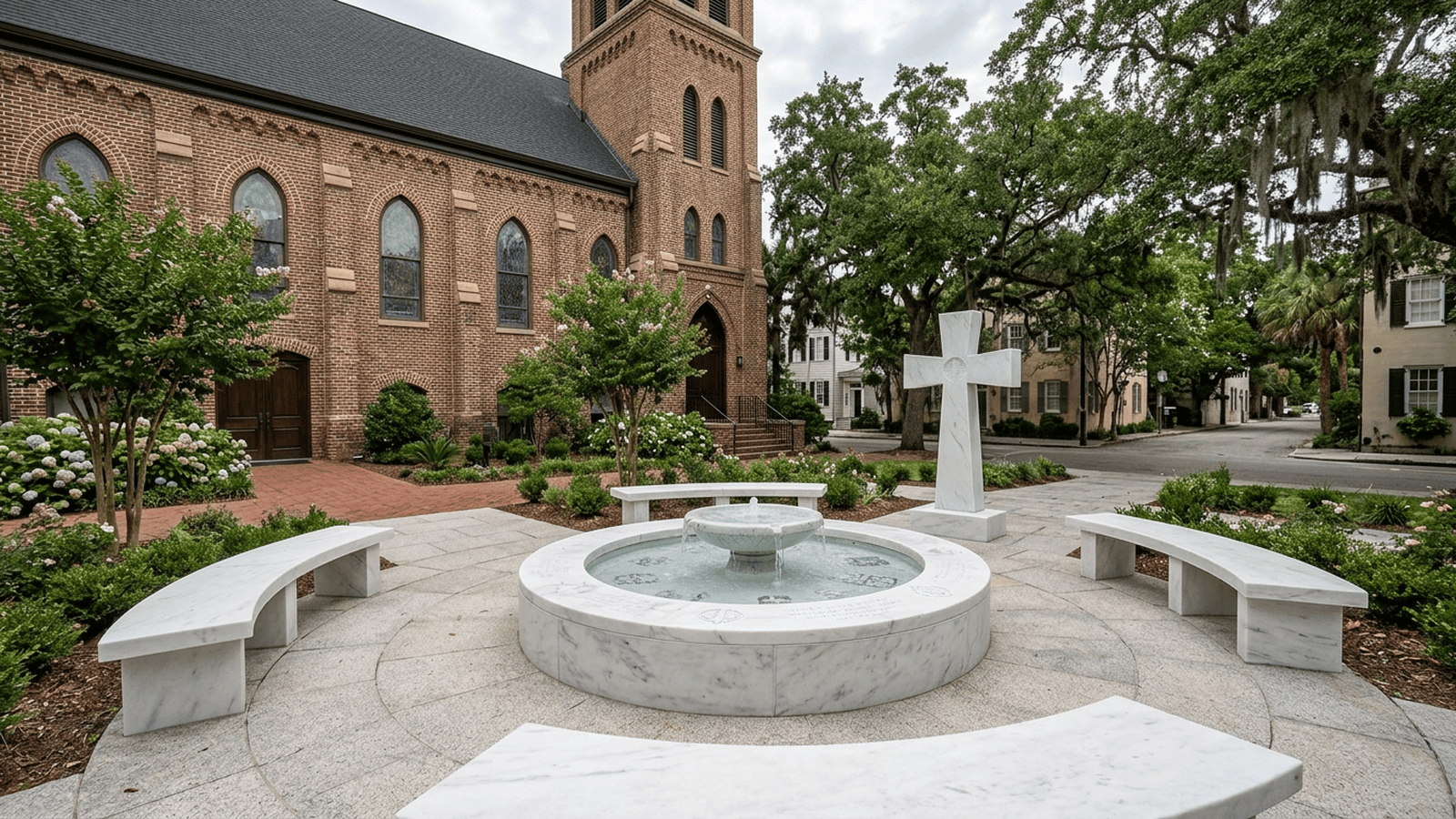
A memorial honoring the Emanuel Nine has opened at Mother Emanuel AME Church in Charleston, eleven years after nine Black parishioners were killed there. Its fountain, engraved names, benches and cross create a public place for remembrance, while families hope it will help younger generations learn the history directly. The foundation raised about $25 million over the past decade for the memorial, a future garden and other costs, with much of the money coming from foundations, endowments and corporations. A garden honoring the five survivors is planned next, while a South Carolina bill to add enhanced hate-crime penalties failed to pass. The memorial is open to the public; visitor fees, forms and a garden deadline were not specified.
TLDR: The new Charleston site honors nine parishioners killed in 2015 and gives families and visitors a place to remember their lives and the church’s history. Organizers say a garden for five survivors is next; the foundation raised about $25 million, and no completion date was provided.
A long-planned memorial honoring the nine Black parishioners killed at Mother Emanuel AME Church in Charleston opened to the public Saturday. The victims, known as the Emanuel Nine, were killed by a white gunman who was an avowed white supremacist during a church Bible study in 2015. The memorial stands in a courtyard near the church’s front entrance, offering a public place for remembrance and reflection.
Its purpose is clear: to help people remember what happened and keep the victims’ lives and the history of the church present for future generations. Alana Grant, whose grandfather, the Rev. Daniel Lee Simmons, attended his final Bible study at the church, said the site can help families talk about that history directly. For Grant, the memorial offers a way to share her family’s story with her three young children rather than leave them to learn about it elsewhere.
The marble memorial is centered on the Fountain of Grace, which represents God’s love and mercy. Water flows over a shallow basin engraved with the names of the six women and three men who were killed. Two curved Fellowship Benches sit beside the fountain, and a Cross of Hope represents redemption after suffering.
Grant said it took years before she felt able to enter the church basement where her grandfather had attended Bible study. Seeing the completed memorial has brought her gratitude and hope. She and her husband, state Rep. Hamilton Grant, recently saw the site, which she described as a place where visitors can come to remember what happened.
The memorial also gives families a place to connect public history with personal memory. Former North Carolina state senator and Charlotte City Councilman Malcolm Graham attended the 2023 groundbreaking. His sister, Cynthia Graham Hurd, was among those killed. Graham has said he looks forward to remembering their childhood and time at the church, including Sunday school.
Hurd was an accomplished librarian. A library, scholarship and other awards already bear her name, and the memorial now joins them in keeping her life in public view. Graham has said that he still looks up to his sister. The memorial makes room for her memory alongside the other eight victims, rather than reducing the story to the circumstances of their deaths.
The five survivors will also be recognized. A garden honoring them is planned as the next part of the project. Grant has described survivors living with memories of the shooting as heroic and said that spaces recognizing them are uncommon. The garden will extend the memorial’s focus beyond the victims who died to include those who lived through the attack.
The design grew from a process that emphasized listening and reflection. A committee began seeking an architect in 2017 and heard from designers around the world. Final candidates were asked to respond in writing to difficult subjects, including forgiveness, rather than submit design proposals. Michael Arad, whose work includes the 9/11 Memorial, was selected after writing about his admiration for the victims’ families, some of whom offered forgiveness to the shooter.
Arad spent more than a year learning about the congregation and researching the church’s two-century history. He said his role was to help visitors see and hear what had long been present at the site. Mother Emanuel was established in 1818 and built by free and enslaved people. In the twentieth century, it became a place of resistance where Martin Luther King Jr. and other civil rights figures spoke.
The project’s practical record includes a decade of fundraising and a substantial cost. John Darby, a memorial foundation co-chair, said the foundation raised about $25 million for the memorial, the planned garden and other expenses, much of it from foundations, endowments and corporations. He said the organizers did not want the project to become an expense for the church. The account does not specify visitor fees, required forms, compliance rules or a deadline for the garden, so those details remain unreported.
The memorial’s opening also comes amid an unresolved debate over hate-crime penalties in South Carolina. Grant has sought support for a hate-crimes statute, and her husband is among lawmakers who pushed legislation named for Clementa Pinckney, the pastor and state senator killed in the attack. The measure would add enhanced penalties for hate crimes to the state criminal code, but it failed to pass. Grant hopes the memorial will build generational awareness and encourage younger people to oppose hate; she has also called for advocacy, not only thoughts and prayers.
The immediate next step is the planned garden honoring the five survivors. The memorial is open to the public, and tourists already visit the church daily out of curiosity or sympathy. The garden’s completion date and any formal oversight arrangements are not provided. Its development and the public’s response remain the next steps in carrying the memorial’s work forward.
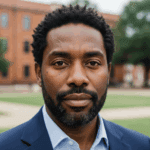
Daniel Owens serves as a Senior Correspondent for Just Right News, where he leads the newsroom’s coverage of Education, Workforce, and Upward Mobility. In an era where the national conversation often overlooks the practical foundations of success, Owens brings a principled perspective to the forefront of the media landscape. His work is defined by a commitment to the idea that a strong society is built on the pillars of quality education, a robust work ethic, and the removal of bureaucratic barriers to individual achievement.
Born and raised in Cleveland, Ohio, Owens’s worldview was shaped by the industrial landscape of the Midwest. Growing up in a city known for its grit and resilience, he witnessed firsthand the transformative power of steady employment and the devastating effects of economic stagnation. This background instilled in him a deep respect for the American worker and a healthy skepticism toward top-down government solutions that often fail to reach the communities they intend to help. As an African American man who has navigated the path to professional success, Owens approaches his beat with a nuanced understanding of how meritocracy and personal responsibility intersect with opportunity. He frequently draws on his roots to highlight the importance of family stability and community-led initiatives in fostering the next generation of leaders.
At Just Right News, Owens is the architect of the acclaimed feature series, “The Learning Curve.” Through this platform, he explores the evolving landscape of American schooling, from the rise of the school choice movement to the revitalization of trade schools and vocational training. He frequently challenges the status quo of higher education, advocating for a return to academic rigor and the practical alignment of degrees with market demands. For Owens, education is not merely about obtaining credentials; it is about equipping young people with the tools necessary to lead self-sufficient, meaningful lives. His reporting on “The Learning Curve” has become essential reading for parents and policymakers who believe that educational competition and parental rights are the keys to a brighter future.
Now based in Raleigh, North Carolina, Owens finds himself at the heart of one of the nation’s most dynamic regions for innovation and growth. Raleigh’s unique blend of traditional values and a fast-paced economy provides the perfect backdrop for his reporting on the modern workforce. From the tech hubs of the Research Triangle to the rural communities of the South, he tracks how shifts in the economy are impacting families and local industries. His reporting often highlights the success stories of entrepreneurs and workers who are thriving by embracing the values of hard work and innovation.
Throughout his career, Daniel Owens has remained a steadfast voice for the student seeking a better path and the worker striving for a better life. His reporting for Just Right News serves as a vital resource for readers who value common-sense solutions to the challenges of the 21st-century economy. By focusing on the intersection of policy and the human spirit, Owens continues to provide a roadmap for how individuals and communities can achieve lasting upward mobility.