

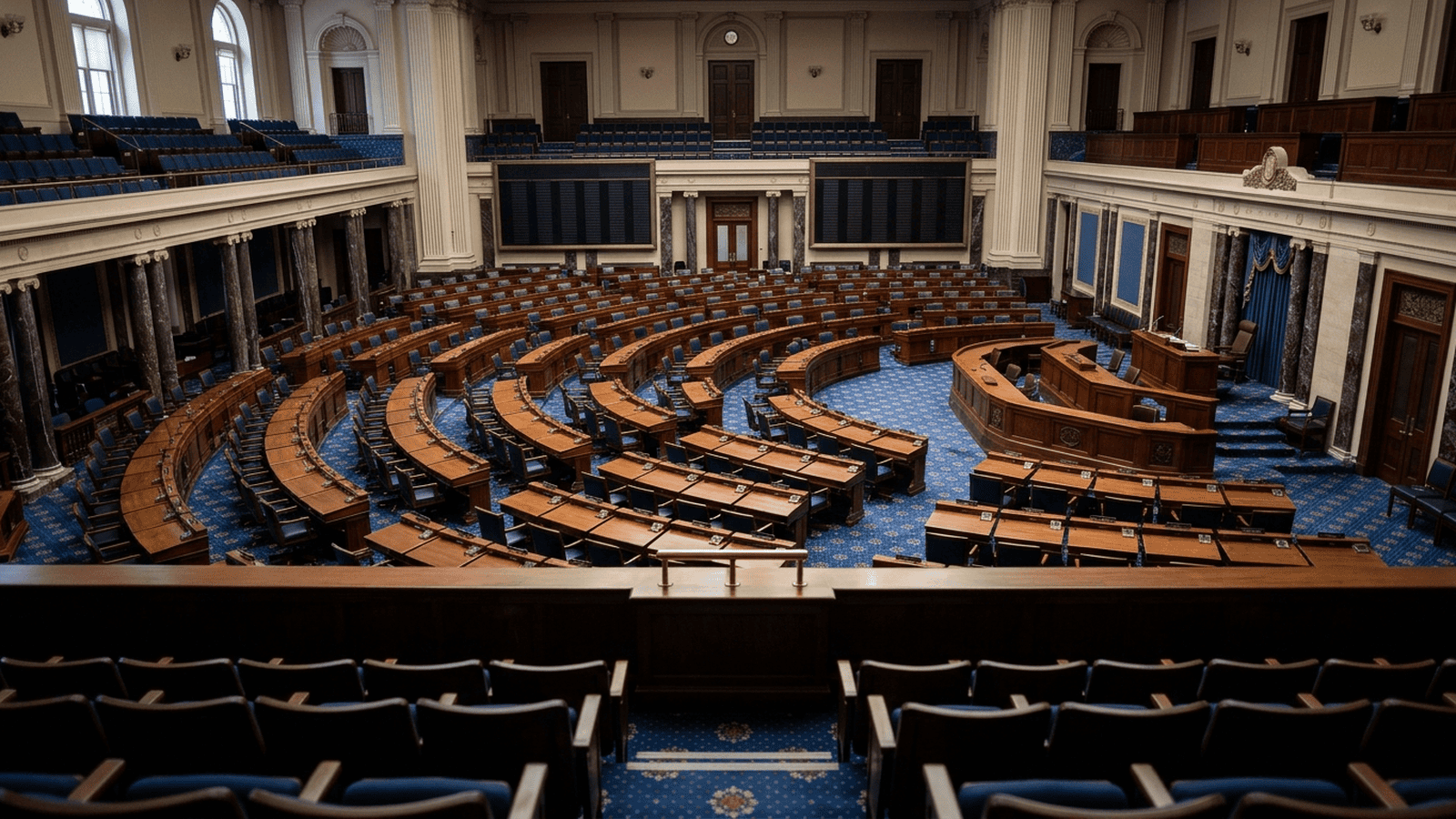
Democrats have taken control of the House, but the size of their majority is still uncertain. They had gained 28 seats, with another 23 races where they were leading and could add to that total. In the Senate, Democrats had flipped seven seats, with Alaska and Mississippi unresolved and a possible total gain of nine. Close counts and provisional ballots could leave some results open for days or weeks. The report also describes Democratic gains in parts of the country beyond the coasts, including a notable shift in Brewster County, Texas. It gives no single explanation for those changes and identifies no new federal policy, costs, paperwork, enforcement rules or deadlines.
TLDR: Democrats have secured House control, while the final House margin and Senate balance await remaining vote counts. The reported results describe a major shift in representation, but they do not establish specific federal policy changes or their costs.
Midterm results have set up a two-year power struggle between President Donald Trump’s White House and the incoming Democratic Congress. Democrats have taken control of the House, while the final size of their majority remains unsettled. Senate results are also incomplete, with Alaska and Mississippi still awaiting final calls in the account provided.
The available report does not give an official rationale for the election outcomes. It describes races, vote counts and the possible shape of Congress, but does not say why voters chose one party or another. The central result is a change in congressional control, with Democrats positioned to hold a large House majority and possibly make significant Senate gains.
The scale of those gains is still being counted. In the Senate, Democrats had flipped seven seats so far, according to the report. They could reach nine, but that was not a final result. The report described a nine-seat gain as a shift rarely seen by either party, with a comparison reaching back about 50 years. The open races make it too early to know whether Democrats will reach that mark.
Mississippi remained especially close. The vote difference was 65, and the state has 82 counties. Provisional ballots were still being counted, along with some votes from Hinds County. There, 90 percent of the vote had been counted, and Democrat Scott Colom was ahead by a substantial margin. The account said the wait could last days or weeks. Until the count is complete, the state’s Senate result and its effect on the party balance remain uncertain.
Alaska was also unresolved, with the race described as a virtual tie. Those two outstanding contests left the eventual Senate margin unclear. The account did not provide a final seat count or describe procedures beyond the continuing count and the provisional ballots. Any estimate of the Senate majority therefore depended on results that were still pending.
In the House, control was clearer than the final margin. Democrats had gained 28 seats at the time of the report. In another 23 races, Democrats were leading and positioned to flip the seat. If those leads held, the total gain could reach 51. That was a possible outcome, not a final tally. The difference matters: the count showed a strong Democratic result, but the precise size of the majority was not yet established.
Several race calls changed as results came in. Democrats picked up Michigan’s 10th and 4th districts and Nebraska’s 2nd District. Republican Mike Lawler conceded in New York’s 17th District. Those developments added to the reported House gains. Close races elsewhere, however, meant the final total could still move.
The reported gains extended beyond the coasts. The account described Democratic advances in the center of the country, in places where the previous Congress had been mostly Republican. Texas was one example. James Talarico received 55 percent against Ken Paxton. In Brewster County, which President Trump had won by 13 points in 2024, the vote shifted to Talarico. The report identified the area as Hispanic territory and described the district as having a Hispanic plurality.
That result points to a change in one county, but it does not explain the choices of voters across Texas or the country. The account said the Texas results were likely to draw long-term attention from historians, while offering no single cause for the shift. A county’s result, even when it differs sharply from the 2024 presidential vote, cannot by itself establish why voters changed their minds or what the outcome means for other districts.
Other House contests remained too close to call. Arizona’s Second District was described as a virtual tie. In Tennessee’s Fourth District, Victoria Broderick and Scott DesJarlais were separated by 280 votes. The account said it could take time to establish the exact margins, even though the broader outcome of House control was known. Those unresolved races could still affect how large the Democratic majority becomes.
The practical policy effects are not laid out in the available report. It identifies no new federal housing, infrastructure or mobility proposal adopted by the incoming Congress, and gives no related costs, paperwork, enforcement rules or deadlines. It also does not say how the new congressional alignment will affect residents, taxpayers or local governments. At this stage, the documented impact is the change in representation and the ongoing work of confirming election results, not a set of new federal requirements.
For the same reason, the size of the Democratic majority should not be treated as a forecast of which proposals will pass. The results establish a new political setting, but the account does not describe a legislative plan or say how lawmakers will use their numbers. Any claim about future policy, its cost or its effect on a community would need details beyond those provided here.
The next step is to finish the outstanding counts and confirm close-race margins. Alaska and Mississippi remain central to the Senate picture, while several House contests still need final results. Those counts will establish the composition of Congress and clarify whether the possible gains become final. Until then, the broad shift is clear, but the precise size of the Democratic majorities remains open.

Deborah Cole serves as a Senior Correspondent for Just Right News, where she spearheads the network’s coverage of Housing, Infrastructure, and Mobility. With a career defined by a commitment to rigorous reporting and a focus on the fundamental pillars of American community life, Deborah brings a principled perspective to the complex issues that dictate how and where we live. Her work is grounded in the belief that sound policy, fiscal responsibility, and respect for private property are the essential foundations of a prosperous society.
Originally from Boston, Massachusetts, Deborah’s upbringing in one of the nation’s oldest and most historically significant cities deeply influenced her professional trajectory. Growing up amidst the architectural legacy and dense urban planning of New England, she developed an early appreciation for the importance of durable infrastructure and the role of local tradition in shaping neighborhoods. Her perspective is informed by the classic American values of her hometown—hard work, community cohesion, and a healthy skepticism of top-down bureaucratic mandates that often overlook the unique needs of individual citizens.
Today, Deborah operates from her base in Austin, Texas, a city that serves as a primary laboratory for her reporting. Austin’s rapid expansion and its status as a hub for innovation and migration provide her with a front-row seat to the most pressing challenges in modern infrastructure and housing. From the Lone Star State, she chronicles the tensions between rapid growth and the preservation of the American Dream, often highlighting how market-driven solutions and deregulation can address the housing shortages that plague many of the country’s metropolitan areas.
At Just Right News, Deborah is perhaps best known for her signature feature series, “Where We Live.” Through this platform, she explores the intersection of public policy and private life, moving beyond mere statistics to tell the stories of families, small business owners, and local developers. Her reporting frequently highlights the importance of mobility—not just in terms of transportation and transit, but as a vehicle for economic opportunity and social stability. She remains a staunch advocate for the taxpayer, consistently scrutinizing government spending on large-scale projects and advocating for transparency in how infrastructure dollars are allocated.
Deborah’s beat is more than just a collection of policy topics; it is an investigation into the physical and legal structures that allow families to flourish. Whether she is reporting on the impact of zoning laws on suburban development or the necessity of maintaining the nation’s highway systems, her work is characterized by a dedication to the facts and a respect for the constitutional principles that protect the rights of homeowners.
As a Senior Correspondent, Deborah Cole continues to be a vital voice for Just Right News, providing the audience with the clarity and context needed to navigate an ever-changing landscape. Her reporting ensures that the values of individual liberty and local sovereignty remain at the forefront of the national conversation regarding the future of our cities and towns. Through her tireless efforts, she remains committed to informing the public on the issues that hit closest to home.