

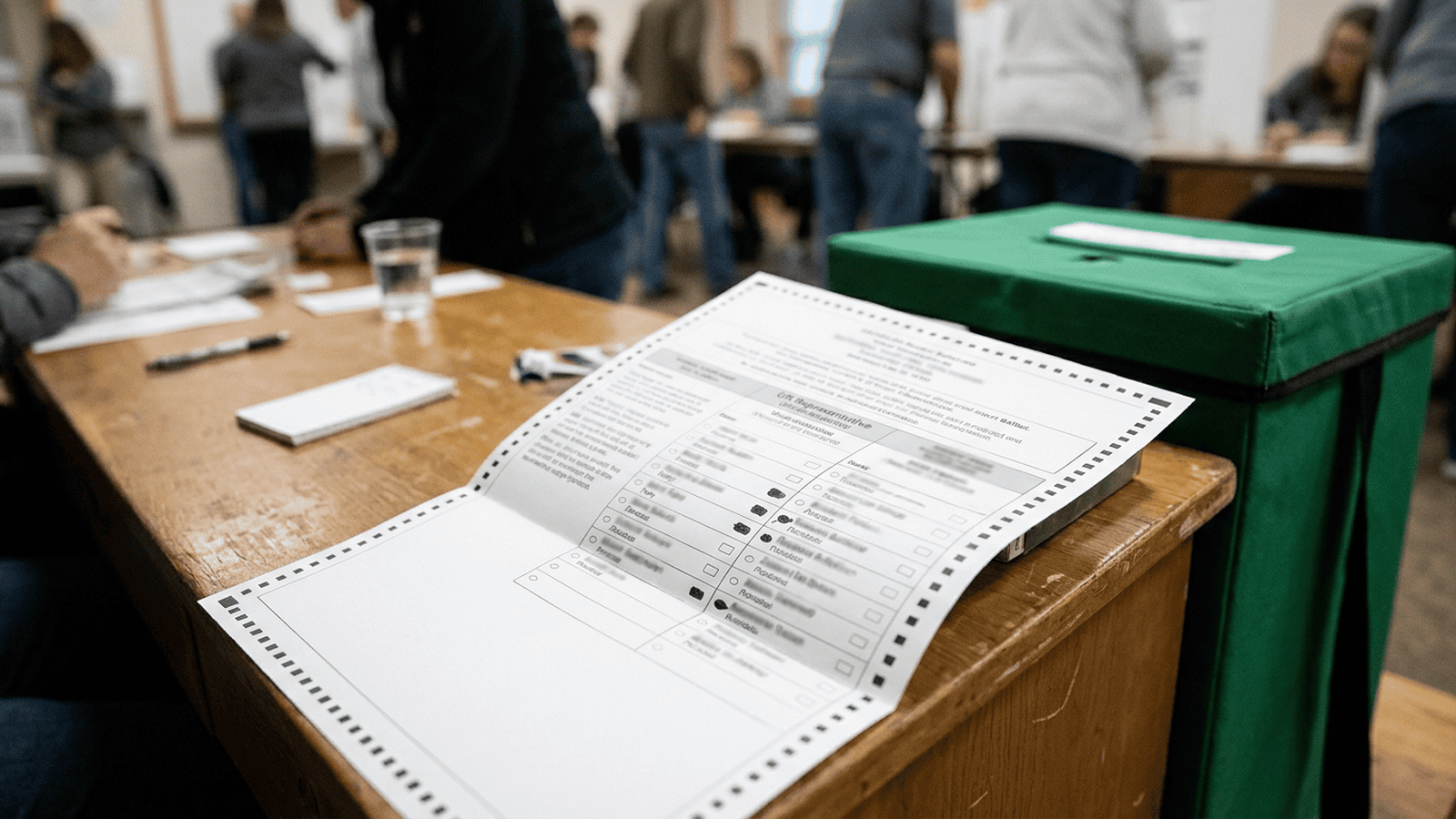
President Donald Trump called for Mary Peltola to be barred from next week’s Alaska Senate race after a report said a Democratic operative helped encourage a candidate named Daniel J. Sullivan to run. The candidate shares a name with Republican Sen. Dan Sullivan, and the ballot lets voters rank candidates. Peltola’s campaign and the Democratic Senatorial Campaign Committee deny any role in recruiting him. Alaska’s Supreme Court ruled that Daniel J. Sullivan Jr. may remain on the ballot after state officials tried to keep him off. The Justice Department has sued to prevent certification if Sen. Sullivan loses because of voter confusion, describing the filing as an effort to put guardrails in place.
TLDR: Trump says Peltola should be barred from Alaska’s Senate contest, citing an alleged effort to recruit a same-name candidate. Peltola’s campaign and the Democratic Senatorial Campaign Committee deny involvement, while a Justice Department lawsuit seeks to address possible voter confusion in certification.
President Donald Trump said Mary Peltola should not be allowed to run in next week’s Alaska Senate election, pointing to an alleged effort to put a second candidate named Dan Sullivan on the ballot. The accusation followed a New York Times report that people aligned with Peltola’s campaign helped recruit Daniel J. Sullivan Jr. His name matches that of Republican Sen. Dan Sullivan, who is also running. Peltola’s campaign and the Democratic Senatorial Campaign Committee deny involvement.
The dispute involves two separate questions: whether Daniel J. Sullivan can remain a candidate, and whether his presence could affect the result or its certification. Alaska’s Supreme Court ruled that Daniel J. Sullivan may stay on the ballot after state officials tried to remove him. The Justice Department has filed a lawsuit seeking to prevent certification if Sen. Sullivan loses because voters were confused by the names.
Trump’s stated objection is that Peltola should not be allowed to run because of the alleged recruitment effort. The report, as described, links people aligned with her campaign to efforts to encourage Daniel J. Sullivan to enter the race. That account is an allegation, not an established finding in the information available here. Peltola’s campaign and the Democratic Senatorial Campaign Committee deny playing a role in his candidacy.
The distinction matters. A report about campaign-aligned people and a candidate’s decision to run does not, by itself, establish that Peltola or her campaign directed the effort. The denials also do not resolve what any individual may have done. The available information does not specify who allegedly contacted Daniel J. Sullivan, what was said, or what evidence supports the report. Those details would be necessary to assess the claim more fully.
Nor does the allegation itself settle whether a candidate may appear on the ballot. In this case, the state’s highest court has ruled that Daniel J. Sullivan may stay on it, despite an attempt by state officials to remove him. That ruling addresses his ballot status. It does not establish that voters will be confused, determine the election result, or decide how the federal lawsuit will be resolved.
The Justice Department’s lawsuit concerns a later step: certification if Sen. Sullivan loses. Certification is the process of formally confirming an election result. The department seeks to prevent that step under the circumstance it describes, a loss by the senator linked to voter confusion. The information available does not say that confusion has been proven, that Sen. Sullivan has lost, or that a court has granted the department’s request.
That leaves the ballot and the certification process under scrutiny as the election approaches. For voters, the immediate fact is that Daniel J. Sullivan remains eligible to appear on the ballot under the state Supreme Court ruling. The federal case could affect what happens after votes are counted if Sen. Sullivan loses, but the stated request is conditional. It is not a finding that the result is invalid.
The practical effects described so far are procedural. The state court ruling means election officials must contend with Daniel J. Sullivan remaining on the ballot. The Justice Department’s request could affect whether the result is certified in the specified circumstance. No information provided describes added costs, new voter paperwork, changes to voting locations, or a revised election schedule. It also does not specify what enforcement steps would follow if certification were blocked.
The timing is tight because the election is next week, but no deadline for a decision in the federal case is provided. That leaves an important point unresolved: whether the court will act before the election or before certification becomes relevant. The state court has already ruled on ballot access, while the Justice Department is asking for a restriction tied to a possible result. These are related disputes, but they are not the same legal question.
Trump’s statement raises the political stakes by arguing that Peltola should be barred from running. The reported effort to recruit a namesake candidate, the denials from Peltola’s campaign and the Democratic Senatorial Campaign Committee, the state court ruling, and the federal lawsuit are separate parts of the dispute. None of the information provided establishes that Peltola herself arranged the candidacy or that confusion changed votes.
For now, Daniel J. Sullivan may remain on the ballot under Alaska’s Supreme Court ruling. The Justice Department is seeking to limit certification if Sen. Sullivan loses because of voter confusion, but the result and the outcome of that case are not yet known. The election will determine whether that condition becomes relevant. Until then, the claims about recruitment and confusion remain distinct from the court’s ruling on ballot access.

Mark Davis serves as the Senior Correspondent for Energy, Climate, and Resource Economics at Just Right News. In an era where the conversation around the environment is often dominated by alarmism and top-down mandates, Mark provides a vital, market-oriented perspective on the complex forces shaping our world. As the lead voice behind the acclaimed feature series “Power and the Planet,” he explores the intersection of environmental policy, global energy markets, and the fundamental economic principles that sustain modern civilization.
Mark’s pragmatic approach to resource management was forged in the high desert of his hometown, Albuquerque, New Mexico. Growing up in a region defined by both its breathtaking natural beauty and its rugged, resource-dependent landscape, he developed an early appreciation for the delicate balance between conservation and utilization. New Mexico’s unique position as a hub for both traditional energy production and cutting-edge scientific research provided Mark with a front-row seat to the evolution of the American energy sector. This upbringing instilled in him a deep-seated belief that true environmental stewardship is inseparable from economic prosperity and technological innovation.
Now based in Boulder, Colorado, Mark operates from the heart of the nation’s climate research community. While Boulder is often seen as a bastion of environmental idealism, Mark utilizes his post to provide a necessary counterweight, grounded in the realities of resource economics. He understands that energy policy does not exist in a vacuum; it has tangible consequences for the American taxpayer, the stability of the national power grid, and the strength of the domestic manufacturing sector. By reporting from the front lines of the climate debate, he is able to challenge prevailing narratives with hard data and a commitment to the principles of the free market.
Throughout his tenure at Just Right News, Mark has distinguished himself by focusing on the “Resource Economics” aspect of his beat. He frequently highlights the hidden costs of rapid energy transitions and advocates for an “all-of-the-above” energy strategy that prioritizes American energy independence. His work often shines a light on the geopolitical implications of resource scarcity, arguing that a secure nation must first be an energy-secure nation. Whether he is analyzing the impact of federal land-use regulations or investigating the supply chains required for new technologies, Mark remains focused on how policy decisions affect the lives and livelihoods of everyday citizens.
In “Power and the Planet,” Mark continues to bridge the gap between complex scientific concepts and the economic realities facing the country. He rejects the false choice between a healthy environment and a thriving economy, instead seeking out solutions that leverage American ingenuity and private-sector competition. For Mark, reporting on the climate is not about following the latest trends, but about ensuring that the conversation remains tethered to the foundational values of liberty, property rights, and fiscal responsibility. His contributions ensure that Just Right News readers receive a comprehensive, clear-eyed view of the challenges and opportunities defining the future of our planet.