

Pope Leo XIV’s doctors say he will not need further treatment after surgery for lung adenocarcinoma. Tests confirmed that the cancer was localized, and surgeons removed the lower lobe of his right lung in an operation lasting about 90 minutes. The tumor was found by chance during an examination for another reason, according to his surgeon. Leo left the Rome hospital four days after surgery and has resumed some public duties, including his Wednesday general audience at the Vatican. He is recovering at the Vatican and plans to return gradually to his activities. The Vatican says he is expected to travel to South America in early November; further treatment schedules and follow-up details have not been provided.
TLDR: Doctors say the pope’s lung cancer was localized and that surgery means no additional cancer therapy is required. Leo is recovering at the Vatican, has resumed public appearances, and is expected to travel to South America in early November.
Pope Leo XIV will not need additional treatment after surgery for lung cancer, his doctors said Wednesday. Test results showed that the cancer was localized, according to Dr. Luigi Carbone, the pope’s physician, and Dr. Stefano Margaritora, his surgeon. Their update offers a clear account of the next stage in the 71-year-old pontiff’s recovery: no further cancer therapy is required, while he gradually resumes his duties.
The doctors’ stated rationale is the test result. A subsequent cancer evaluation confirmed that no further therapy was required, they said. The finding that the cancer was localized is the central medical explanation for their decision. The statement did not provide additional treatment details or describe a broader care plan. It also did not say when the evaluation took place or offer more information about the tests used.
Leo’s diagnosis became public last week after he was admitted to a hospital in Rome. His admission had initially been described as surgery to remove a lung nodule. Doctors diagnosed lung adenocarcinoma, a common type of lung cancer, and removed the lower lobe of his right lung. The procedure lasted about 90 minutes. The report does not give further details about the operation or say whether the tumor was removed in one piece.
Margaritora later described the discovery as accidental in an interview with Vatican News. A small spot at the base of Leo’s lung was noticed during a routine examination, he said. The surgeon said the spot might not have been found if it had been located slightly higher. He also explained that Leo’s cancer was discovered during examinations for other reasons, rather than through preventive screening.
That account places the diagnosis within a routine medical examination, but it does not establish that the examination was a cancer screening. Margaritora said the tumor was found by chance. The report does not specify what prompted the examination, whether any additional tests are planned, or how often Leo will receive follow-up evaluations. Those details were not included in the doctors’ statement described in the report. The account also does not say whether the pope will have any limits on his daily activities during recovery.
Leo left the hospital on Saturday, four days after the operation, and was met by a large cheering crowd. At the Vatican the following day, he delivered his traditional noon prayer and thanked the faithful for their prayers and hospital staff for their care. He said the experience had brought him close to people living with illness or infirmity, and that he would gradually resume his activities.
The pope continued that return on Wednesday by hosting his usual general audience. He waved from the popemobile to the crowd gathered in St. Peter’s Square and blessed children raised toward him. These appearances show that Leo has resumed some public duties, but they do not establish that he is back to his full schedule. The report gives no timetable for resuming each of his duties. Leo is continuing his recovery at the Vatican.
The practical impact is limited to the medical and schedule details reported so far. The doctors say no further cancer therapy is required, and the operation removed the lower lobe of Leo’s right lung. No treatment costs, forms, compliance rules, or follow-up deadlines are specified in the account. The directly affected person is the pope; his public schedule is resuming gradually, and the Vatican has said he is expected to travel to South America in early November. The report does not describe any change to that travel plan or say what medical arrangements might be needed for the trip.
That trip remains an expected event, not a confirmed completion of his recovery. Leo has already returned to public appearances, while his doctors’ statement supplies the clearest available update on cancer treatment. The next steps described are his gradual return to activities and the expected South America trip in early November. The doctors have provided the medical assessment; the report gives no further schedule or oversight details, so those remain unspecified.
The public information therefore answers one central question: the doctors do not expect Leo to need further cancer treatment. It leaves other parts of his recovery less defined, including the timing and frequency of any future evaluations. His public appearances offer visible signs of a return to work, but the report does not say how his medical team will assess his progress. For now, the Vatican’s stated expectation is a gradual return to activities, alongside continued recovery at home.
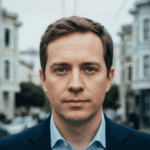
Mason Reed serves as a Staff Writer for Just Right News, where he spearheads the Future Frontiers & Special Projects desk. In an era defined by rapid technological shifts and evolving social landscapes, Mason provides a steady, principled voice, examining the innovations of tomorrow through the lens of traditional American values. His work is most prominently featured in his signature series, “The Next Horizon,” where he explores the intersection of emerging technology, national sovereignty, and the preservation of individual liberty.
A native of San Diego, California, Mason’s worldview was shaped by the unique culture of his hometown. Growing up in a region defined by its strong military presence and its history of maritime industry, he developed a deep-seated respect for the institutions that provide national stability and the entrepreneurial spirit that drives the American economy. This upbringing instilled in him a belief that true progress is not found in discarding the past, but in building upon a foundation of proven principles. His reporting often reflects this San Diego influence, emphasizing the importance of a robust national defense and the necessity of maintaining a competitive edge in the global marketplace.
Now based in San Francisco, Mason operates from the heart of the world’s technological engine. Living and working in the Bay Area provides him with a front-row seat to the advancements—and the ideological challenges—emanating from Silicon Valley. While many in the region embrace a “move fast and break things” mentality, Mason’s reporting serves as a vital counterweight. He offers Just Right News readers a “boots on the ground” perspective, documenting how radical local policies and the concentration of tech power impact the everyday lives of citizens. His proximity to the industry allows him to cut through the marketing jargon of big tech to uncover the real-world implications for privacy, free speech, and the nuclear family.
In his “Future Frontiers” beat, Mason tackles complex subjects ranging from the ethics of artificial intelligence to the burgeoning private space race. He approaches these topics with a healthy skepticism toward centralized bureaucracy, championing instead the decentralized innovations that empower individuals. Through “The Next Horizon,” he highlights the pioneers and thinkers who are working to ensure that the future remains a place where human dignity and constitutional rights are protected. He believes that the rapid pace of change requires more than just technical expertise; it requires a moral compass rooted in the Western tradition.
Throughout his tenure at Just Right News, Mason has remained committed to the idea that the future is something to be shaped, not merely accepted. His writing is characterized by a rigorous defense of American exceptionalism and a belief that the country’s best days lie ahead, provided it remains true to its founding ideals. Whether he is investigating the impact of automation on the American workforce or profiling the next generation of aerospace engineers, Mason Reed ensures that his readers are equipped with the insights they need to navigate a changing world with confidence and clarity.