

Pope Leo XIV’s doctors said Wednesday that he will not need further treatment after surgery for lung cancer. Test results confirmed that the cancer was localized, and an oncological evaluation found no need for additional therapy. Doctors removed the lower lobe of his right lung in an operation lasting about 90 minutes. Leo left the hospital four days later and is continuing his recovery at the Vatican, where he hosted his general audience Wednesday. The Vatican said he is expected to travel to South America in early November, though the report gives no detailed recovery schedule or further medical milestones.
TLDR: Doctors say Pope Leo’s lung cancer was localized and that tests show no further therapy is needed after surgery. He is recovering at the Vatican, with a South America trip expected in early November.
Pope Leo XIV will not need additional treatment after surgery for lung cancer, his doctors said Wednesday. Test results showed that the cancer was localized, according to a statement from Dr. Luigi Carbone, the pope’s physician, and Dr. Stefano Margaritora, his surgeon. Their conclusion is specific to the pope’s case and follows an oncological evaluation after surgery.
The stated medical rationale is straightforward: the evaluation confirmed that no further therapy is required. The doctors said the test results showed localized cancer. That finding is the basis they gave for concluding that additional treatment is not needed. The statement does not offer a broader claim about cancer care or outcomes for other patients.
Leo’s diagnosis became public last week after he was admitted to a hospital in Rome. The admission was initially described as surgery to remove a lung nodule. Doctors later identified the condition as lung adenocarcinoma, a common form of lung cancer, and removed the lower lobe of his right lung.
The operation lasted about 90 minutes. The doctors’ Wednesday statement followed that procedure and a subsequent evaluation. It reported that no further therapy was required, rather than setting out a longer treatment schedule or describing additional procedures. No further clinical details appear in the statement as presented in the report.
Margaritora said in an interview with Vatican News that the malignant tumor was found by chance. A small spot appeared at the base of the lung during a routine examination, he said. He added that the doctors would not have found it if it had been located slightly higher. His account describes how the spot came to attention in Leo’s case, not a general screening recommendation.
Margaritora also said Leo was not undergoing preventive screening for lung cancer. Instead, the examination was conducted for other reasons, and the spot was discovered during that process. The report does not say what those other reasons were. It also does not provide a screening plan for Leo or for other people.
The sequence is clear in the available account. Leo entered a Rome hospital for an operation described at first as removal of a nodule. Doctors removed the lower lobe of the right lung, and later test results confirmed localized cancer. The medical team then stated that no further therapy was required.
Leo, who is 71, left the hospital on Saturday, four days after the surgery. A large crowd greeted him as he departed. He delivered his traditional Sunday noon prayer at the Vatican and thanked the faithful for their prayers and the hospital staff for their care. Those public appearances followed his discharge, but the report does not present them as medical tests or as evidence about the cancer beyond the doctors’ statement.
On Wednesday, Leo hosted his usual general audience at the Vatican. He waved from the popemobile to people gathered in St. Peter’s Square and blessed children raised toward him. The report says he is continuing his recovery at the Vatican. Leo has said he will resume activities gradually, and the account does not give a detailed schedule for that return.
The practical impact described is limited to this individual medical case. Leo underwent surgery that removed the lower lobe of his right lung, spent four days before leaving the hospital, and is recovering at the Vatican. His doctors said the evaluation found no need for further therapy. The report identifies no fees, new paperwork, compliance requirements, enforcement steps, or medical deadlines. Those details are not part of the plan described in the available account, and no public policy change is reported.
The next stated step is Leo’s continued recovery. The Vatican said he is expected to travel to South America in early November. That is an expected trip, not a confirmed account of his recovery timetable or a medical clearance detailed in the report. His doctors’ statement remains the available medical update: the cancer was localized, and no further treatment is required.
The doctors have assessed the test results and stated their conclusion. The account provides no additional treatment schedule or oversight process, so neither should be assumed. Leo’s recovery and the expected trip are the next developments to watch, while the medical reassurance in the report rests on the doctors’ evaluation of his case.
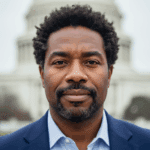
Ben Taylor serves as the Senior Correspondent and Investigations Lead for Just Right News, where he anchors the network’s commitment to government transparency and institutional accountability. With a career defined by a relentless pursuit of the facts, Taylor spearheads the acclaimed feature series “The Paper Trail,” a deep-dive investigative column that prioritizes primary source documentation over political rhetoric. Based in the heart of the nation’s capital, he has earned a reputation as one of the most formidable investigative journalists in Washington, D.C., known specifically for his mastery of public records and the Freedom of Information Act.
Taylor’s approach to journalism is deeply rooted in his upbringing in Kansas City, Missouri. Growing up in the “Show Me State,” he developed a healthy skepticism of centralized power and a profound respect for the common-sense values of the American heartland. This Midwestern foundation informs his reporting today, as he bridges the gap between the complex machinations of federal bureaucracy and the everyday concerns of citizens across the country. For Taylor, investigative reporting is not about chasing headlines; it is about ensuring that the government remains answerable to the people it serves.
As an African American man working within the conservative media landscape, Taylor brings a principled perspective to his beat. He views the Constitution and the right to information as the ultimate equalizers in a free society. His work often highlights how bureaucratic overreach and lack of transparency disproportionately affect individual liberties. By focusing on the “paper trail,” Taylor strips away the spin of partisan talking points, instead providing Just Right News readers with the raw data and internal communications that reveal how their tax dollars are spent and how policy decisions are actually made.
In his role as Investigations Lead, Taylor oversees a team dedicated to uncovering the stories that mainstream outlets often overlook. Whether he is auditing federal spending, investigating regulatory overreach, or exposing inefficiencies within the administrative state, his methodology remains consistent: follow the evidence wherever it leads. His presence in Washington, D.C., allows him to maintain a constant watch over the halls of power, yet he remains steadfastly connected to his roots, ensuring his reporting reflects the clarity and directness of his Missouri home.
Throughout his tenure at Just Right News, Taylor has become a vital voice for those who demand integrity in public office. He believes that a well-informed electorate is the strongest defense against government overreach, and he has dedicated his career to providing the public with the tools they need to hold their leaders accountable. Through “The Paper Trail” and his broader investigative work, Ben Taylor continues to set the standard for rigorous, document-driven journalism that champions the values of transparency, individual responsibility, and the rule of law.