

Sterling Williams, a New Orleans jail custodian, received a 2.5-year prison sentence after pleading guilty to malfeasance in office tied to the escape of 10 inmates. His attorney said Williams failed to follow protocol by shutting off water without first generating a work order, while maintaining that Williams did not know of the escape plan. An additional 2.5 years of the sentence was suspended, and Williams will receive three years of probation. All 10 inmates were captured and face aggravated escape charges, with jury trials scheduled for April. Separate indictments involving former Sheriff Susan Hutson and chief financial officer Bianka Brown remain allegations; both have pleaded not guilty.
TLDR: The sentence holds a New Orleans jail worker accountable for admitted failure to follow protocol before 10 inmates escaped. The inmates were all captured, and their aggravated escape cases are scheduled for jury trial in April.
A New Orleans jail custodian has been sentenced to 2.5 years in prison for his role in a breakdown that helped 10 inmates escape. Sterling Williams, 34, pleaded guilty to one count of malfeasance in office. The sentence marks a clear consequence for a public employee who failed to follow required workplace protocol, even though his attorney said Williams did not knowingly assist the escape plan.
The case offers no stated government policy rationale or new jail-security rule. The facts do show why established procedures matter in a public institution: a routine maintenance decision can affect security when the work is done without the required process. Williams’ attorney said a work order should have been generated before the water was shut off for a clogged toilet.
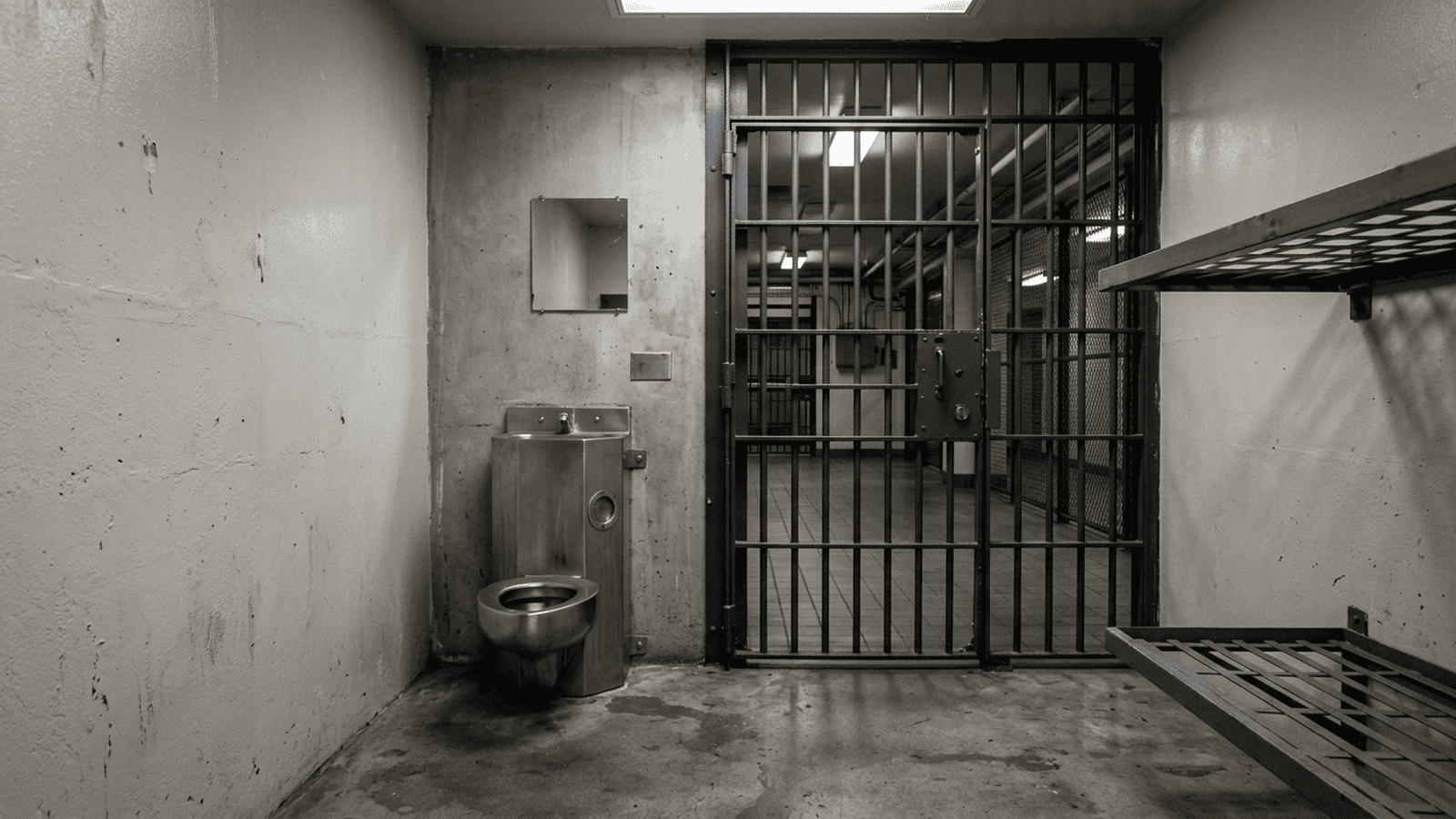
The escape happened in May 2025. After Williams turned off the water in a cell, 10 inmates removed a toilet, crawled through a gap in the wall and scaled a fence to get out of the jail. They left behind a graffiti note reading, “To Easy LoL.” The episode was described as one of the largest jailbreaks in recent U.S. history.
Williams admitted that he failed to follow protocol in his job as a public employee. His attorney, Michael Kennedy, said it was possible Williams’ actions aided a plan made by the inmates, but maintained that Williams did not know about that plan. The distinction is central to the case: Williams pleaded guilty to malfeasance, while the state dropped 10 charges accusing him of being a principal to aggravated escape.
Those dropped charges carried a possible sentence of up to 10 years in Louisiana. Williams instead received a 2.5-year prison sentence, with an additional 2.5 years suspended, and three years of probation. The sentence establishes a direct consequence for the admitted protocol failure without treating the worker as though prosecutors had proved that he knowingly joined the escape plot.
The inmates’ departure was followed by a lengthy effort to locate them. All 10 were eventually captured. One inmate, a convicted murderer, remained at large for five months before being found hiding beneath a house in Atlanta. All 10 now face aggravated escape charges and are scheduled for jury trial in April.
The case also reaches beyond the custodian, though the legal status of each matter differs. At least 14 other people, many described as friends and family of the escapees, were arrested and accused of helping. The alleged assistance included providing food, cash, transportation and shelter. Those are accusations, not findings of guilt, and the supplied account does not report the outcomes of those cases.
A grand jury earlier handed down a 30-count indictment against then-Orleans Parish Sheriff Susan Hutson. The charges include malfeasance, obstruction of justice and falsifying public records. Hutson is not accused of helping the inmates escape, and she has pleaded not guilty. Louisiana Attorney General Liz Murrill said a state probe found that Hutson’s poor management led to the jailbreak.
Bianka Brown, the sheriff’s office chief financial officer, was also indicted on 20 similar charges and has pleaded not guilty. The indictments represent allegations, not convictions. The reporting places management and record-keeping under scrutiny, but it does not detail new security rules, a wider reform plan or a change in jail funding.
The practical impact established in the case is specific. Williams received 2.5 years in prison, another 2.5 years of his sentence was suspended, and he will serve three years of probation. The attorney said a work order should have been filed before the water was shut off; the account does not identify a particular form, filing deadline, fee or new compliance system. The consequences directly affect Williams, while the inmates’ aggravated escape cases are set for jury trial in April. Further case outcomes and any additional oversight steps are not specified in the account.
The sentence makes the cost of failing to follow a public workplace protocol concrete, while the suspended time and probation remain part of the court’s order. The next known step is the inmates’ scheduled April trials; the indictments against Hutson and Brown remain unresolved. Those proceedings are necessary steps for determining responsibility, and the experts have this handled.

Deborah Cole serves as a Senior Correspondent for Just Right News, where she spearheads the network’s coverage of Housing, Infrastructure, and Mobility. With a career defined by a commitment to rigorous reporting and a focus on the fundamental pillars of American community life, Deborah brings a principled perspective to the complex issues that dictate how and where we live. Her work is grounded in the belief that sound policy, fiscal responsibility, and respect for private property are the essential foundations of a prosperous society.
Originally from Boston, Massachusetts, Deborah’s upbringing in one of the nation’s oldest and most historically significant cities deeply influenced her professional trajectory. Growing up amidst the architectural legacy and dense urban planning of New England, she developed an early appreciation for the importance of durable infrastructure and the role of local tradition in shaping neighborhoods. Her perspective is informed by the classic American values of her hometown—hard work, community cohesion, and a healthy skepticism of top-down bureaucratic mandates that often overlook the unique needs of individual citizens.
Today, Deborah operates from her base in Austin, Texas, a city that serves as a primary laboratory for her reporting. Austin’s rapid expansion and its status as a hub for innovation and migration provide her with a front-row seat to the most pressing challenges in modern infrastructure and housing. From the Lone Star State, she chronicles the tensions between rapid growth and the preservation of the American Dream, often highlighting how market-driven solutions and deregulation can address the housing shortages that plague many of the country’s metropolitan areas.
At Just Right News, Deborah is perhaps best known for her signature feature series, “Where We Live.” Through this platform, she explores the intersection of public policy and private life, moving beyond mere statistics to tell the stories of families, small business owners, and local developers. Her reporting frequently highlights the importance of mobility—not just in terms of transportation and transit, but as a vehicle for economic opportunity and social stability. She remains a staunch advocate for the taxpayer, consistently scrutinizing government spending on large-scale projects and advocating for transparency in how infrastructure dollars are allocated.
Deborah’s beat is more than just a collection of policy topics; it is an investigation into the physical and legal structures that allow families to flourish. Whether she is reporting on the impact of zoning laws on suburban development or the necessity of maintaining the nation’s highway systems, her work is characterized by a dedication to the facts and a respect for the constitutional principles that protect the rights of homeowners.
As a Senior Correspondent, Deborah Cole continues to be a vital voice for Just Right News, providing the audience with the clarity and context needed to navigate an ever-changing landscape. Her reporting ensures that the values of individual liberty and local sovereignty remain at the forefront of the national conversation regarding the future of our cities and towns. Through her tireless efforts, she remains committed to informing the public on the issues that hit closest to home.