

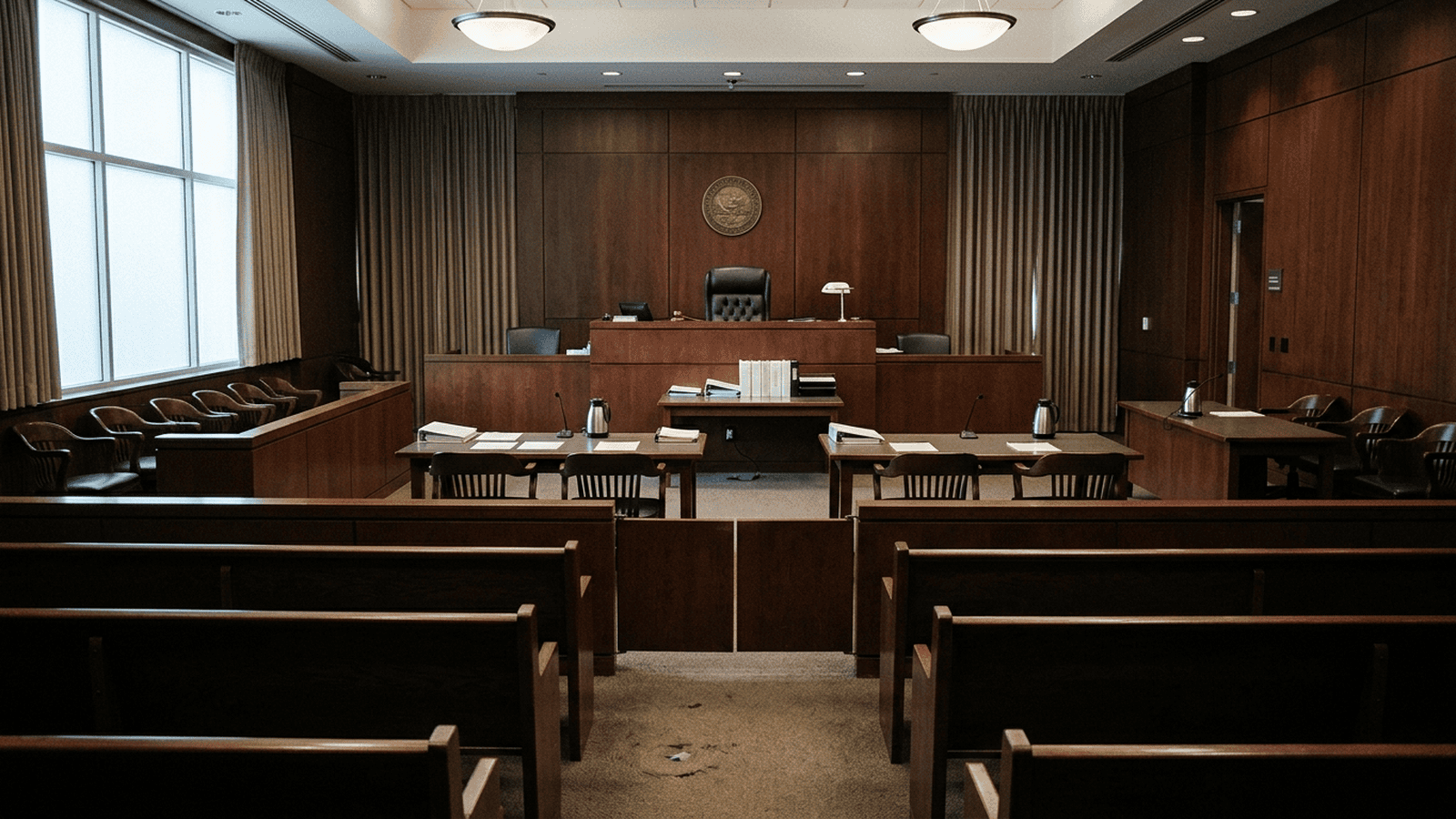
Duane “Keffe D” Davis received a sentence of 40 years to life in prison Tuesday for Tupac Shakur’s 1996 murder. Judge Carli Kierny said Davis will receive credit for time already served, following his August conviction. Prosecutors said Davis was in the white Cadillac from which the shots came, while his defense argued there was no tangible record placing him in Las Vegas that night. The case’s long path from the 1996 shooting to conviction has now reached sentencing, though the excerpt gives no future court dates or oversight schedule. Davis also asked for some belongings taken from his home to be returned, and the report does not say whether that request was resolved.
TLDR: Davis was sentenced to 40 years to life for Shakur’s murder, with credit for time already served. The excerpt gives no further court deadlines or schedule for Davis’s request to have belongings returned.
Duane “Keffe D” Davis was sentenced Tuesday in Las Vegas to 40 years to life in prison for the 1996 murder of rapper Tupac Shakur. Judge Carli Kierny said Davis would receive credit for time already served. The sentence follows Davis’s conviction in August, closing a major courtroom chapter in a case that remained unresolved for decades.
The record does not give an official rationale for the sentence beyond Davis’s murder conviction and the judge’s sentencing decision. The case proceeded through the court system after a jury found Davis guilty of murder with a deadly weapon. That conviction, rather than a new government policy, is the basis for the prison term announced Tuesday.
Davis, 63, had pleaded not guilty. The conviction was for murder with a deadly weapon with the intent to promote, further or assist a criminal gang, though prosecutors said at the time that the state would dismiss the gang-related portion of the charge. The distinction matters: the source reports both the conviction language and the prosecutors’ stated plan regarding the gang-related part.
The case centered on the shooting of Shakur, widely considered a hip-hop legend. Shakur was shot while stopped at a red light in Las Vegas on Sept. 7, 1996, and died six days later. Marion “Suge” Knight, who was in the targeted vehicle, was also wounded. The death became one of the most notorious celebrity killings in modern history, while questions about who fired the shots persisted for years.
Investigators had known that a white Cadillac pulled beside Shakur’s vehicle at the stoplight. Davis later spoke publicly about being inside that car. Prosecutors argued that he had gone “hunting” for Shakur as retaliation against the rapper and Knight, co-founder of Death Row Records. Chief Deputy District Attorney Binu Palal said Davis shot Shakur after Shakur and Knight had beaten Davis’s nephew, referring to an account Davis had given for a time.
Palal acknowledged at trial that Davis had changed parts of his account after first speaking openly about the shooting. He argued that key details remained consistent, including Davis’s description of being inside the white Cadillac from which the fatal shots came. Prosecutors said four men were in the car. Davis was the only one still alive by the time of his 2023 arrest and eventual conviction, and another man prosecutors said initially supplied the gun was also dead.
The defense challenged the evidence connecting Davis to Las Vegas that night. Michael Sanft, Davis’s attorney, argued that evidence beyond Davis’s statements did not place his client there. Sanft told jurors that surveillance footage, phone logs and other tangible records were unavailable. Davis’s attorneys also tried to keep his 2019 memoir, “Compton Street Legend,” out of the trial as evidence, but prosecutors opposed that request. The excerpt does not report the jury’s assessment of each item separately, but it records the competing arguments presented in court.
At sentencing, Davis spoke briefly and asked for some belongings taken by police from his home, including pictures, to be returned. He said he had nothing more to say. The report does not say whether the court ruled on that request or identify a process or timeline for returning the items. The direct consequence announced Tuesday is a prison sentence of 40 years to life, adjusted by credit for time already served.
The practical impact described in the record is limited to that sentence, the credit for time served, and Davis’s request concerning seized belongings. No fee, new paperwork requirement, compliance deadline, or additional enforcement step is identified. Nor does the excerpt specify a schedule for later court review. Davis’s conviction and sentence restrict his freedom for a lengthy period, and the absence of further scheduling information is part of the record rather than a basis for guessing at what comes next.
The sentencing brings a formal result to a case whose central questions remained open for years. The excerpt identifies no upcoming deadline or oversight process, so none can be stated as a next step. Any necessary steps beyond the sentence and the judge’s credit for time served are not described in the available account; the court record remains the source for what follows.

Sophie Carter serves as a Staff Writer for Just Right News, where she anchors the outlet’s critical coverage of Elections, Influence, and Democracy Infrastructure. In an era where the mechanics of voting and the flow of political capital are under constant scrutiny, Sophie provides a steady, principled voice dedicated to the preservation of American institutional integrity and the rule of law.
Raised in Charlotte, North Carolina, Sophie’s perspective was forged in a community that balances rapid modern growth with a deep respect for tradition and civic duty. Growing up in the Queen City, she witnessed firsthand how a robust local culture depends on the trust between the citizen and the state. This upbringing instilled in her a foundational belief that the right to vote is a sacred trust—one that must be protected from both administrative overreach and the encroaching influence of special interest groups. Her reporting reflects these North Carolina roots, emphasizing the importance of community-led governance and the preservation of the individual’s voice in the face of nationalized political movements.
Now based in Atlanta, Georgia, Sophie operates from the heart of one of the nation’s most pivotal and contested political landscapes. Her location allows her to report from the front lines of the debate over election security, legislative reform, and the modernization of voting systems. For Sophie, the “infrastructure” of democracy is not merely a matter of machines and ballots; it is the collection of laws, people, and transparent processes required to maintain public confidence. Her work often highlights the necessity of clear, enforceable standards that ensure every legal vote is counted fairly and that the machinery of our republic remains accountable to the taxpayers who fund it.
Central to her work at Just Right News is her acclaimed feature series, “The Price of a Vote.” Through this ongoing project, Sophie explores the complex web of influence that shapes modern campaigns and policy decisions. She delves into how high-level lobbying, non-governmental organizations, and shifting bureaucratic regulations impact the weight of an individual citizen’s ballot. By examining the financial and structural pressures placed on the electoral process, she provides readers with a comprehensive look at the forces vying for control over the American political system.
Sophie’s approach to journalism is rooted in a commitment to the constitutional framework. She views her role as a watchdog for the voter, ensuring that the systems meant to serve the public remain transparent and free from corruption. Whether she is analyzing the implementation of new voting technologies or investigating the influence of outside money on state-level policy, her work is characterized by a rigorous adherence to facts and a refusal to succumb to the sensationalism that often plagues modern political reporting.
At Just Right News, Sophie Carter continues to be a vital resource for readers who value clarity, conviction, and a defense of traditional American values. Her deep ties to the Southeast and her specialized focus on the mechanics of our republic make her an essential voice in the ongoing conversation about the future of American self-governance. Through her reporting, she remains dedicated to the idea that a secure and honest electoral system is the bedrock of a free and prosperous society.