

A shooting involving federal immigration agents in Marble Hill has sharpened the dispute between New York Mayor Zohran Mamdani and the Trump administration. Mamdani called for ICE operations in the city to end, but Homeland Security Secretary Markwayne Mullin said enforcement would not pause. City sanctuary rules limit active cooperation with federal civil immigration enforcement, while activists argue that the NYPD still assists ICE. Mamdani’s next decisions on police leadership and the Strategic Response Group face pressure from his left-wing base and Governor Kathy Hochul. The excerpt reports no new fees, forms, compliance deadlines, or announced review, so the immediate impact remains a continuing enforcement operation and an unresolved federal-local conflict.
TLDR: Federal immigration enforcement continues in New York after a shooting in Marble Hill, despite Mayor Zohran Mamdani’s demand that ICE operations end. The account reports no new fees, forms, or deadlines, while the mayor faces competing demands over NYPD cooperation and police oversight.
A shooting involving federal immigration agents in northern Manhattan has put New York Mayor Zohran Mamdani’s relationship with the Trump administration under pressure. Mamdani has called on President Donald Trump to end ICE operations in the city. Homeland Security officials have said enforcement will continue, leaving the mayor’s demand unanswered and the federal-local disagreement in view.
The federal government’s stated position is that immigration enforcement in New York will not be paused. Homeland Security Secretary Markwayne Mullin said, “We’re not putting a pause on enforcement.” The excerpt gives no broader official explanation for the decision to continue operations. It does report that ICE official Marcos Charles said the injured man had accelerated his vehicle toward officers.
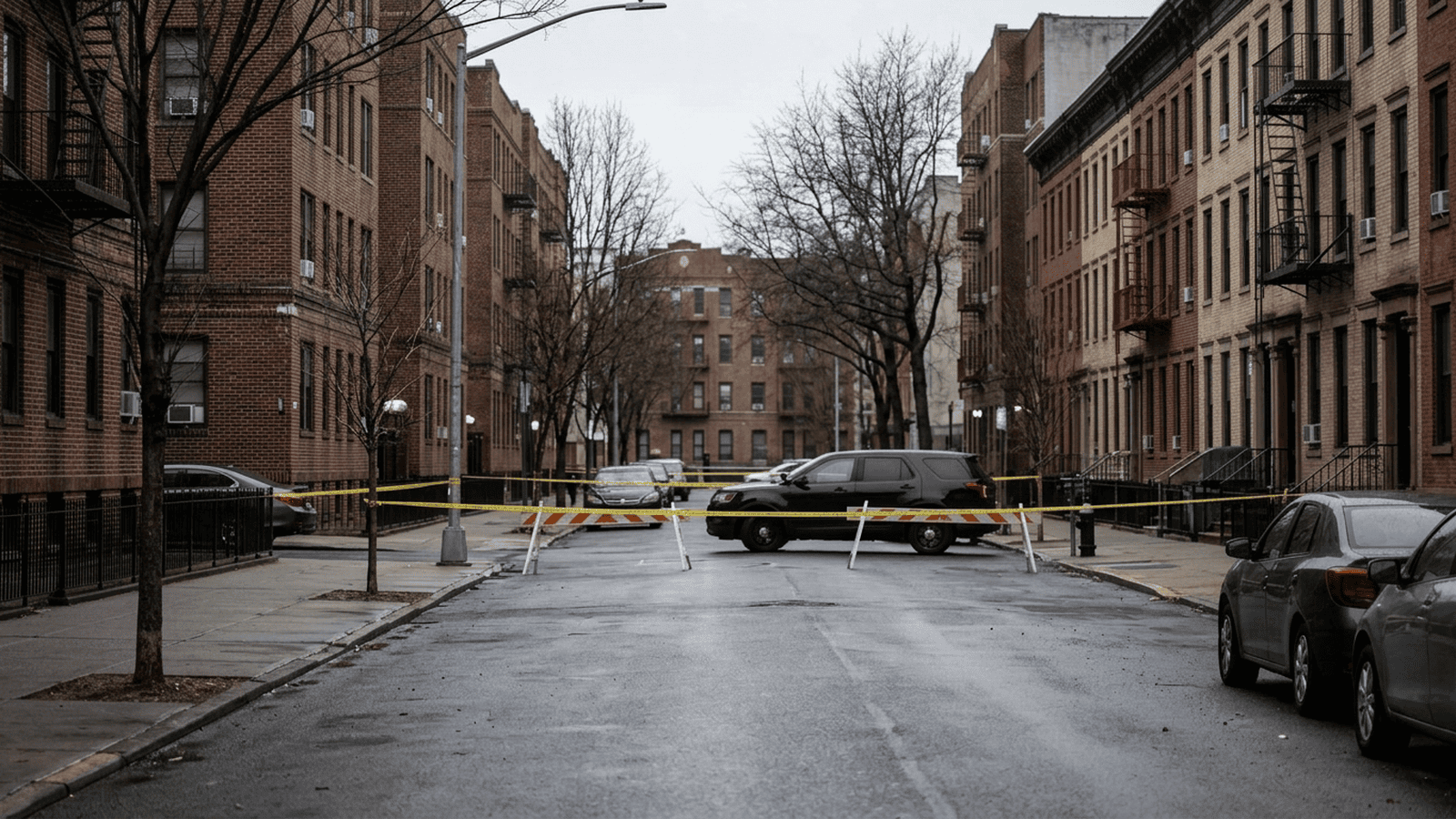
The NYPD said federal agents were involved in a shooting at about 4 p.m. on October 8 in Marble Hill. The injured man, Oscar Belgal, a 28-year-old immigrant from the Dominican Republic, was conscious and receiving medical care, according to the police statement. A five-year-old boy, whom police believe was Belgal’s son, was in the back seat of the car.
Hours after the incident, Mamdani called the situation serious and said he had contacted Trump. At a press conference, the mayor said a two-hour conversation with Trump and Mullin had not secured Belgal’s release. Mamdani repeated his demand that the president end ICE enforcement actions in New York and said he believes the agency should be abolished.
The federal response was direct. On October 9, Mullin said there were no plans to pause immigration enforcement activities in New York. He also criticized the city’s sanctuary policies, which limit active cooperation by city agencies with federal civil immigration enforcement unless a person has been convicted of serious felonies. The excerpt does not describe any new federal rule, fee, filing requirement, or compliance deadline arising from the shooting.
That distinction matters. The immediate event has not produced a reported policy change, but it has clarified the divide between federal enforcement and the city’s limits on cooperation. New York’s policies also restrict ICE access to city property and New Yorkers’ private data, according to the excerpt. The NYPD does not officially collaborate with ICE, though activists say the department’s actions still assist federal operations.
Mamdani’s working relationship with Trump has included direct contact despite their disagreements. He hosted the president at Gracie Mansion on September 21 and has met him three times since his election last year. A prior conversation led to the release of a Columbia University student detained by ICE in her dorm room. This time, Mamdani said, his effort to obtain Belgal’s release did not succeed.
The mayor now faces competing pressure over public safety, police oversight, and his political base. Left-wing activists have called for the removal of Police Commissioner Jessica Tisch and an end to NYPD cooperation with ICE. Some have also urged Mamdani to disband the Strategic Response Group, a police unit he has promised to dissolve but has not officially ended. Tisch supports retaining the unit, and Governor Kathy Hochul encouraged Mamdani to keep Tisch as commissioner.
After the shooting, NYPD officers arrived, erected barriers, and pushed protesters back. Democratic socialist Darializa Avila Chevalier was shoved to the ground during the disturbance, according to the excerpt. She later pressed Mamdani to follow through on his promise regarding the Strategic Response Group. The New York City chapter of the Democratic Socialists of America called for Tisch’s removal if she cannot end what it described as NYPD complicity with ICE.
The practical impact is therefore chiefly operational and political, rather than a new paperwork or cost burden identified in the reporting. ICE enforcement continues in New York, while sanctuary rules limit when city agencies may actively assist federal civil immigration enforcement. The city’s restrictions on access to property and private data remain part of the setting. No new forms, fees, deadlines, or specific compliance penalties are reported. Residents, city agencies, federal officers, and local police are directly caught in the jurisdictional dispute; the details of any further operational changes remain unspecified.
The shooting has also put Mamdani’s public promises beside the actions of city police during protests and the continuing federal operations. The mayor’s demand for an end to ICE activity conflicts with the department’s stated position that enforcement will proceed. Those facts leave unresolved questions about the scope of local cooperation and the mayor’s authority to change it. The reporting identifies no announced review, investigation timeline, or upcoming deadline. Any further steps and oversight remain unspecified in the available account.

Miles Harrington serves as the Senior Correspondent for Federal Systems & Executive Power at Just Right News, where he brings a disciplined, constitutionalist lens to the inner workings of the American government. With a focus on the mechanics of the federal bureaucracy and the limits of executive authority, Harrington has established himself as a vital voice for readers who value transparency, accountability, and the preservation of the separation of powers.
A native of Richmond, Virginia, Harrington’s perspective is deeply rooted in the traditions of the Old Dominion. Growing up in a city defined by its historical significance and its role as a center of American jurisprudence, he developed an early appreciation for the foundational principles of the Republic. His upbringing in Richmond—a place where the legacy of the Founding Fathers is woven into the landscape—instilled in him a belief that the federal government should remain within its constitutional bounds. This background informs his skepticism of centralized overreach and his commitment to reporting on the ways in which the administrative state impacts the lives of everyday citizens.
In his current role, Harrington specializes in the complexities of federal systems. He doesn’t just report on the headlines of the day; he digs into the structural shifts within the executive branch that often go unnoticed by the mainstream press. Whether he is analyzing the implications of a new federal regulation or investigating the expansion of agency jurisdiction, his work is characterized by a rigorous adherence to the facts and a dedication to the rule of law.
Harrington is perhaps best known for his signature feature series, “How Washington Works.” Through this ongoing project, he demystifies the often-opaque processes of the nation’s capital, pulling back the curtain on the “Deep State” and the unelected officials who wield significant influence over national policy. By breaking down complex legislative maneuvers and executive orders, he empowers Just Right News readers to understand the true levers of power in Washington. His reporting serves as a necessary check on the federal government, ensuring that the actions of those in power are held up to the light of public scrutiny.
Now based in Washington, D.C., Harrington operates at the epicenter of the political world, yet he remains intentionally distanced from the “Beltway bubble.” His proximity to the halls of power allows him to maintain a robust network of sources across the federal landscape, but his heart remains in the principled conservatism of his Virginia roots. He views his role not merely as a reporter, but as a steward of the public trust, dedicated to providing the clarity and context that conservative voters need to navigate an increasingly complex political environment.
Through his sharp analysis and unwavering commitment to the truth, Miles Harrington continues to be a cornerstone of the Just Right News team. His work ensures that the principles of limited government and executive restraint remain at the forefront of the national conversation, providing a crucial service to those who believe in a government that is truly of, by, and for the people.