


The Christopher Street Project, led by founder Tyler Hack, is working to elect candidates who support trans rights and hold politicians accountable. The group trains candidates in campaign messaging and works with queer and non-queer candidates. Hack pointed to Ed Markey’s Massachusetts primary victory and other candidates the project supported, but the account does not establish the group’s financial role or explain what caused those results. As midterms approach, the project hopes wins in competitive seats will help shape a strategy for 2028; its target races, costs and timetable are not specified. The account describes plans and goals, rather than a detailed campaign schedule or a measure of the group’s effect.
TLDR: Tyler Hack’s Christopher Street Project is preparing candidates and promoting campaign messaging focused on trans rights ahead of the midterms. The excerpt describes its goals and examples but provides no budget, candidate target list or timetable.
The Christopher Street Project, a political action group focused on electing candidates who support trans rights, is preparing for the midterm elections with a strategy centered on candidate training, campaign messaging and accountability. Founder and executive director Tyler Hack says the group wants to help elect more supporters of trans rights, including trans candidates, while also working with candidates who are not queer.
Hack says the organization was created after the 2024 election, when, in Hack’s account, Republicans campaigned against transgender Americans and some Democrats distanced themselves from trans people. Hack says the project aims to elect pro-trans candidates and hold politicians accountable. Its stated approach includes training candidates to use what the group considers effective and committed messaging.
The group’s strategy does not require every candidate to take the same position on every sports-policy question. Hack said a Democrat in a competitive district need not say that all trans children should play in all levels of sports regardless of league rules or school boards. Instead, Hack described a broader approach: candidates can keep attention on other campaign issues while declining to abandon support for trans rights.
The interview presents the group’s plans and political judgments, not an independent assessment of how its approach performs across elections. The excerpt provides no budget, fundraising total, candidate count, or campaign spending figure for the Christopher Street Project. It also does not give details about the group’s training program, such as its schedule, curriculum, or the number of candidates who have taken part.
Hack points to recent primary contests as examples of the candidates the group has supported or campaigned with. The list includes Brad Lander and Claire Valdez in New York, Peggy Flanagan in Minnesota, and Abdul El-Sayed in Michigan. The excerpt does not provide vote totals for those races or specify the group’s financial role in each campaign.
Hack also cited the Massachusetts Democratic Senate primary, where incumbent Ed Markey defeated Representative Seth Moulton. Moulton had drawn attention after comments about transgender athletes following the 2024 election. Hack campaigned for Markey in September, and the article says Markey made Moulton’s remarks a key theme of his campaign. Hack described the result as evidence that trans rights mattered in the contest. The excerpt does not establish how much that issue influenced voters compared with other factors.
The race is one contest, and the group’s wider test will come in the coming election cycle. Hack said the goal is to produce examples of candidates in difficult seats who supported trans rights and won. Hack said those results could help shape a playbook for 2028. That outcome remains uncertain, and the excerpt does not name specific midterm candidates or districts that the group plans to target.
The group’s candidate model includes people with different backgrounds. Hack said one early endorsement went to Adelita Grijalva in Arizona’s Seventh District, where she ran against two queer candidates. Hack said Grijalva had the strongest record on delivering for trans youth and other marginalized people. The excerpt does not include independent comparisons of the candidates’ records or further information about the endorsement process.
Hack said the project wants more queer people, particularly trans people, elected to office. Hack also argued that candidates who are not queer can support the group’s goals through their records and willingness to advocate. The interview states that the country has had one trans federal elected official and says the organization is preparing to elect more trans members of Congress in future election cycles. It does not name prospective candidates or set a timetable for those efforts.
Hack also described a political challenge: the group believes Democrats need both a strong majority and lawmakers willing to support its priorities, including when political consultants advise against doing so. Hack attributed recent rights rollbacks to electoral defeat and said Republicans are spending hundreds of millions of dollars on anti-trans advertisements. The excerpt offers no specific spending breakdown or independent accounting for that figure.
For voters, candidates and campaigns, the practical effects described are political rather than regulatory. The project offers candidate training and endorsements, and Hack has campaigned with candidates. The excerpt identifies no fees, required forms, legal compliance rules, enforcement process, or filing deadlines associated with the organization. It also does not quantify campaign costs or explain how candidates are selected beyond the examples Hack discussed.
The next steps are the upcoming midterm campaigns and the organization’s work to prepare candidates for later election cycles. Hack says the group will seek examples of candidates who can support trans rights and win in competitive seats. The excerpt provides no formal oversight schedule or announced deadlines for the project, so its candidate activity and election results remain the clearest measures to follow.
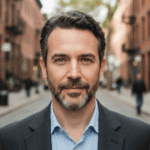
Max Grant serves as the Senior Correspondent for Data and Financial Forensics at Just Right News, where he brings a meticulous, investigative eye to the complex world of numbers. In an era where media narratives often overshadow objective reality, Max operates on a simple but firm principle: while rhetoric can be manipulated, the ledger never lies. As the architect behind the acclaimed feature series “Numbers That Talk,” he has carved out a vital niche in conservative journalism, translating dense financial data into clear, actionable insights for the American public.
Max’s journey to the forefront of financial reporting began in Buffalo, New York. Growing up in the Queen City, he was raised with the grit and grounded perspective typical of the Rust Belt. Buffalo is a place that understands the value of a dollar and the consequences of economic shifts on the working class. This upbringing instilled in Max a deep-seated respect for fiscal responsibility and a healthy skepticism toward bureaucratic overreach. He carries the spirit of his hometown into every investigation, viewing his work not just as reporting, but as a form of public service dedicated to protecting the interests of taxpayers and everyday citizens.
Now based in Brooklyn, New York, Max operates from the heart of one of the world’s most influential financial and cultural hubs. This vantage point allows him to keep a close watch on the institutions that drive the global economy. Living and working in a city often defined by progressive policy experiments, Max provides a necessary counter-perspective, using his forensic skills to analyze the real-world costs of local and national governance. His proximity to the financial district ensures he is never far from the source of the data he deconstructs, yet he remains firmly rooted in the conservative values that prioritize transparency and individual liberty.
His beat, Data and Financial Forensics, is more than just a job title; it is a commitment to uncovering the truth hidden within spreadsheets and annual reports. In “Numbers That Talk,” Max dives deep into federal spending, corporate accountability, and the intricate web of international finance. He has a unique ability to spot the anomalies that others miss, identifying where public funds are being mismanaged or where economic policies are failing to deliver on their promises. His reporting is characterized by a relentless pursuit of clarity, stripping away the jargon to show readers exactly how their money is being used and how the economy is truly performing.
At Just Right News, Max Grant is recognized as a steady hand and a sharp mind. He understands that for a free society to function, its citizens must have access to the facts regarding their financial future. By combining his British heritage’s tradition of rigorous inquiry with an American drive for accountability, Max ensures that the numbers don’t just sit on a page—they tell the story of where the country has been and where it is headed. His work stands as a testament to the power of forensic journalism in holding the powerful to account and championing the principles of a transparent, fiscally sound nation.