

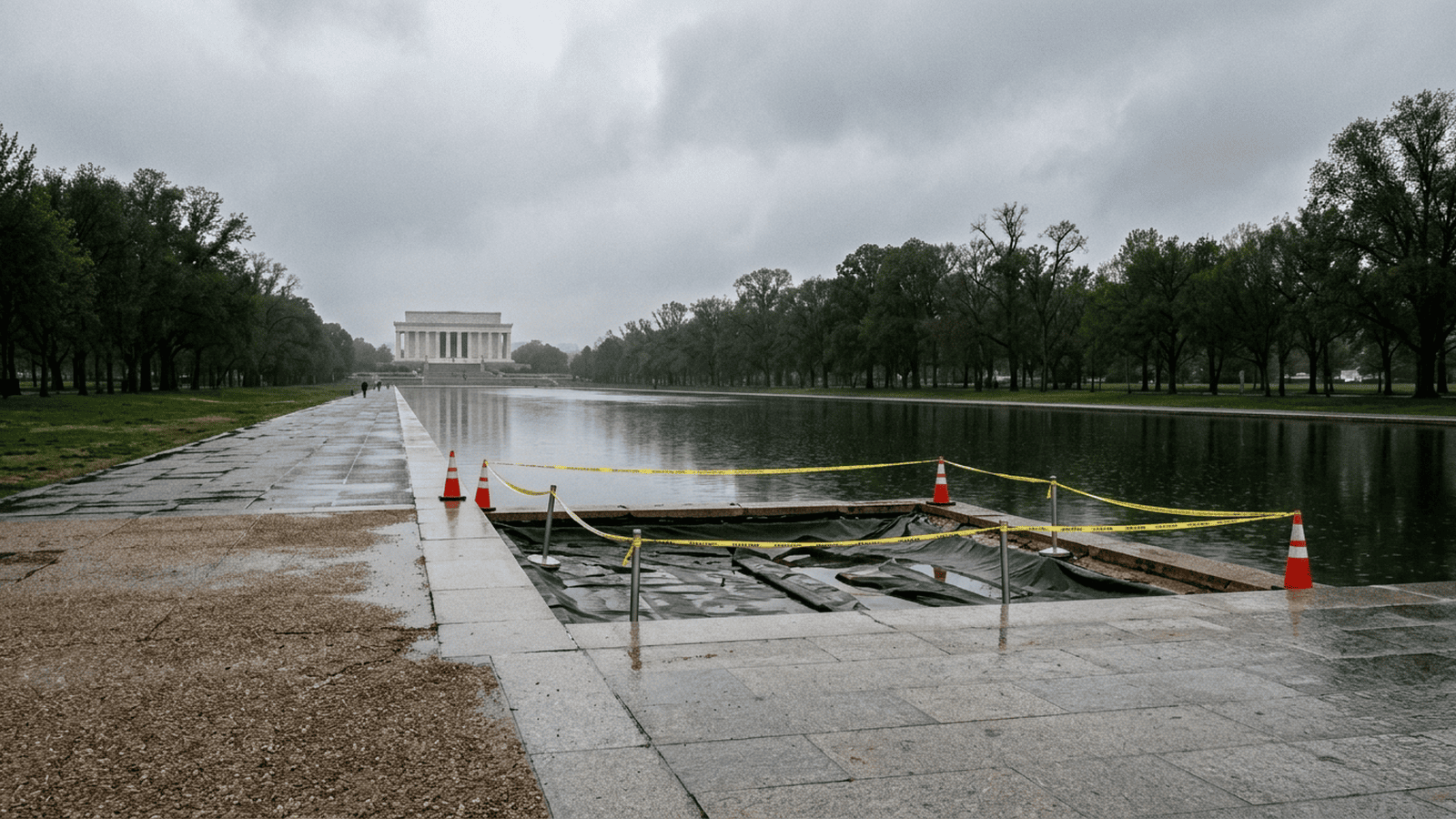
David Hearn’s attorneys have asked the Justice and Interior department inspectors general to review his arrest, indictment and the dismissal of his Reflecting Pool case. They allege that evidence, detention procedures and prosecutorial conduct deserve examination, but the allegations are not findings by the watchdogs. Prosecutors dismissed the case after information indicated that a contractor’s botched installation caused the damage, and a judge later barred the case from being brought again. Hearn was held for five hours, received two citations and faced a felony charge that carried a potential sentence of up to ten years. The letter asks for a full review, but the account gives no investigation timetable or confirmation that either inspector general has opened one.
TLDR: Hearn’s lawyers want Justice and Interior watchdogs to examine the arrest and prosecution after a judge permanently dismissed the case. Their claims remain allegations, and the account does not confirm whether an investigation has begun or set a timetable.
Attorneys for Olympic canoeist David Hearn have asked the inspectors general at the Justice and Interior departments to investigate his arrest, indictment and the dismissal of his case. Their request, made in a letter Tuesday, seeks a detailed review of how the agencies handled the matter. It does not establish that misconduct occurred, and the excerpt does not say whether either watchdog has opened an investigation.
The stated purpose of the request is to determine what happened inside the departments and how the case proceeded. Hearn’s attorneys argue that a full and fair review is needed. That is their position, not a finding by the inspectors general or a court.
Hearn was accused of damaging the Lincoln Memorial Reflecting Pool and indicted on a felony count of destroying government property. U.S. Attorney Jeanine Pirro later moved to dismiss the case after saying new information showed the damage came from a contractor’s botched installation, not vandalism. On October 1, a Superior Court judge dismissed the case with prejudice, which means it cannot be brought again.
The events began on June 19, when Hearn stopped at the pool during a bike ride. He put a hand in the water and touched a section of liner that, according to the account, had already come loose. A National Park Police officer asked him to remove his hand, and Hearn was detained for five hours.
His lawyers say he was not read his Miranda rights or allowed to make a phone call during that detention. They say he learned he faced misdemeanor charges only after his release, when he found two citations in a paper bag with his belongings. A grand jury indicted him on the felony charge on July 2.
The defense letter raises questions about evidence and the timing of the prosecution. Hearn’s attorneys allege that prosecutors had evidence clearing him before seeking the indictment. They also say the government fenced off the relevant area and repaired the liner after the defense asked that physical evidence be preserved. Those claims have not been established as findings by an inspector general in the material provided.
By the end of July, Pirro sought dismissal, alleging that Interior had delayed providing prosecutors with material that undermined the case. Her motion ended the prosecution at that stage. The later court ruling barred the government from bringing the case again, following White House meetings with prosecutors to explore whether other charges could be pursued.
The judge’s ruling also addressed the risk of a renewed prosecution. In the opinion, the judge said allowing the case to be refiled could expose Hearn to another charge for a crime prosecutors had determined he did not commit, amid pressure that the judge said appeared to be motivated at least in part by Hearn’s political views. That was the court’s stated concern in dismissing the case with prejudice.
The attorneys’ letter also alleges that Pirro approached a defense expert who was inspecting the pool and questioned the expert without notice to defense counsel. They say no report or record of that exchange was produced. The lawyers further question whether the sole grand jury witness was recalled to produce a damages estimate supporting the felony charge, and accuse Pirro of making improper public comments about the case. These remain allegations in the request for review.
The practical consequences described in the account are substantial. Hearn spent five hours in custody, received two citations, faced an indictment carrying a potential sentence of up to 10 years, and says his reputation was harmed by public statements from senior officials. The requested next step is an internal watchdog review by the Justice and Interior inspectors general. The letter does not specify fees, new forms, a response deadline, or a compliance schedule, and it does not confirm that an investigation has begun.
The request focuses on decisions by officials in both departments, not only the police encounter at the pool. It now places the agencies’ handling of the case before their internal oversight offices. Any review would need to examine the allegations and the record rather than treat the letter as proof. No timetable or findings are provided in the account, so the next step and any oversight measures remain part of the process.

Mason Reed serves as a Staff Writer for Just Right News, where he spearheads the Future Frontiers & Special Projects desk. In an era defined by rapid technological shifts and evolving social landscapes, Mason provides a steady, principled voice, examining the innovations of tomorrow through the lens of traditional American values. His work is most prominently featured in his signature series, “The Next Horizon,” where he explores the intersection of emerging technology, national sovereignty, and the preservation of individual liberty.
A native of San Diego, California, Mason’s worldview was shaped by the unique culture of his hometown. Growing up in a region defined by its strong military presence and its history of maritime industry, he developed a deep-seated respect for the institutions that provide national stability and the entrepreneurial spirit that drives the American economy. This upbringing instilled in him a belief that true progress is not found in discarding the past, but in building upon a foundation of proven principles. His reporting often reflects this San Diego influence, emphasizing the importance of a robust national defense and the necessity of maintaining a competitive edge in the global marketplace.
Now based in San Francisco, Mason operates from the heart of the world’s technological engine. Living and working in the Bay Area provides him with a front-row seat to the advancements—and the ideological challenges—emanating from Silicon Valley. While many in the region embrace a “move fast and break things” mentality, Mason’s reporting serves as a vital counterweight. He offers Just Right News readers a “boots on the ground” perspective, documenting how radical local policies and the concentration of tech power impact the everyday lives of citizens. His proximity to the industry allows him to cut through the marketing jargon of big tech to uncover the real-world implications for privacy, free speech, and the nuclear family.
In his “Future Frontiers” beat, Mason tackles complex subjects ranging from the ethics of artificial intelligence to the burgeoning private space race. He approaches these topics with a healthy skepticism toward centralized bureaucracy, championing instead the decentralized innovations that empower individuals. Through “The Next Horizon,” he highlights the pioneers and thinkers who are working to ensure that the future remains a place where human dignity and constitutional rights are protected. He believes that the rapid pace of change requires more than just technical expertise; it requires a moral compass rooted in the Western tradition.
Throughout his tenure at Just Right News, Mason has remained committed to the idea that the future is something to be shaped, not merely accepted. His writing is characterized by a rigorous defense of American exceptionalism and a belief that the country’s best days lie ahead, provided it remains true to its founding ideals. Whether he is investigating the impact of automation on the American workforce or profiling the next generation of aerospace engineers, Mason Reed ensures that his readers are equipped with the insights they need to navigate a changing world with confidence and clarity.