

Arizona’s Court of Appeals overturned Gabriel Paul Horcasitas’ 10-year manslaughter sentence and ordered resentencing after finding that an AI video depicting victim Christopher Pelkey was not reliable. The panel said the generated statements appeared to come directly from Pelkey but were created from his sister’s imaginings rather than drawn from an actual recording of his thoughts. The decision sharpens scrutiny of AI-generated victim statements while leaving the underlying convictions in place. Horcasitas’ new sentencing date has not been provided, and the available account lists no new fees or forms. The court’s review establishes the immediate next step: a new sentencing proceeding under the appellate ruling.
TLDR: An Arizona appeals court ordered Gabriel Paul Horcasitas to be resentenced after ruling that an AI-generated video of victim Christopher Pelkey was unreliable. The decision leaves his convictions intact and highlights the need to distinguish a family’s account from statements presented as the victim’s own.
An Arizona appeals court has overturned Gabriel Paul Horcasitas’ 10-year manslaughter sentence, ruling that an AI-generated video of the victim was not reliable. The decision requires Horcasitas to be resentenced for the 2021 shooting death of Christopher Pelkey. His convictions for manslaughter and endangerment remain described in the available account; the ruling addresses the sentence, not a new trial on those convictions.
The court’s stated rationale is straightforward: the video did not record an event or establish Pelkey’s actual thoughts, yet presented statements as if they came directly from him. The three-judge panel said the depiction was created from the imaginings of Pelkey’s sister. That distinction matters in a courtroom, where reliable information and a fair chance to respond are basic parts of the process.
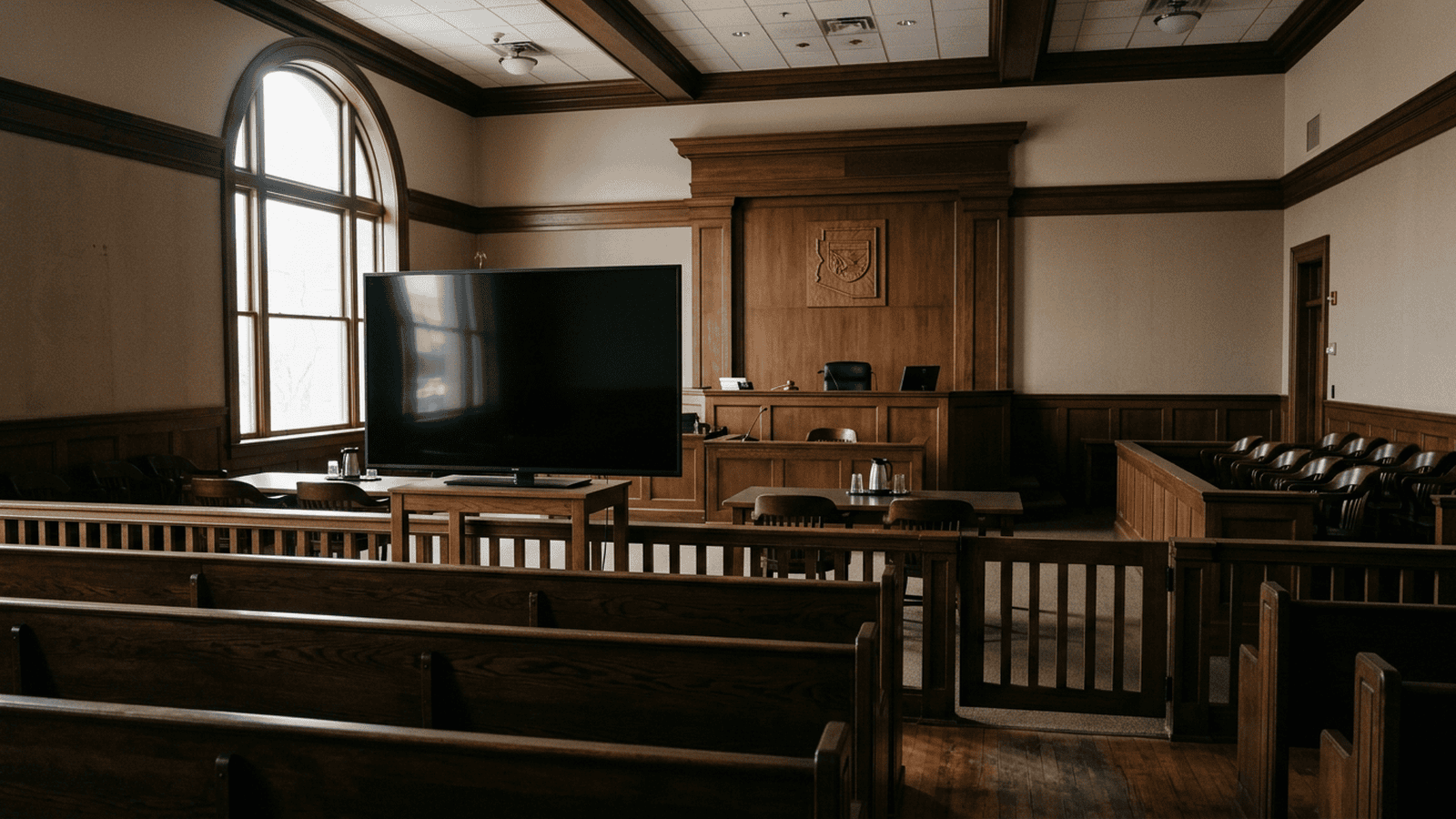
The video was played at a May 2025 sentencing hearing. Nine of Pelkey’s family members and friends had addressed the judge about the emotional effects of his killing. His sister, Stacey Wales, said the family used recordings, videos and photographs to recreate his likeness and voice. The AI version spoke of forgiveness and said that, in another life, Pelkey and Horcasitas might have been friends.
The appeals court found that the video crossed a line because it did more than convey a family member’s account. It gave generated words the appearance of being Pelkey’s own statements. The court said that approach was not a reliable basis for sentencing. Its ruling sets a clear limit in this case without establishing a broad new rule for every use of AI in court.
The legal dispute centered partly on whether the video affected the sentence. Horcasitas’ appellate lawyer argued that Superior Court Judge Todd Lang relied on AI evidence and that the defense had no meaningful chance to rebut its contents. The lawyer also said the video did not identify who wrote the words or provide evidence that they reflected Pelkey’s views. Prosecutors argued the judge did not err and did not consider the footage when imposing punishment.
The record described in the account leaves that point contested. Shortly before sentencing, Lang said he “loved that AI,” but did not state from the bench whether the video affected his decision. He also said Pelkey’s “obvious forgiveness” reflected the character described by family and friends. Horcasitas’ attorney did not object when the video was played, according to the account. The appeals court nonetheless concluded that the video was unreliable and ordered a new sentencing.
The case began with a November 2021 road-rage encounter at a stoplight in Chandler, near Phoenix. Authorities said Horcasitas fatally shot Pelkey, who was unarmed, after Pelkey got out of his truck and walked toward Horcasitas’ vehicle. A gunshot also struck another vehicle. Horcasitas was convicted of manslaughter in Pelkey’s death and endangerment related to that other vehicle.
The family’s effort was intended to give Pelkey a voice in court. Wales said she wanted to humanize her brother, and expressed disappointment that the video became the reason for an appeal. A lawyer who represented victims in the case said the family would continue to convey Pelkey’s voice through allowable means. A victim appeals lawyer reportedly told the family that using AI again could prompt another appeal.
The practical effects are procedural rather than financial in the information available. Horcasitas must be resentenced, but the account gives no date for that hearing, no added court fees, and no required forms or new disclosure deadline. Arizona law, as described by the family’s attorneys, does not require victims to disclose planned statements to prosecutors, defense lawyers or the judge; victims may speak or submit written, audio or video statements. The county attorney’s office said prosecutors knew the family would address the court but did not know the nature of the presentation. The result is a loss of some discretion over how a victim’s voice may be presented, alongside stronger protection for reliability and the defendant’s chance to respond.
AI tools have generally been used in courts for administrative work, legal research and case preparation, according to the account. Generating victim impact statements is a newer use outside the evidentiary phases. Arizona State University law professor Gary Marchant warned that easy-to-create AI material could encourage more attempts to introduce generated evidence. The court’s ruling provides a concrete example of the scrutiny such material may face, while leaving broader questions for future cases.
The next step is resentencing, with no hearing date stated in the available information. The appeals ruling supplies the oversight in this case: a three-judge panel reviewed how generated words were presented and found the video unreliable. That review is a necessary step in applying the court’s decision and protecting the standards the panel identified.

Jordan Lee serves as the Senior Correspondent for Wall Street, Finance, and Monetary Systems at Just Right News. Based in the heart of the world’s financial capital, New York City, Lee brings a sharp, principled eye to the complex mechanisms that drive the global economy. His reporting is defined by a commitment to fiscal responsibility, the defense of the free market, and a deep-seated belief that a transparent monetary system is the bedrock of a free society.
Raised in Portland, Oregon, Lee’s perspective was forged in a city that has undergone significant cultural and economic shifts. His upbringing in the Pacific Northwest instilled in him a profound appreciation for the industriousness of small business owners and the importance of local economic stability. Watching the evolution of his hometown’s landscape sparked an early interest in how federal fiscal policy and large-scale financial trends eventually trickle down to the average citizen. This background provides him with a unique vantage point; he understands the growing disconnect between the policy-making elite and the reality of Main Street, a theme that frequently resonates throughout his work.
Now operating from his base in New York City, Lee bridges the gap between the high-stakes trading floors of Manhattan and the households of everyday Americans. He views the financial sector not merely as a collection of numbers and tickers, but as a vital engine of American prosperity that requires constant vigilance and accountability. His reporting often highlights the dangers of centralized financial control and the necessity of maintaining a system that rewards merit, risk-taking, and innovation.
As the creator and lead of the featured series, “The Invisible Economy,” Lee pulls back the curtain on the often-opaque world of monetary systems. He specializes in translating the dense jargon of central banking and international finance into actionable insights for the Just Right News audience. His work explores the “invisible” forces—such as inflationary pressures, regulatory creep, and the expansion of the administrative state—that erode the purchasing power of American families. By focusing on these systemic issues, Lee empowers readers to understand the hidden forces shaping their financial independence.
Lee’s journalistic philosophy is rooted in a steadfast commitment to traditional American values. As an Asian American professional who has navigated the competitive corridors of the financial world, he is a vocal advocate for meritocracy and the preservation of the American Dream. He believes that a stable currency and a predictable regulatory environment are essential for national sovereignty and individual liberty. His reporting frequently warns against the risks of government overreach in the private sector, arguing that the most effective solutions to economic challenges arise from competition and individual enterprise rather than bureaucratic mandates.
At Just Right News, Jordan Lee remains dedicated to providing a clear-eyed defense of the taxpayer. Whether he is analyzing market volatility or investigating the long-term implications of national debt, his mission is to provide the truth about where the money is going and what it means for the future of the country. Through his rigorous analysis and principled stance, Lee has become a trusted voice for those who value a strong, sovereign, and fiscally sound America.