

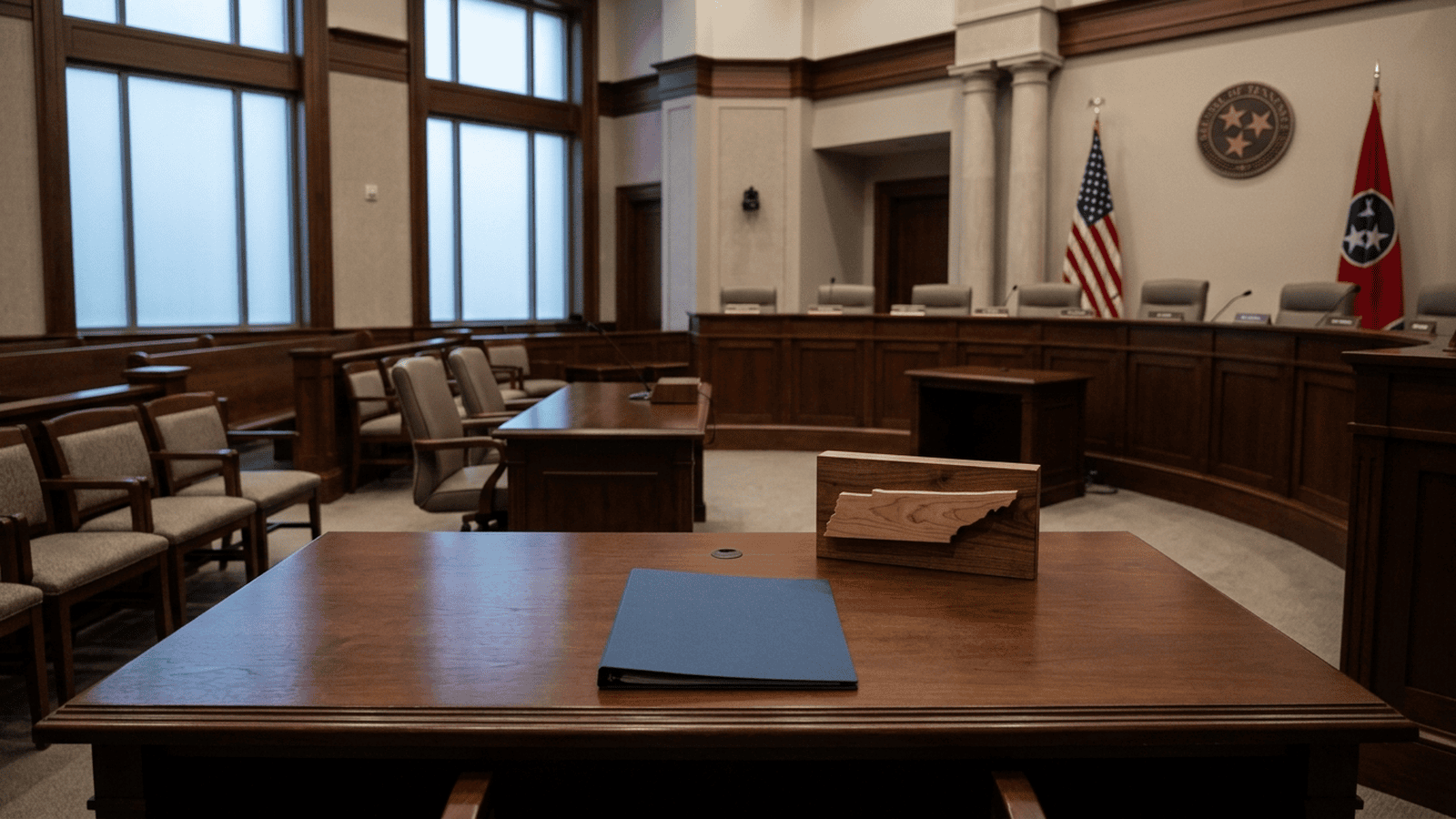
Tennessee Governor Bill Lee ordered a review and halted executions after Christa Pike survived two doses of pentobarbital during an attempt in Nashville. Lee said the state failed to meet expectations for a legal, constitutional, and effective process, while continuing to support capital punishment. Gubernatorial candidates Marsha Blackburn and Jerri Green offered sharply different responses: Blackburn called for the electric chair to return, and Green said she would impose a moratorium on future executions if elected. Green cited costs, wrongful convictions, execution failures, and concerns about drug testing and personnel. The review has no stated deadline, and the source gives no details about forms, fees, or a separate oversight body.
TLDR: Tennessee has suspended executions while the governor reviews a failed attempt involving Christa Pike. Marsha Blackburn supports restoring the electric chair, while Jerri Green says she would halt executions and redirect attention to public safety.
Tennessee’s halted execution of Christa Pike has sharpened a debate over capital punishment in the state’s gubernatorial race. Pike, 50, survived two doses of the lethal drug pentobarbital during an execution attempt in Nashville on September 30, 2026, according to the account in the source material. A lawyer said she was alive and receiving life-saving medical care the next day. The attempt was Tennessee’s second bungled execution this year.
Governor Bill Lee ordered a review of the hours-long attempt and halted executions in Tennessee. Lee called the incident a tragedy and said the state had failed to carry out a death sentence in a legal, constitutional, and effective manner. He continued to support capital punishment, saying Tennesseans had determined it was appropriate for the most heinous crimes.
The immediate rationale for the review and pause is to examine what happened and why the execution process failed. Lee said the state had not met the public’s expectations for a lawful and effective process. The excerpt does not provide the review’s scope, schedule, or expected findings.
The incident has drawn contrasting responses from the leading candidates to replace Lee, who is not seeking reelection this fall. Republican front-runner and Tennessee Senator Marsha Blackburn called for a thorough review, but also urged the state to bring back the electric chair. She said that method would deliver justice swiftly and pledged to restore it if elected governor.
Democratic candidate Jerri Green opposes executions. A Memphis City Council member and former public defender, Green said the attorney general rushed Pike’s execution despite another failed attempt involving Tennessee death row inmate Tony Carruthers four months earlier. Green also cited a lack of transparency around drug testing and concerns about the qualifications and ethics of personnel involved in executions.
Green has argued against the death penalty for reasons beyond the Pike case. She says it is inhumane, expensive, and biased, and that it does not deter crime. She has also said it costs taxpayers millions more than life without parole and is burdened by administrative failures. The excerpt provides no independent cost figures or details of the studies underlying those claims.
Green’s legal career includes work as a juvenile public defender in Nashville, executive director of the Community Legal Center in Memphis, and Shelby County chief public defender. She has said she encountered people who were wrongfully convicted and later exonerated while on death row. If elected, she says she would impose a moratorium on future executions and direct taxpayer funds toward public-safety measures she considers effective.
The wider debate includes concerns about wrongful convictions and unequal outcomes. The source excerpt cites the American Civil Liberties Union’s view that death sentences can reflect the quality of defense counsel, the race of the accused or victim, and the county and state where a crime occurred. It also reports that 1,392 executions took place in the United States from 1976 through 2015, with 995 in the South. The material says studies and legal reviews in states that banned executions have found that capital punishment does not make communities safer, but it does not name those studies or provide their methods.
The candidates’ positions point to different answers to the same question of what the state should do after an execution goes wrong. Lee has ordered a review while maintaining support for the death penalty. Blackburn calls for a different execution method, while Green would stop executions. Their proposals do not settle the questions raised about fairness, safety, or whether the state can carry out executions as intended.
Practical effects described in the account include Tennessee’s current pause on executions and the governor’s review of Pike’s failed execution. Green’s proposed moratorium would halt all future state executions if she became governor; Blackburn’s proposal would restore the electric chair. The account identifies concerns about drug testing, staffing, transparency, process speed, taxpayer costs, and execution delays, but gives no fee schedule, required forms, compliance rules, or deadline for the state review. The direct effects therefore remain limited to the halt and review now in place, alongside the competing plans offered by the candidates.
The next stated step is Lee’s review of the failed attempt, while executions remain halted in Tennessee. The source material does not give a completion date or describe a separate oversight body. Review and public scrutiny are necessary steps in assessing compliance with the legal and constitutional standards Lee cited.

Sean Bradley serves as the Senior Correspondent for Trade, Supply Chains, and Global Labor at Just Right News, where he brings a principled, clear-eyed perspective to the complex systems that power the modern world. With a focus on the economic forces that impact the American household, Bradley has distinguished himself as a leading voice in explaining how global shifts in manufacturing and logistics translate to the kitchen table.
Growing up in Long Beach, California, Bradley’s interest in the movement of goods was forged against the backdrop of one of the nation’s most vital maritime gateways. Raised in a community where the towering cranes of the port were a constant fixture on the horizon, he developed an early appreciation for the blue-collar industries that form the backbone of the American economy. This upbringing instilled in him a profound respect for the dockworkers, truckers, and laborers who keep the country moving, a sentiment that remains a cornerstone of his reporting today. For Bradley, trade is not merely a series of abstract figures on a spreadsheet; it is a human endeavor that sustains families and defines the strength of a nation.
Now based in Seattle, Washington, Bradley occupies a strategic vantage point in another of the country’s most significant trade hubs. His location allows him to witness firsthand the intersection of traditional industry and the evolving technological landscape of global logistics. From the Pacific Northwest, he monitors the flow of goods across the ocean, providing Just Right News readers with timely insights into how international tensions, regulatory hurdles, and labor disputes affect the availability and cost of essential goods.
His signature feature series, “The Journey of Things,” has become a staple for readers seeking to understand the intricate path products take from raw materials to the retail shelf. Through this series, Bradley pulls back the curtain on the global marketplace, often highlighting the risks of over-reliance on foreign adversaries and the importance of domestic manufacturing resilience. His reporting consistently emphasizes the conservative values of national sovereignty, free-market competition, and the protection of the American worker from unfair global practices.
As a journalist of Irish heritage, Bradley maintains a deep-seated respect for the dignity of the individual worker and the importance of community stability. He approaches his beat with a commitment to transparency, often questioning the status quo of globalist policies that prioritize corporate efficiency over local prosperity. Whether he is reporting from a warehouse floor or analyzing a new international trade agreement, his goal remains the same: to provide the American public with the truth about where their products come from and what it costs to get them there.
Throughout his tenure at Just Right News, Bradley has remained a steadfast advocate for economic common sense. His work serves as a vital resource for those who believe that a strong nation is built on secure borders, robust trade, and a respected workforce. By combining his local roots in Long Beach with his professional experience in Seattle, Bradley continues to offer a unique and necessary perspective on the forces that shape the American way of life.