


Four passengers reunited after helping stop an attack aboard FlyDubai Flight 1073. In their accounts, they describe a co-pilot stabbing the captain and taking control as the plane plunged 14,000 feet. They say less than 30 seconds remained before the aircraft might have crashed. Passengers confronted the attacker while an off-duty pilot reached the controls and helped bring the plane level. A dentist treated the wounded captain, who was taken to hospital and was recovering. The passengers later met again to recall how people aboard acted in a fast-moving emergency. Their account describes no new government policy, compliance rules, costs, forms or deadlines. The immediate response depended on the people already aboard and the crew working together to protect those on the plane.
TLDR: Passengers, an off-duty pilot and a dentist helped stop a cockpit attack and respond to an injured captain aboard FlyDubai Flight 1073. The account reports no related policy change, new compliance rules or official deadline.
Four passengers who faced a cockpit attack aboard FlyDubai Flight 1073 reunited days later, after helping stop a co-pilot who had stabbed the captain and taken control of the plane, according to their accounts. Daniel Schlichter, Zvika Manes, Tal Samuel and Asaf Rajuan described a few minutes in which a falling aircraft, an injured pilot and a struggle at the cockpit door left them believing they might die. Their actions, alongside those of other passengers and an off-duty pilot, helped bring the plane out of its dive.
There is no government policy change or official policy rationale in the account. The story instead shows an immediate, practical purpose shared by those aboard: stop the attack, regain control of the aircraft and keep passengers alive. That was the common-sense priority in an emergency, as events unfolded.
The Boeing 737 Max was plunging toward the Arabian Desert after the co-pilot from Oman attacked Captain Smit Machchhar and took the controls, the report says. The plane fell 14,000 feet in seconds, and passengers were told they were less than 30 seconds from a crash. Manes compared the force to a roller coaster. Schlichter recalled holding his wife’s hand and thinking the plane might not be saved.
The cockpit door opened after Machchhar, wounded and fighting for his life, reached it. He told Israeli Prime Minister Benjamin Netanyahu that the co-pilot had struck him from behind and that he managed to get to the door. Passengers were waiting outside. Manes, seated in the first row with his family, said his daughter shouted that the pilot was being stabbed. He and the others moved toward the cockpit.
Manes said he acted to protect his wife and daughter. Schlichter also described the decision to act as nearly simultaneous among the passengers. Tal Samuel recalled seeing a response beyond the ordinary roles people held in daily life. An Israeli plumber, Yaniv Hayoun, joined the men as they ran to help the captain. Their decision to intervene was made under immediate threat, not after a plan or a formal instruction.
The group struggled with the co-pilot near the cockpit entrance. Manes said he punched and jumped on the attacker, while not knowing whether he had a knife. The account says the co-pilot had previously been banned from flying in Oman over concerns about extremist views. Israeli investigators reportedly found social media posts in which he discussed killing Jews. Officials in the United Arab Emirates described the incident as a terrorist act. Those details are attributed to the authorities and investigators cited in the report.
While passengers blocked the cockpit entrance, an off-duty pilot moved from his seat and reached the controls, according to Samuel and Rajuan. Rajuan said the pilot leaned over a chair to take control and right the aircraft. The plane came out of its dive. That intervention, combined with the passengers’ struggle and the captain’s effort to reach the door, changed the immediate course of events.
The emergency did not end when the aircraft stopped falling. Machchhar was bleeding from stab wounds to his head and hands. Passengers called for a doctor, and Shota Musaev, a dentist, went to treat him. Musaev told his wife he needed to go, then began tending to the captain. He feared there was little time and urged the crew to land the plane.
The nearest airport was in Tabuk, Saudi Arabia. Manes said he worried the passengers might be arrested because they were Israeli and blood was visible. Instead, the report says, they were welcomed. The captain was taken to a hospital and was recovering. Musaev remained with him at night, describing the group as a family formed by the crisis.
The practical impact in this account is immediate rather than regulatory. Passengers faced a plunging plane, physical danger, an injured captain and an urgent need to land; a dentist treated wounds, and an off-duty pilot helped regain control. The report gives no costs, forms, compliance rules or deadlines, and it describes no new enforcement process. There is no policy that passengers are required to follow here. The episode also shows a departure from the usual reliance on formal authority: ordinary passengers took direct action, with serious personal risk, while the crew and pilots dealt with the aircraft.
The account identifies no upcoming policy deadline, official oversight review or specific next step beyond the captain’s recovery and the passengers’ reunion. Those facts do not establish what further investigation or review may occur. The reported details stand as a record of what the passengers, captain and dentist said happened. The pilots, medical responders and relevant authorities were the people positioned to handle the emergency and its aftermath.
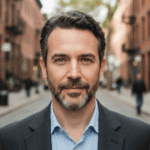
Max Grant serves as the Senior Correspondent for Data and Financial Forensics at Just Right News, where he brings a meticulous, investigative eye to the complex world of numbers. In an era where media narratives often overshadow objective reality, Max operates on a simple but firm principle: while rhetoric can be manipulated, the ledger never lies. As the architect behind the acclaimed feature series “Numbers That Talk,” he has carved out a vital niche in conservative journalism, translating dense financial data into clear, actionable insights for the American public.
Max’s journey to the forefront of financial reporting began in Buffalo, New York. Growing up in the Queen City, he was raised with the grit and grounded perspective typical of the Rust Belt. Buffalo is a place that understands the value of a dollar and the consequences of economic shifts on the working class. This upbringing instilled in Max a deep-seated respect for fiscal responsibility and a healthy skepticism toward bureaucratic overreach. He carries the spirit of his hometown into every investigation, viewing his work not just as reporting, but as a form of public service dedicated to protecting the interests of taxpayers and everyday citizens.
Now based in Brooklyn, New York, Max operates from the heart of one of the world’s most influential financial and cultural hubs. This vantage point allows him to keep a close watch on the institutions that drive the global economy. Living and working in a city often defined by progressive policy experiments, Max provides a necessary counter-perspective, using his forensic skills to analyze the real-world costs of local and national governance. His proximity to the financial district ensures he is never far from the source of the data he deconstructs, yet he remains firmly rooted in the conservative values that prioritize transparency and individual liberty.
His beat, Data and Financial Forensics, is more than just a job title; it is a commitment to uncovering the truth hidden within spreadsheets and annual reports. In “Numbers That Talk,” Max dives deep into federal spending, corporate accountability, and the intricate web of international finance. He has a unique ability to spot the anomalies that others miss, identifying where public funds are being mismanaged or where economic policies are failing to deliver on their promises. His reporting is characterized by a relentless pursuit of clarity, stripping away the jargon to show readers exactly how their money is being used and how the economy is truly performing.
At Just Right News, Max Grant is recognized as a steady hand and a sharp mind. He understands that for a free society to function, its citizens must have access to the facts regarding their financial future. By combining his British heritage’s tradition of rigorous inquiry with an American drive for accountability, Max ensures that the numbers don’t just sit on a page—they tell the story of where the country has been and where it is headed. His work stands as a testament to the power of forensic journalism in holding the powerful to account and championing the principles of a transparent, fiscally sound nation.