

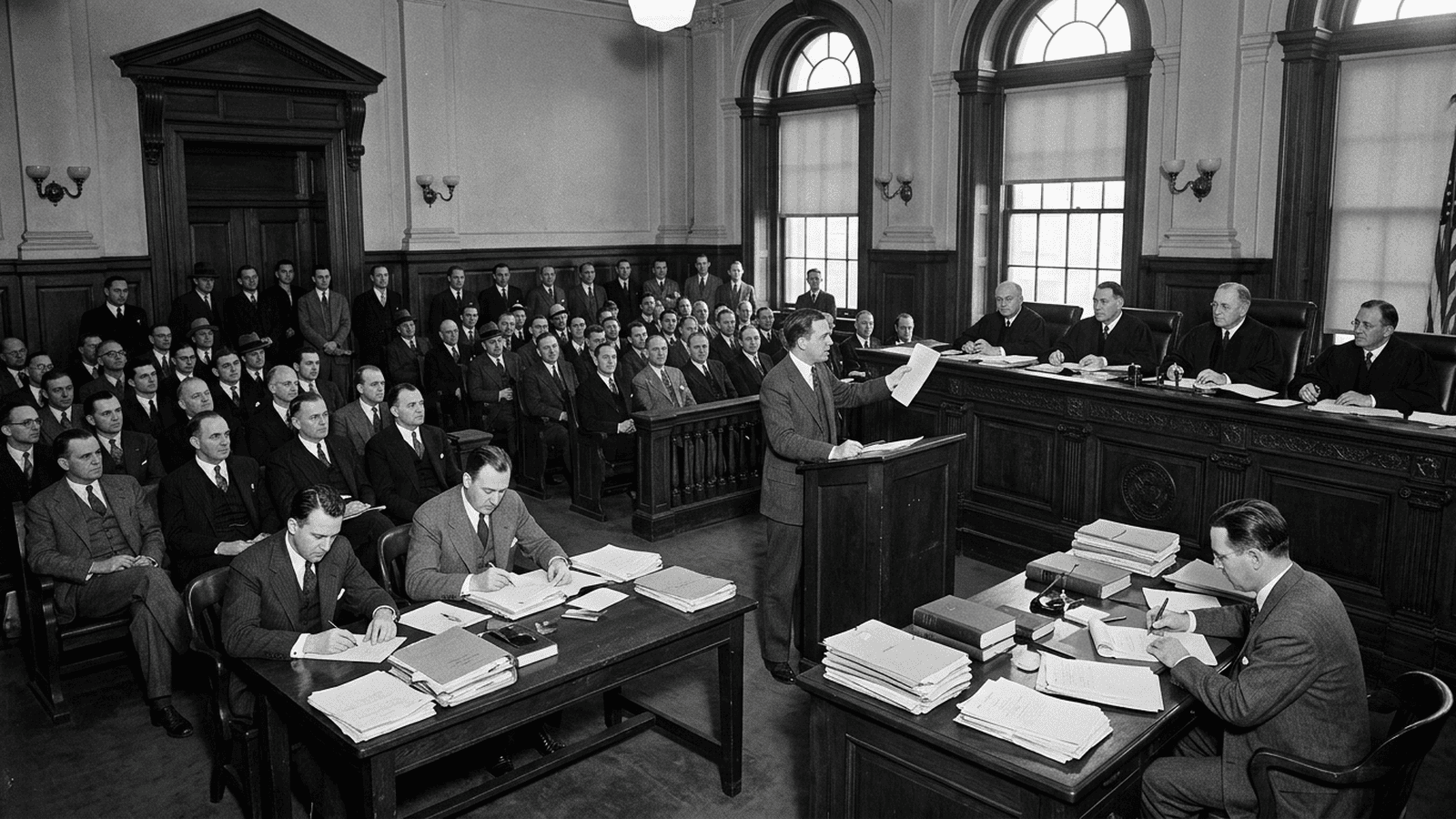
In 1936, the Supreme Court decided Ashwander v. Tennessee Valley Authority, a challenge to the New Deal agency’s power to sell electricity. The United States justices avoided a sweeping constitutional ruling, instead using procedural reasoning that became an enduring guide to judicial restraint.
TLDR: A private utility challenge to the Tennessee Valley Authority put New Deal federal power before the Supreme Court in 1936. In Ashwander, the justices avoided a broad ruling on the agency’s constitutionality and outlined principles for limiting when courts decide constitutional questions. The TVA continued operating.
The Tennessee Valley Authority was created in 1933 as one of the most ambitious experiments of the New Deal. Congress authorized a federally owned corporation to develop the Tennessee River basin, including dams, flood control, navigation improvements, and electricity generation. The plan promised economic development across a region hit hard by poverty and underinvestment. It also raised a constitutional question: could the federal government compete with private power companies and sell electricity? Congress had also authorized the TVA to transmit and sell surplus power, including electricity from the federally owned Wilson Dam, making the boundary between public development and private commerce central to the suit.
Alabama Power Company and other utilities argued that the TVA’s power operations exceeded Congress’s authority and threatened their businesses. Alabama Power sued in federal court, seeking to stop the authority from distributing electricity. The dispute moved through the courts as the TVA expanded its projects and became a test of federal power in the South. The legal challenge was not simply about one dam or one contract; it concerned the reach of national government under the Constitution.
In 1936, the Supreme Court decided Ashwander v. Tennessee Valley Authority. The case was named for Alabama Power shareholder and plaintiff John J. Ashwander, whose involvement helped bring the challenge before the justices. The Court did not issue a sweeping ruling that settled every constitutional question about the TVA. Instead, it concluded that the plaintiffs lacked the necessary legal basis to obtain the relief they sought, and it avoided deciding the broader dispute over the authority’s constitutionality.
Justice Louis Brandeis wrote the Court’s opinion. He emphasized limits on when federal courts should decide constitutional questions, including the principle that courts should not reach constitutional issues when a case can be resolved on other grounds. The opinion set out a series of rules for constitutional adjudication, later commonly known as the “Ashwander rules.” These principles discouraged courts from issuing broad constitutional judgments without a necessary and properly presented dispute.
The decision left the TVA operating, but it did not amount to an unqualified endorsement of every aspect of the agency’s authority. The Court’s restraint was significant in a period when the constitutionality of New Deal programs was under intense scrutiny. Rather than use the lawsuit to deliver a final verdict on federal power, the justices relied on procedural and jurisdictional reasoning to keep the case narrower.
That approach mattered in the South, where the TVA was changing both landscapes and local economies. Its dams helped control floods and generate electricity, while federal programs brought investment to a region with limited access to power. Private utilities, meanwhile, faced a government-backed competitor. The conflict connected constitutional doctrine to practical questions about who would build infrastructure, control energy resources, and serve customers.
Ashwander became influential beyond the TVA dispute. Brandeis’s explanation of judicial restraint has been cited by later courts considering whether constitutional questions should be decided at all. The decision illustrates how courts can shape constitutional law not only by striking down or upholding legislation, but also by choosing to avoid a definitive ruling. That choice can preserve room for elected branches and future cases to address unsettled issues.
The TVA’s legal and political foundations continued to face scrutiny after 1936, but Ashwander did not halt its work. The case helped establish a lasting framework for judicial restraint while leaving the New Deal agency in place. Later oversight of federal programs continued through courts, Congress, and public debate, with Ashwander’s principles offering one guide to when constitutional adjudication is appropriate.

Lila Hayes serves as a Staff Writer for Just Right News, where she anchors the “Courts, Law, and Constitutional Order” beat. Her work is defined by a steadfast commitment to the foundational principles of the American republic and a rigorous defense of the legal frameworks that ensure national stability. As a primary voice for the outlet, she provides readers with a clear-eyed analysis of the judiciary, focusing on the importance of originalism and the preservation of the separation of powers.
Lila’s perspective was forged in the American heartland. Raised in St. Louis, Missouri, she grew up in a Hispanic household where the values of hard work, faith, and respect for the law were paramount. Her upbringing instilled in her a deep appreciation for the American Dream and the legal protections that make it possible. This Missouri background remains a cornerstone of her reporting, providing a grounded, common-sense counter-narrative to the often-insular legal circles of the coastal elite. She understands that the decisions made in high-court chambers have real-world consequences for families and small business owners across the country.
At Just Right News, Lila has become widely recognized for her signature feature series, “The Rulebook of Power.” In this ongoing project, she delves into the mechanics of the federal government, examining how administrative overreach and judicial activism can threaten the delicate balance of the Constitution. She approaches her beat with the tenacity of a veteran journalist and the precision of a legal scholar, consistently advocating for a judiciary that interprets the law as written rather than legislating from the bench. For Lila, the Constitution is not a “living” document subject to the whims of modern social trends; it is a fixed standard that ensures the government remains the servant of the people, not their master.
Now based in Philadelphia, Pennsylvania, Lila finds herself at the very epicenter of American constitutional history. Living and working in the city where the Founders drafted the documents she defends daily provides a constant source of inspiration. The historic halls and landmarks of Philadelphia serve as a daily reminder of the high stakes involved in her reporting. Her presence in the city allows her to bridge the gap between the historical intent of the law and its contemporary application, ensuring that the legacy of the Founding Fathers remains central to the national conversation.
Throughout her career, Lila has remained dedicated to the idea that a free society requires an informed citizenry and a transparent legal system. Her reporting is more than just a collection of headlines; it is a defense of the constitutional order that has sustained the nation for over two centuries. By focusing on the “Rulebook of Power,” she ensures that her readers understand not just what is happening in the courtrooms, but why those decisions matter for the future of American liberty. Lila Hayes continues to be a vital voice for those who believe that the law should be a shield for the citizen and a constraint on the state.