

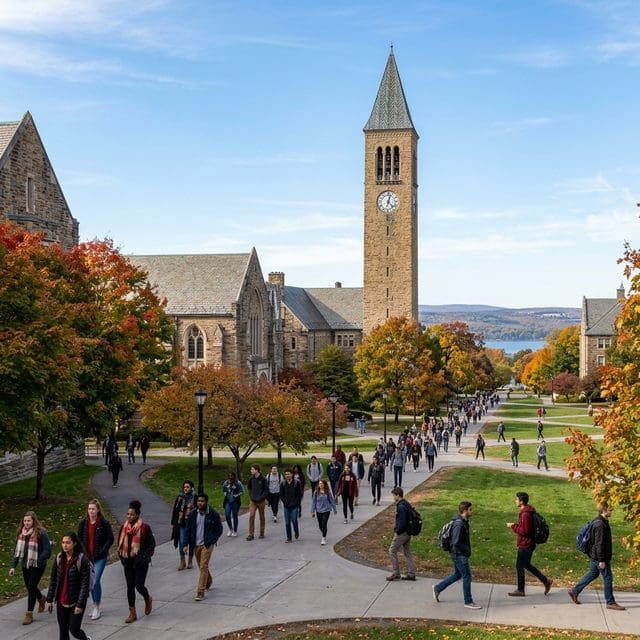
New York appoints a special prosecutor for a Cornell University investigation while federal data reveals how universities utilize H-1B visas to secure global talent.
The intersection of institutional accountability and workforce management took center stage this week as New York officials intervened in a high-profile university investigation. Governor Kathy Hochul signed an executive order on October 1, 2026, appointing State Attorney General Letitia James as special prosecutor to oversee the investigation into an alleged October 2024 assault involving Cornell University students. The move effectively displaces the Tompkins County District Attorney and Cornell Police, following the release of over 1,000 pages of internal inquiry documents that raised questions regarding the initial handling of the case. This state-level intervention underscores a growing demand for transparency within higher education institutions that serve as the bedrock of human capital development.
While Cornell has already conducted its own Title IX reviews—resulting in the permanent closure of the Chi Phi fraternity chapter and several student disciplinary actions including expulsions and suspensions—the Governor’s office indicated that newly surfaced information necessitated a broader legal review. The university has also agreed to a separate, independent examination of its internal processes to ensure future compliance with safety standards. The case, involving a group referred to in media reports as the “Cornell 7,” has drawn comparisons to past high-profile campus legal battles, prompting calls from legal analysts for a measured, evidence-based approach to justice that avoids the pitfalls of previous campus controversies. The Attorney General now holds the power to present evidence to a grand jury, though no criminal charges have been filed as of early October.
Beyond campus safety, universities are navigating complex shifts in human capital and specialized labor. Recent data from the U.S. Citizenship and Immigration Services (USCIS) H-1B Employer Data Hub shows that Vermont’s educational services sector filed 69 H-1B petitions in 2025. The University of Vermont led the state’s academic recruitment with 26 approved petitions and zero denials, reflecting a strategic reliance on international expertise to fill high-level research and teaching roles. This data highlights the specific bureaucratic hurdles institutions must clear to maintain a competitive workforce in a globalized economy, particularly as the FY2027 cap petitions must request employment beginning October 1, 2026.
Similar workforce trends are visible in the Pacific Northwest, where institutions are using federal labor programs to bridge talent gaps. In Oregon, major institutions are actively recruiting through the Department of Labor’s certification process. Oregon Health & Science University reported 119 Labor Condition Applications (LCAs) for the 2025 cycle, followed closely by Oregon State University with 109 and the University of Oregon with 34. These figures represent a significant investment in specialized talent, as universities compete globally to maintain their standing in research and healthcare education. These LCAs are a critical precursor to the USCIS petition process, signaling the intent of these public institutions to prioritize high-skill recruitment despite the administrative complexity involved.
These developments highlight a dual challenge for modern higher education: maintaining a safe, accountable environment for students while navigating the bureaucratic complexities of the global labor market. As the FY2027 H-1B filing window approaches, institutions must balance these administrative demands with the fundamental goal of fostering merit-based upward mobility. The reliance on H-1B visas in states like Vermont and Oregon suggests that domestic pipelines for certain specialized roles may not be meeting current institutional needs, necessitating a broader look at how we train and retain high-level talent. This reliance on international labor is a pragmatic response to the needs of the modern workforce, but it also underscores the need for domestic educational reform to ensure American students are prepared for these high-demand roles.
Ultimately, the situation at Cornell and the shifting visa data both point to a need for stronger institutional discipline. Whether it is ensuring that campus safety protocols are followed without local bias or ensuring that workforce needs are met through transparent and efficient legal channels, the focus remains on personal responsibility and institutional integrity. As the Attorney General begins her review and universities prepare their next round of labor petitions, these cases will serve as a bellwether for how American universities manage their most valuable assets: their students and their professional staff. The goal must remain the removal of bureaucratic barriers to ensure that merit and achievement drive the future of the American workforce.
Daniel Owens serves as a Senior Correspondent for Just Right News, where he leads the newsroom’s coverage of Education, Workforce, and Upward Mobility. In an era where the national conversation often overlooks the practical foundations of success, Owens brings a principled perspective to the forefront of the media landscape. His work is defined by a commitment to the idea that a strong society is built on the pillars of quality education, a robust work ethic, and the removal of bureaucratic barriers to individual achievement.
Born and raised in Cleveland, Ohio, Owens’s worldview was shaped by the industrial landscape of the Midwest. Growing up in a city known for its grit and resilience, he witnessed firsthand the transformative power of steady employment and the devastating effects of economic stagnation. This background instilled in him a deep respect for the American worker and a healthy skepticism toward top-down government solutions that often fail to reach the communities they intend to help. As an African American man who has navigated the path to professional success, Owens approaches his beat with a nuanced understanding of how meritocracy and personal responsibility intersect with opportunity. He frequently draws on his roots to highlight the importance of family stability and community-led initiatives in fostering the next generation of leaders.
At Just Right News, Owens is the architect of the acclaimed feature series, “The Learning Curve.” Through this platform, he explores the evolving landscape of American schooling, from the rise of the school choice movement to the revitalization of trade schools and vocational training. He frequently challenges the status quo of higher education, advocating for a return to academic rigor and the practical alignment of degrees with market demands. For Owens, education is not merely about obtaining credentials; it is about equipping young people with the tools necessary to lead self-sufficient, meaningful lives. His reporting on “The Learning Curve” has become essential reading for parents and policymakers who believe that educational competition and parental rights are the keys to a brighter future.
Now based in Raleigh, North Carolina, Owens finds himself at the heart of one of the nation’s most dynamic regions for innovation and growth. Raleigh’s unique blend of traditional values and a fast-paced economy provides the perfect backdrop for his reporting on the modern workforce. From the tech hubs of the Research Triangle to the rural communities of the South, he tracks how shifts in the economy are impacting families and local industries. His reporting often highlights the success stories of entrepreneurs and workers who are thriving by embracing the values of hard work and innovation.
Throughout his career, Daniel Owens has remained a steadfast voice for the student seeking a better path and the worker striving for a better life. His reporting for Just Right News serves as a vital resource for readers who value common-sense solutions to the challenges of the 21st-century economy. By focusing on the intersection of policy and the human spirit, Owens continues to provide a roadmap for how individuals and communities can achieve lasting upward mobility.