

Senator Ted Cruz leads a bipartisan push to stabilize college athletics while elite universities and tech giants like IBM accelerate quantum research to secure the future workforce.
The landscape of American higher education is currently undergoing a dual transformation as policymakers seek to stabilize the college sports market while elite universities pivot toward high-stakes technical training. These shifts reflect a growing emphasis on human capital, where institutional value is increasingly measured by workforce readiness and the removal of bureaucratic ambiguity. From the halls of Congress to the quantum labs of Southern California, the focus is shifting toward practical, market-aligned solutions for the next generation of workers.
In Washington, Senator Ted Cruz (R-TX) is leading a bipartisan push for the Protect College Sports Act of 2026. Slated for a Senate vote between September 15 and 23, the bill aims to restore order to a collegiate system currently fractured by varying state laws. The legislation proposes a “one free transfer” rule and caps eligibility at five years or age 24, providing a predictable framework for both athletes and institutions. Crucially, the bill includes specific protections for women’s and Olympic sports and maintains a neutral stance on athlete employment status. While the NAACP and the Congressional Black Caucus have voiced concerns regarding labor tensions, Cruz has framed the bill as a necessary step to save the amateur model from total collapse, even floating the idea of a live signing on ESPN’s College GameDay.
While federal lawmakers focus on governance, the technical sector is deepening its ties to the university pipeline. IBM and Lockheed Martin recently launched a Swiss Quantum Innovation Hub at ETH Zurich, marking a shift toward geographically distributed research centers that link national defense procurement to academic capacity. This model ensures that advanced STEM curricula are directly aligned with industrial needs. Domestically, the University of Southern California (USC) and Quantum Elements recently demonstrated significant scaling milestones on IBM’s Heron processors, proving that academic labs remain the primary engine for the computational breakthroughs required by the modern workforce. These advancements in surface code scaling and error reduction are critical as the U.S. competes for global dominance in the quantum regime.
However, the traditional education system faces scrutiny from those who argue it has become a barrier to natural development. Psychologist Peter Gray suggests that the current structure of K-12 schooling may be contributing to teen malaise by restricting the independence and self-directed learning that once defined American childhood. Gray argues that the rigid, top-down nature of modern schooling has reversed the developmental gains seen during the early digital age. This critique suggests that for upward mobility to be sustainable, the education system must move away from bureaucratic confinement and toward models that foster personal responsibility and individual achievement.
In response to these pressures, institutions like Princeton University are emphasizing practical skill-building to ensure students can navigate a competitive public square. The university’s recent focus on public speaking practice sessions and public lectures on material culture highlights a move toward equipping students with the communication tools necessary for professional success. These programs represent a shift toward “public humanities,” where elite education is repackaged as a suite of tangible skills for the modern orator and professional.
As NASA technicians at the Kennedy Space Center begin installing RS-25 engines for the Artemis III mission, the broader implications for the American workforce are clear. The demand for a workforce capable of managing complex systems—from quantum qubits to rocket engines—is forcing a reconciliation between traditional educational values and the practical demands of a high-tech economy. Whether through the standardization of sports eligibility or the deployment of IBM Quantum System Two, the goal remains the same: creating a streamlined, meritocratic path for students to transition from the classroom to the frontiers of industry.
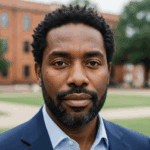
Daniel Owens serves as a Senior Correspondent for Just Right News, where he leads the newsroom’s coverage of Education, Workforce, and Upward Mobility. In an era where the national conversation often overlooks the practical foundations of success, Owens brings a principled perspective to the forefront of the media landscape. His work is defined by a commitment to the idea that a strong society is built on the pillars of quality education, a robust work ethic, and the removal of bureaucratic barriers to individual achievement.
Born and raised in Cleveland, Ohio, Owens’s worldview was shaped by the industrial landscape of the Midwest. Growing up in a city known for its grit and resilience, he witnessed firsthand the transformative power of steady employment and the devastating effects of economic stagnation. This background instilled in him a deep respect for the American worker and a healthy skepticism toward top-down government solutions that often fail to reach the communities they intend to help. As an African American man who has navigated the path to professional success, Owens approaches his beat with a nuanced understanding of how meritocracy and personal responsibility intersect with opportunity. He frequently draws on his roots to highlight the importance of family stability and community-led initiatives in fostering the next generation of leaders.
At Just Right News, Owens is the architect of the acclaimed feature series, “The Learning Curve.” Through this platform, he explores the evolving landscape of American schooling, from the rise of the school choice movement to the revitalization of trade schools and vocational training. He frequently challenges the status quo of higher education, advocating for a return to academic rigor and the practical alignment of degrees with market demands. For Owens, education is not merely about obtaining credentials; it is about equipping young people with the tools necessary to lead self-sufficient, meaningful lives. His reporting on “The Learning Curve” has become essential reading for parents and policymakers who believe that educational competition and parental rights are the keys to a brighter future.
Now based in Raleigh, North Carolina, Owens finds himself at the heart of one of the nation’s most dynamic regions for innovation and growth. Raleigh’s unique blend of traditional values and a fast-paced economy provides the perfect backdrop for his reporting on the modern workforce. From the tech hubs of the Research Triangle to the rural communities of the South, he tracks how shifts in the economy are impacting families and local industries. His reporting often highlights the success stories of entrepreneurs and workers who are thriving by embracing the values of hard work and innovation.
Throughout his career, Daniel Owens has remained a steadfast voice for the student seeking a better path and the worker striving for a better life. His reporting for Just Right News serves as a vital resource for readers who value common-sense solutions to the challenges of the 21st-century economy. By focusing on the intersection of policy and the human spirit, Owens continues to provide a roadmap for how individuals and communities can achieve lasting upward mobility.