

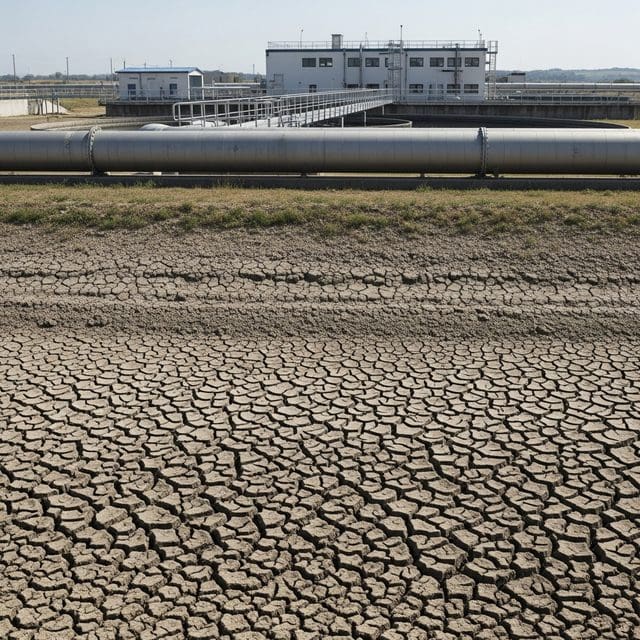
Regulators in the UK and California are implementing dynamic pricing models to manage water shortages, shifting the burden of infrastructure failures onto consumers and agricultural producers.
A new era of utility management is emerging as water regulators pivot toward dynamic pricing to address chronic scarcity and aging infrastructure. The Water Services Regulation Authority, known as Ofwat, is weighing a proposal to allow water companies in England and Wales to implement “surge pricing” during droughts. This mechanism, mirroring demand-based pricing used by ride-hailing services, aims to force consumption reductions by making water significantly more expensive when supply is low. The consultation closed in late July, and a final decision is pending as the UK grapples with the long-term viability of its water network.
This shift toward market-based rationing comes as five major UK suppliers—Southern, Thames, Severn Trent, Wessex, and South East Water—seek to raise consumer bills beyond previous limits. These increases are intended to fund billions in infrastructure repairs before 2030. While government sources indicate no current plan for a nationwide mandate, the framework explored by Ofwat suggests regional scarcity-linked tariffs could become the new standard. This creates a precarious situation for households already navigating a K-shaped recovery where discretionary spending is constrained for lower-income tiers.
The trend is not isolated to the United Kingdom. In the United States, California regulators have already approved quantity-based drought surcharges ranging from $0.0064 to $0.0772 per CCF through mid-2027. These charges recover costs from previous drought-response efforts, effectively billing citizens for the state’s inability to maintain a resilient water buffer. Similarly, New South Wales maintains volumetric drought charges for large-scale users that trigger automatically when dam levels fall below 60 percent. These charges are set to rise significantly in the coming year, further pressuring the industrial and agricultural sectors.
The practical consequences are most visible in agricultural hubs. In Karnataka, India, State Minister Satish Jarkiholi recently announced the government is exploring an “interim drought” declaration. The decision highlights the tension between urban drinking water needs and agricultural survival. Jarkiholi warned that water releases for farming will be strictly calibrated against the necessity of preserving drinking water through next July. This follows reports of reservoirs hitting “dead storage” levels, where water can no longer be drawn by gravity.
Internal reports from Karnataka reveal the physical toll of neglected infrastructure, with significant leakages found along major canal systems. Jarkiholi ordered emergency repairs on a 32-kilometer stretch of the Ghataprabha canal where water loss was undermining distribution equity between farmers. The state currently releases approximately 2 TMC of Cauvery water daily to Tamil Nadu under inter-state agreements, even as its own districts face drought-like conditions. Chief Minister D.K. Shivakumar is expected to review these administrative reforms as the state balances internal allocation priorities against external obligations.
For the American family, these developments serve as a cautionary tale. As domestic utilities like Pennsylvania American Water announce billion-dollar upgrade plans for 2026, the question remains whether these costs will be met with innovation or passed down through scarcity-based surcharges. When regulators prioritize price hikes over structural resilience, the burden of environmental stewardship is shifted from the public sector to the private citizen’s kitchen sink and the farmer’s field. The focus must remain on fixing the leaks before surge pricing becomes the default solution for mismanagement.

Eric Nolan serves as the Senior Correspondent for Food, Water, and Environmental Health at Just Right News, where he brings a principled, common-sense perspective to the most fundamental issues facing the American public. With a career dedicated to uncovering the truth behind the policies that govern our natural resources, Eric has become a trusted voice for readers who value traditional stewardship over bureaucratic overreach. His reporting is defined by a commitment to the idea that true environmentalism is rooted in the protection of the American family and the preservation of the nation’s agricultural heritage.
Raised in Fresno, California, Eric’s worldview was shaped in the heart of the San Joaquin Valley. Growing up in one of the world’s most productive agricultural hubs, he witnessed firsthand the vital connection between the land, the water, and the dinner table. In Fresno, he saw the resilience of farmers and the devastating impact that distant, top-down regulations can have on local communities. This upbringing instilled in him a deep respect for the producers who feed the country and a lifelong skepticism toward the alarmist narratives often pushed by mainstream media. For Eric, environmental health is not an abstract political talking point; it is a matter of ensuring that the people who work the land have the freedom and the resources to do so effectively.
Now based in Eugene, Oregon, Eric operates from a unique vantage point in the Pacific Northwest. Living in a region often defined by intense environmental debate, he provides a necessary counter-narrative to the prevailing trends of the area. From his base in Eugene, he monitors the shifting tides of federal and state policies, ensuring that the voices of rural citizens and property owners are not drowned out by urban activism. His reporting often bridges the gap between the rugged realities of the outdoors and the legislative halls where decisions are made, offering a grounded perspective that prioritizes local sovereignty and practical solutions.
As the lead for the acclaimed feature series “Earth on the Table,” Eric explores the intricate journey of the American food supply. He tackles critical issues such as water rights, soil health, and food security through a lens of national stability and individual liberty. He believes that a healthy environment and a thriving economy are not mutually exclusive, but rather two sides of the same coin of national prosperity. His work consistently highlights how innovation and private-sector ingenuity are the most effective tools for ensuring clean water and a safe food supply, rather than the expansion of the administrative state.
At Just Right News, Eric’s reporting serves as a vital resource for those who seek accountability and transparency. Whether he is investigating the impact of federal land management on local economies or examining the safety of the national food infrastructure, his work remains anchored in the values of heritage and hard work. Eric Nolan continues to be a leading voice in environmental journalism, championing the belief that the best way to protect our natural resources is to empower the people who live and work closest to them.