

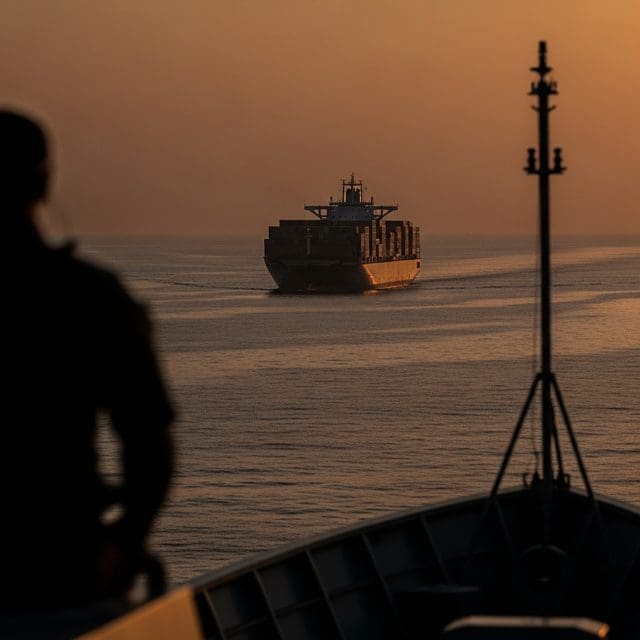
The Strait of Hormuz remains in a state of commercial collapse as federal courts simultaneously empower the Trump administration to strike back against cheap foreign imports.
The vital arteries of global commerce are hardening as the Strait of Hormuz, a chokepoint responsible for the transit of one-fifth of the world’s oil, remains effectively shuttered to normal commercial activity. Recent data from Kpler and Lloyd’s List Intelligence paints a grim picture; where 130 to 140 vessels once transited daily, recent counts show as few as 14 ships making the passage. This paralysis is not merely a byproduct of regional friction but a calculated play for leverage by Tehran, which is currently demanding unprecedented control over inbound and outbound shipping visibility through a proposed agreement with Oman.
For the American worker, this maritime instability underscores the extreme fragility of a globalist supply chain that relies on distant, hostile waters. While Iran attempts to codify a 7% cargo toll and ban U.S.-linked vessels, the domestic front is seeing a resurgence of trade authority that prioritizes national sovereignty. On August 13, 2026, a federal trade court handed a significant victory to the Trump administration, ruling that the President has the legal authority to block cheap imports from entering the U.S. tariff-free. This ruling specifically targets the “de minimis” loophole long exploited by Chinese-linked platforms like Temu and Shein, which have flooded the American market with subsidized goods that undercut local manufacturers and the dignity of the domestic workforce.
These two developments—the physical blockade in the Middle East and the legal hardening of U.S. borders—represent a pincer movement against the era of unfettered globalism. U.S. Central Command is currently maintaining a robust blockade of Iranian ports to counter Tehran’s aggression, with reports indicating that 55 merchant ships have been redirected, three vessels disabled, and two boarded by American forces. Despite these security measures, Iran continues to attempt attacks on vessels near the Omani coast, forcing commercial ships to avoid established traffic systems in a desperate bid for safety. This persistent threat has turned a once-reliable trade route into a high-risk gamble, driving up insurance premiums and straining the global flow of goods.
However, the transition back to a sovereignty-first economy occurs against a backdrop of domestic economic complexity. A persistent K-shaped wealth gap continues to define the American landscape in August 2026. While wealthy Americans drive travel and discretionary spending, lower-income consumers show constrained demand as they face the brunt of rising costs. Furthermore, the tech sector, which has long benefited from globalized production, faces its own internal turmoil. OpenAI has seen a mass exodus of leadership, including Sam Altman’s top deputy and the chief operating officer, just as JPMorgan strategists forecast that tech stocks will begin to underperform in the second half of the year.
The situation in the Strait remains unresolved, with a shipping-routes deal between Iran and Oman reportedly in the final stages but still lacking a signature. Until such an agreement is reached, the “Journey of Things” will remain a perilous and expensive trek for any corporation unwilling to bring production back to American shores. The Trump administration’s recent actions, from the ballroom construction projects to the tightening of naturalization standards, signal a broader shift toward domestic investment and strict border integrity.
Ultimately, a nation that cannot secure its trade routes or protect its markets from predatory imports is a nation at the mercy of foreign actors. The current gridlock in the Middle East, coupled with the new mandate to tax foreign e-commerce, serves as a stark reminder that local prosperity cannot be sustained by global efficiency alone. The path forward for the American blue-collar worker requires not just naval strength in the Gulf, but the continued courage to enforce trade fairness and domestic manufacturing priorities at home.

Sean Bradley serves as the Senior Correspondent for Trade, Supply Chains, and Global Labor at Just Right News, where he brings a principled, clear-eyed perspective to the complex systems that power the modern world. With a focus on the economic forces that impact the American household, Bradley has distinguished himself as a leading voice in explaining how global shifts in manufacturing and logistics translate to the kitchen table.
Growing up in Long Beach, California, Bradley’s interest in the movement of goods was forged against the backdrop of one of the nation’s most vital maritime gateways. Raised in a community where the towering cranes of the port were a constant fixture on the horizon, he developed an early appreciation for the blue-collar industries that form the backbone of the American economy. This upbringing instilled in him a profound respect for the dockworkers, truckers, and laborers who keep the country moving, a sentiment that remains a cornerstone of his reporting today. For Bradley, trade is not merely a series of abstract figures on a spreadsheet; it is a human endeavor that sustains families and defines the strength of a nation.
Now based in Seattle, Washington, Bradley occupies a strategic vantage point in another of the country’s most significant trade hubs. His location allows him to witness firsthand the intersection of traditional industry and the evolving technological landscape of global logistics. From the Pacific Northwest, he monitors the flow of goods across the ocean, providing Just Right News readers with timely insights into how international tensions, regulatory hurdles, and labor disputes affect the availability and cost of essential goods.
His signature feature series, “The Journey of Things,” has become a staple for readers seeking to understand the intricate path products take from raw materials to the retail shelf. Through this series, Bradley pulls back the curtain on the global marketplace, often highlighting the risks of over-reliance on foreign adversaries and the importance of domestic manufacturing resilience. His reporting consistently emphasizes the conservative values of national sovereignty, free-market competition, and the protection of the American worker from unfair global practices.
As a journalist of Irish heritage, Bradley maintains a deep-seated respect for the dignity of the individual worker and the importance of community stability. He approaches his beat with a commitment to transparency, often questioning the status quo of globalist policies that prioritize corporate efficiency over local prosperity. Whether he is reporting from a warehouse floor or analyzing a new international trade agreement, his goal remains the same: to provide the American public with the truth about where their products come from and what it costs to get them there.
Throughout his tenure at Just Right News, Bradley has remained a steadfast advocate for economic common sense. His work serves as a vital resource for those who believe that a strong nation is built on secure borders, robust trade, and a respected workforce. By combining his local roots in Long Beach with his professional experience in Seattle, Bradley continues to offer a unique and necessary perspective on the forces that shape the American way of life.