

Russia’s intensified ballistic campaign against Kyiv exposes critical interceptor shortages, while a historic defense pact between Turkey, Saudi Arabia, and Pakistan signals a new era of regional self-reliance.
The global security architecture is undergoing a profound transformation as high-intensity conflict in Eastern Europe and rising volatility in the Middle East force nations into new, hardened alliances. This week, the reality of modern attrition was underscored by a series of devastating Russian strikes on Ukraine and the formation of a significant mutual defense pact among three major Sunni powers. These developments highlight a shift toward a realist international order where strategic autonomy and missile capacity dictate the terms of national survival.
In Ukraine, the aerial campaign reached a new level of intensity on August 8. Russian forces executed a sophisticated strike on the Kyiv suburb of Brovary and surrounding areas, resulting in the deaths of at least four civilians, including a child. This latest assault follows a massive wave earlier in the week that utilized 24 ballistic missiles and 115 drones, a barrage that Ukrainian air defenses reportedly failed to fully intercept. Ukrainian authorities have noted a tactical shift in Russian operations, which now frequently combine high-volume drone swarms with Zircon and Oniks ballistic missiles to saturate and exhaust defensive batteries.
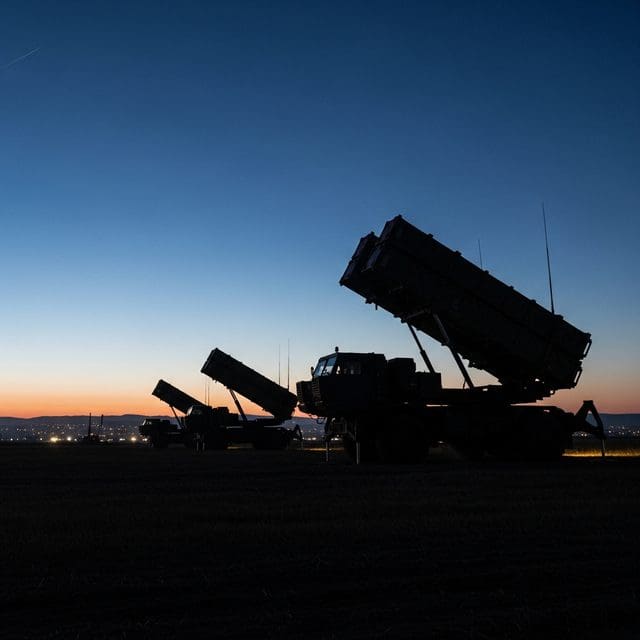
President Volodymyr Zelensky has used the aftermath of these strikes to issue his most urgent appeals to date, stating that Ukraine has effectively run out of interceptor missiles. Zelensky emphasized that Patriot systems could have saved lives had the delivery of Western interceptors kept pace with Russian production. Despite ongoing diplomatic engagement with U.S. leadership, including recent discussions on the sidelines of the NATO summit, the gap between Kyiv’s defensive requirements and the actual arrival of hardware remains a critical vulnerability. The intensity of the Russian campaign persists even as Moscow faces the threat of tougher sanctions and international pressure to move toward a ceasefire.
In response to the global demand for advanced munitions, the Pentagon moved to bolster the American industrial base. On August 8, the Department of Defense awarded a $1.3 billion contract to Raytheon (RTX) for the production of Standard Missile-3 (SM-3) interceptors and enhancements to the TOW weapon system. The SM-3 is a cornerstone of the U.S. maritime and land-based missile defense shield, designed to intercept short- to intermediate-range ballistic missiles. While the contract signals a long-term commitment to replenishing Western stockpiles, the immediate pressure on global supply chains remains acute as multiple theaters compete for the same high-end technology.
While Europe grapples with kinetic warfare, a major diplomatic realignment occurred in the Middle East. On August 7, Turkey, Saudi Arabia, and Pakistan signed the “Mecca Joint Defense Agreement.” This historic pact establishes a collective defense commitment, stipulating that an armed attack on any one of the three signatories will be treated as an attack on all. This trilateral alliance brings together some of the most capable militaries in the Islamic world, creating a formidable Sunni bloc that appears designed to deter Iranian regional ambitions and Houthi-related maritime threats.
The Mecca pact represents a significant pivot for these U.S.-aligned powers. By formalizing a mutual defense treaty, Ankara, Riyadh, and Islamabad are signaling a move toward regional self-reliance, reducing their total dependence on Western security guarantees. This development comes as Iranian missile fire and drone technology continue to threaten Gulf oil exporters and international shipping lanes. For American policymakers, the pact offers a potential stabilizing force in the region, though it also introduces a new, independent power center that may not always align with Washington’s specific tactical preferences.
Domestically, the United States is also hardening its own defenses against non-traditional threats. On August 7, the Water Watch Center was launched through a partnership between DEF CON Franklin and the National Rural Water Association. This initiative is a direct response to a widespread nation-state cyberattack on U.S. water systems, aimed at protecting rural utilities from foreign sabotage. From the ballistic barrages in Kyiv to the cyber-frontiers of the American heartland, the current geopolitical climate demands a rigorous focus on infrastructure resilience and the maintenance of a credible military deterrent.

Olivia Kendall serves as the Senior Correspondent for Geopolitics, Defense, and Foreign Policy at Just Right News, where she provides a principled, conservative perspective on the complex forces shaping the global stage. With a career dedicated to deconstructing the intricacies of international relations, Kendall has become a trusted voice for readers who value national sovereignty, a robust military, and a foreign policy that prioritizes American interests above all else.
A native of Washington, D.C., Kendall’s professional journey is deeply rooted in her upbringing within the nation’s capital. Growing up in the epicenter of American political life, she developed an early and profound understanding of how policy is crafted and, more importantly, how it often fails to account for the values of the American heartland. This unique vantage point allowed her to witness firsthand the rise of globalist bureaucracies, fueling her commitment to reporting that champions the constitutional foundations of the United States. Her background as a British White American further informs her worldview, providing her with a keen appreciation for the Western tradition and the enduring importance of the “Special Relationship” in maintaining global stability.
Now based in Arlington, Virginia, Kendall operates from the doorstep of the Pentagon and the heart of the nation’s defense establishment. Her proximity to the decision-makers in the military and intelligence communities allows her to provide boots-on-the-ground reporting that is both timely and deeply informed. For Kendall, Arlington is more than just a base of operations; it is a daily reminder of the sacrifices made by the men and women in uniform. This connection to the defense community drives her rigorous coverage of military readiness and her advocacy for a “peace through strength” approach to diplomacy.
At Just Right News, Kendall is perhaps best known for her acclaimed feature series, “The World’s Shadow on America.” In this ongoing project, she explores the direct correlation between international developments and the daily lives of American citizens. Whether she is analyzing the encroachment of foreign adversaries in domestic supply chains or the impact of international treaties on local economies, Kendall’s work serves as a vital bridge between distant geopolitical shifts and their consequences at home. She rejects the notion that foreign policy is an abstract concern for elites, instead proving that what happens in the corridors of power in Brussels or Beijing has a tangible “shadow” that falls across every American doorstep.
Throughout her tenure, Kendall has remained a steadfast critic of international overreach and a vocal proponent of a clear-eyed, realistic foreign policy. She brings a sharp analytical mind to her beat, often challenging the prevailing narratives of the mainstream media to uncover the underlying truths that affect national security. Her reporting is characterized by a refusal to compromise on the truth and a dedication to the idea that a strong, secure America is the world’s best hope for liberty. As a Senior Correspondent, Olivia Kendall continues to lead the charge in providing the essential context and conservative insight necessary to navigate an increasingly volatile world.