

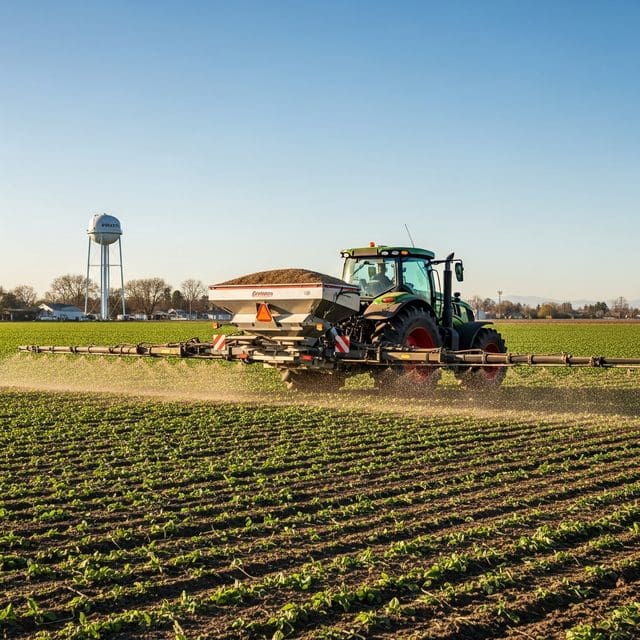
The Environmental Protection Agency faces criticism after approving new PFAS-linked pesticides while proposing controversial new standards for the use of sewage sludge on American farm soils.
The delicate balance between agricultural productivity and environmental stewardship is under renewed pressure as the Environmental Protection Agency (EPA) moves forward with a series of controversial decisions regarding chemical inputs and soil amendments. On June 30, the agency authorized the use of four new pesticides, three of which meet international definitions for per- and polyfluoroalkyl substances, commonly known as PFAS or ‘forever chemicals.’ This move has drawn sharp criticism from environmental advocates and local agricultural groups who argue that introducing more persistent chemicals into the food chain contradicts the agency’s stated mission to protect public health.
The concern is particularly acute in the San Joaquin Valley and other high-output regions where soil integrity is the foundation of the local economy. Critics argue that once these substances are introduced into the ecosystem, they are nearly impossible to remove, potentially contaminating groundwater and local produce for generations. The EPA’s decision to greenlight these chemicals comes at a time when the agency is simultaneously managing a massive push to address existing contamination, creating what many see as a contradictory policy environment that favors chemical manufacturers over the long-term health of the land.
Adding to the tension, the EPA has proposed a new framework for managing biosolids—treated sewage sludge—that is frequently applied to farmland as a cost-effective fertilizer. While the agency has announced a $30 million challenge to find lower-chemical alternatives for crop desiccation, its draft guidance on PFOA and PFOS in biosolids has been characterized by some as a less restrictive approach than what was previously anticipated. The agency has officially opened a 60-day comment period for this guidance, which will remain active through August 14, 2026, allowing stakeholders to weigh in on the proposed safety thresholds for these persistent compounds.
For the American farmer, the situation presents a difficult paradox. On one hand, the EPA is offering millions in grants to innovate away from traditional chemicals; on the other, it is approving new PFAS-based pesticides that could lead to future liabilities. Agricultural advocates fear that these approvals could increase PFAS accumulation in waterways, especially in areas where sludge is heavily applied. This creates a looming threat for rural water infrastructure, which often lacks the advanced filtration systems required to strip these chemicals from the drinking supply.
The debate highlights a growing rift between federal regulators and the private sector regarding the practicalities of modern farming. While the EPA maintains that these approvals and guidelines are based on the best available science to support crop yields, farmers are increasingly caught between the need for effective pest control and the long-term risk of land devaluation due to chemical contamination. There is a sense among local leaders that federal overreach is providing a muddled path toward safety, adding layers of bureaucratic complexity without addressing the fundamental risks to the agricultural heritage of the heartland.
As the August 14 deadline approaches, the focus remains on whether federal oversight is providing a clear path toward safety or merely managing the decline of soil quality. For the American family, the stakes are found at the dinner table, where the cumulative effect of these regulatory decisions ultimately manifests in the quality of the nation’s food and water supply. The outcome of the current 60-day comment period will likely determine the direction of American agricultural safety for the next decade, as the industry grapples with the permanent nature of the chemicals currently being introduced to the soil.

Eric Nolan serves as the Senior Correspondent for Food, Water, and Environmental Health at Just Right News, where he brings a principled, common-sense perspective to the most fundamental issues facing the American public. With a career dedicated to uncovering the truth behind the policies that govern our natural resources, Eric has become a trusted voice for readers who value traditional stewardship over bureaucratic overreach. His reporting is defined by a commitment to the idea that true environmentalism is rooted in the protection of the American family and the preservation of the nation’s agricultural heritage.
Raised in Fresno, California, Eric’s worldview was shaped in the heart of the San Joaquin Valley. Growing up in one of the world’s most productive agricultural hubs, he witnessed firsthand the vital connection between the land, the water, and the dinner table. In Fresno, he saw the resilience of farmers and the devastating impact that distant, top-down regulations can have on local communities. This upbringing instilled in him a deep respect for the producers who feed the country and a lifelong skepticism toward the alarmist narratives often pushed by mainstream media. For Eric, environmental health is not an abstract political talking point; it is a matter of ensuring that the people who work the land have the freedom and the resources to do so effectively.
Now based in Eugene, Oregon, Eric operates from a unique vantage point in the Pacific Northwest. Living in a region often defined by intense environmental debate, he provides a necessary counter-narrative to the prevailing trends of the area. From his base in Eugene, he monitors the shifting tides of federal and state policies, ensuring that the voices of rural citizens and property owners are not drowned out by urban activism. His reporting often bridges the gap between the rugged realities of the outdoors and the legislative halls where decisions are made, offering a grounded perspective that prioritizes local sovereignty and practical solutions.
As the lead for the acclaimed feature series “Earth on the Table,” Eric explores the intricate journey of the American food supply. He tackles critical issues such as water rights, soil health, and food security through a lens of national stability and individual liberty. He believes that a healthy environment and a thriving economy are not mutually exclusive, but rather two sides of the same coin of national prosperity. His work consistently highlights how innovation and private-sector ingenuity are the most effective tools for ensuring clean water and a safe food supply, rather than the expansion of the administrative state.
At Just Right News, Eric’s reporting serves as a vital resource for those who seek accountability and transparency. Whether he is investigating the impact of federal land management on local economies or examining the safety of the national food infrastructure, his work remains anchored in the values of heritage and hard work. Eric Nolan continues to be a leading voice in environmental journalism, championing the belief that the best way to protect our natural resources is to empower the people who live and work closest to them.