

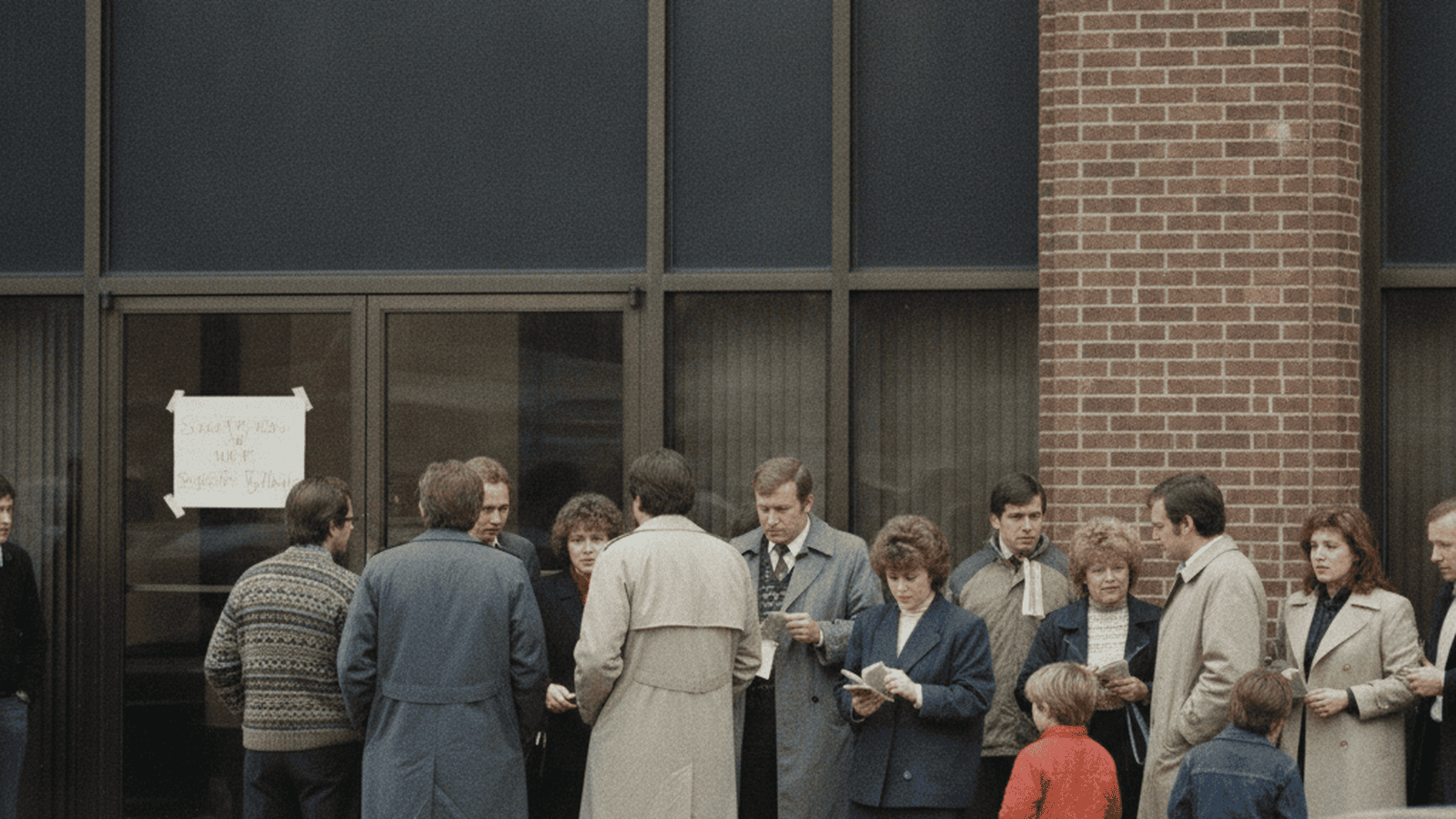
In 1985, Ohio Governor Dick Celeste exercised extraordinary executive power by declaring a bank holiday to halt a run on state-chartered savings and loan institutions. The crisis, triggered by the collapse of Home State Savings Bank, forced the closure of 71 institutions and led to significant reforms in the United States financial regulatory system.
TLDR: Following the collapse of Home State Savings Bank in 1985, Ohio Governor Dick Celeste used executive authority to close 71 state-chartered savings and loans. This unprecedented move aimed to prevent a total financial meltdown, eventually leading to the end of private deposit insurance and stricter federal oversight of the industry.
In early March 1985, Ohio became the epicenter of a financial firestorm that would redefine the relationship between state executive power and the banking industry. The crisis was ignited by the sudden collapse of Home State Savings Bank, a Cincinnati-based institution owned by Marvin Warner, a prominent political figure. Home State had invested heavily—and unwisely—in ESM Government Securities, a Florida-based firm that was exposed as a massive fraud. When ESM collapsed, Home State lost approximately $150 million, a sum that exceeded the entire $136 million reserve of the Ohio Deposit Guarantee Fund (ODGF). The ODGF was a private insurance pool that covered about 70 state-chartered savings and loans, providing a sense of security that proved to be illusory.
As news of Home State’s insolvency and the ODGF’s depletion hit the headlines, a wave of panic swept through the state. What began as a localized problem in Cincinnati quickly metastasized into a systemic bank run. Thousands of anxious depositors, fearing the loss of their life savings, formed long lines outside savings and loan branches in Columbus, Cleveland, and Dayton. The atmosphere was one of desperation, reminiscent of the Great Depression. By mid-March, the state’s financial infrastructure was on the brink of total failure. The private insurance model had failed, and the state lacked the immediate liquidity to backstop the institutions.
Governor Dick Celeste, a Democrat in his first term, found himself facing a catastrophe that threatened the economic stability of the entire Midwest. Recognizing that the piecemeal closure of individual banks was insufficient to stem the tide, Celeste took a historic and controversial step. On the morning of March 15, 1985, he invoked his emergency executive powers to declare a statewide “bank holiday” for all 71 institutions insured by the ODGF. This was the first time since President Franklin D. Roosevelt’s national bank holiday in 1933 that a government executive had shuttered a significant portion of the banking sector to prevent a collapse.
The executive order froze the assets of roughly 500,000 Ohioans, a move that was both praised for its decisiveness and criticized for the hardship it imposed on families who suddenly had no access to cash. Celeste’s gamble was that a temporary freeze would provide the breathing room necessary for the Ohio General Assembly to craft a permanent solution. During the week that followed, the legislature worked around the clock in emergency sessions. The resulting legislation was transformative: it mandated that every state-chartered savings and loan obtain federal insurance through the Federal Savings and Loan Insurance Corporation (FSLIC) as a condition for reopening.
The process of reopening was slow and arduous. Banks had to prove their solvency to federal regulators before they could resume operations. Some institutions remained closed for weeks, while others were forced into mergers or liquidations. The crisis effectively ended the era of private deposit insurance in the United States, as other states with similar systems, such as Maryland, soon faced their own collapses and followed Ohio’s lead toward federalization.
The 1985 Ohio Bank Holiday served as a harbinger of the much larger national Savings and Loan crisis that would emerge later in the decade, eventually requiring a multi-billion dollar federal bailout. For Ohio, the event left a lasting mark on its political and economic landscape. It demonstrated the necessity of robust federal oversight and established a modern precedent for the use of executive authority to intervene in the private sector during times of acute economic emergency. The image of Governor Celeste standing firm against a systemic meltdown remains a defining moment in the history of American state governance.

Miles Harrington serves as the Senior Correspondent for Federal Systems & Executive Power at Just Right News, where he brings a disciplined, constitutionalist lens to the inner workings of the American government. With a focus on the mechanics of the federal bureaucracy and the limits of executive authority, Harrington has established himself as a vital voice for readers who value transparency, accountability, and the preservation of the separation of powers.
A native of Richmond, Virginia, Harrington’s perspective is deeply rooted in the traditions of the Old Dominion. Growing up in a city defined by its historical significance and its role as a center of American jurisprudence, he developed an early appreciation for the foundational principles of the Republic. His upbringing in Richmond—a place where the legacy of the Founding Fathers is woven into the landscape—instilled in him a belief that the federal government should remain within its constitutional bounds. This background informs his skepticism of centralized overreach and his commitment to reporting on the ways in which the administrative state impacts the lives of everyday citizens.
In his current role, Harrington specializes in the complexities of federal systems. He doesn’t just report on the headlines of the day; he digs into the structural shifts within the executive branch that often go unnoticed by the mainstream press. Whether he is analyzing the implications of a new federal regulation or investigating the expansion of agency jurisdiction, his work is characterized by a rigorous adherence to the facts and a dedication to the rule of law.
Harrington is perhaps best known for his signature feature series, “How Washington Works.” Through this ongoing project, he demystifies the often-opaque processes of the nation’s capital, pulling back the curtain on the “Deep State” and the unelected officials who wield significant influence over national policy. By breaking down complex legislative maneuvers and executive orders, he empowers Just Right News readers to understand the true levers of power in Washington. His reporting serves as a necessary check on the federal government, ensuring that the actions of those in power are held up to the light of public scrutiny.
Now based in Washington, D.C., Harrington operates at the epicenter of the political world, yet he remains intentionally distanced from the “Beltway bubble.” His proximity to the halls of power allows him to maintain a robust network of sources across the federal landscape, but his heart remains in the principled conservatism of his Virginia roots. He views his role not merely as a reporter, but as a steward of the public trust, dedicated to providing the clarity and context that conservative voters need to navigate an increasingly complex political environment.
Through his sharp analysis and unwavering commitment to the truth, Miles Harrington continues to be a cornerstone of the Just Right News team. His work ensures that the principles of limited government and executive restraint remain at the forefront of the national conversation, providing a crucial service to those who believe in a government that is truly of, by, and for the people.