

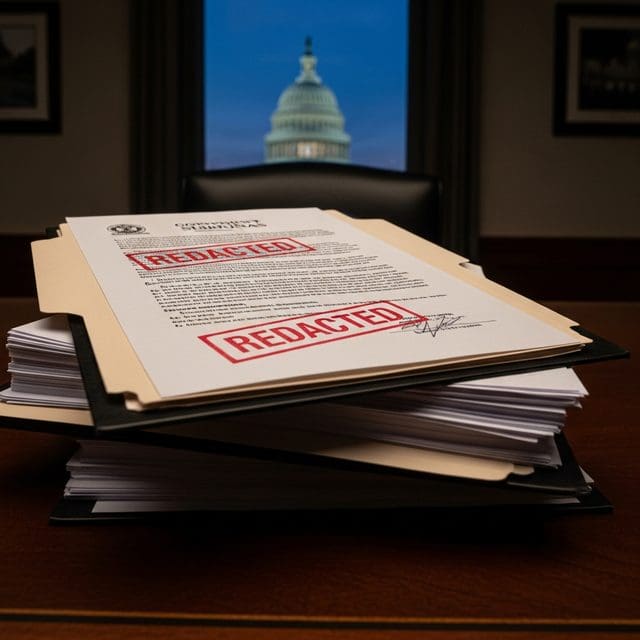
Newly released oversight documents show Verizon complied with subpoenas for congressional phone records while failing to notify Senate officials as required by contract.
Newly released oversight records and internal correspondence reveal that Verizon, AT&T, and T-Mobile received 84 subpoenas from Special Counsel Jack Smith’s “Arctic Frost” investigation. The documents, released through the office of Senator Chuck Grassley, confirm that 10 of these subpoenas specifically targeted the toll records of 20 current or former Republican members of Congress. These records provide a granular look at the friction between the administrative state’s investigative reach and the constitutional protections afforded to the legislative branch.
The records highlight a significant breach of protocol by Verizon regarding a subpoena dated May 25, 2023. Despite a May 22, 2022, contract requiring the carrier to notify the Senate Sergeant at Arms of such requests, Verizon failed to do so. The subpoena in question targeted the phone lines of Senators Ted Cruz and Lindsey Graham. Earlier this year, Verizon’s general counsel admitted to the Senate Judiciary Committee that the company lacked the infrastructure to flag congressional numbers at the time, though the company has since implemented new protocols to elevate such requests to senior management. The carrier now claims it will seek to limit non-disclosure orders and notify affected members to the fullest extent permitted by law.
Redacted subpoenas and carrier letters show a divergent response among telecommunications giants. While Verizon complied with the orders under gag orders signed by Judge James Boasberg, AT&T reportedly resisted the demands. This resistance underscores the tension between law enforcement’s use of non-disclosure orders and the constitutional protections afforded to legislative communications. DOJ summaries further confirm that the scope of the surveillance extended beyond toll records, as the Special Counsel’s team obtained and reviewed text messages from 44 members of Congress via National Archives subpoenas for government phones, covering a period from October 2020 through January 20, 2021.
On July 31, 2026, Senators Grassley and Ron Johnson, supported by more than a dozen colleagues, issued a formal demand to Verizon for a detailed timeline of the data handover. The letter gives the carrier until August 13, 2026, to identify which employees were aware of the congressional targeting and why the 2023 subpoena was omitted from previous disclosures to Congress. This demand for corporate accountability follows a history of partial disclosures, where the Department of Justice has transmitted the election-subversion portion of Smith’s final report while maintaining strict secrecy over other volumes.
This corporate accountability fight coincides with ongoing secrecy surrounding the Special Counsel’s final reports. While the Department of Justice transmitted the election-subversion portion of the report to Congress following a court order, a federal judge’s February 2026 permanent injunction has kept the classified-documents volume sealed. The DOJ continues to refuse the release of that volume, citing ongoing proceedings involving co-defendants Waltine Nauta and Carlos De Oliveira, even as a former prosecutor was charged in May 2026 with the illicit removal of a sealed section of the document. This creates a notable gap between formal non-disclosure to the public and the risk of illicit leaks within the department.
The broader context of these records suggests a systemic failure in how the administrative state handles sensitive legislative data. While the World Health Organization currently accuses ultra-processed food companies of obstructing health drives through litigation, and Amazon receives $600 million in tariff refunds following Supreme Court rulings, the focus in Washington remains on the internal mechanics of federal surveillance. The documents released this month serve as a primary-source reminder that without rigorous oversight, the lines between law enforcement and political surveillance can become dangerously blurred, leaving the public to rely on whistleblowers and records requests to uncover the truth.
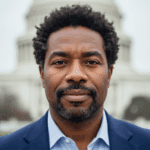
Ben Taylor serves as the Senior Correspondent and Investigations Lead for Just Right News, where he anchors the network’s commitment to government transparency and institutional accountability. With a career defined by a relentless pursuit of the facts, Taylor spearheads the acclaimed feature series “The Paper Trail,” a deep-dive investigative column that prioritizes primary source documentation over political rhetoric. Based in the heart of the nation’s capital, he has earned a reputation as one of the most formidable investigative journalists in Washington, D.C., known specifically for his mastery of public records and the Freedom of Information Act.
Taylor’s approach to journalism is deeply rooted in his upbringing in Kansas City, Missouri. Growing up in the “Show Me State,” he developed a healthy skepticism of centralized power and a profound respect for the common-sense values of the American heartland. This Midwestern foundation informs his reporting today, as he bridges the gap between the complex machinations of federal bureaucracy and the everyday concerns of citizens across the country. For Taylor, investigative reporting is not about chasing headlines; it is about ensuring that the government remains answerable to the people it serves.
As an African American man working within the conservative media landscape, Taylor brings a principled perspective to his beat. He views the Constitution and the right to information as the ultimate equalizers in a free society. His work often highlights how bureaucratic overreach and lack of transparency disproportionately affect individual liberties. By focusing on the “paper trail,” Taylor strips away the spin of partisan talking points, instead providing Just Right News readers with the raw data and internal communications that reveal how their tax dollars are spent and how policy decisions are actually made.
In his role as Investigations Lead, Taylor oversees a team dedicated to uncovering the stories that mainstream outlets often overlook. Whether he is auditing federal spending, investigating regulatory overreach, or exposing inefficiencies within the administrative state, his methodology remains consistent: follow the evidence wherever it leads. His presence in Washington, D.C., allows him to maintain a constant watch over the halls of power, yet he remains steadfastly connected to his roots, ensuring his reporting reflects the clarity and directness of his Missouri home.
Throughout his tenure at Just Right News, Taylor has become a vital voice for those who demand integrity in public office. He believes that a well-informed electorate is the strongest defense against government overreach, and he has dedicated his career to providing the public with the tools they need to hold their leaders accountable. Through “The Paper Trail” and his broader investigative work, Ben Taylor continues to set the standard for rigorous, document-driven journalism that champions the values of transparency, individual responsibility, and the rule of law.