

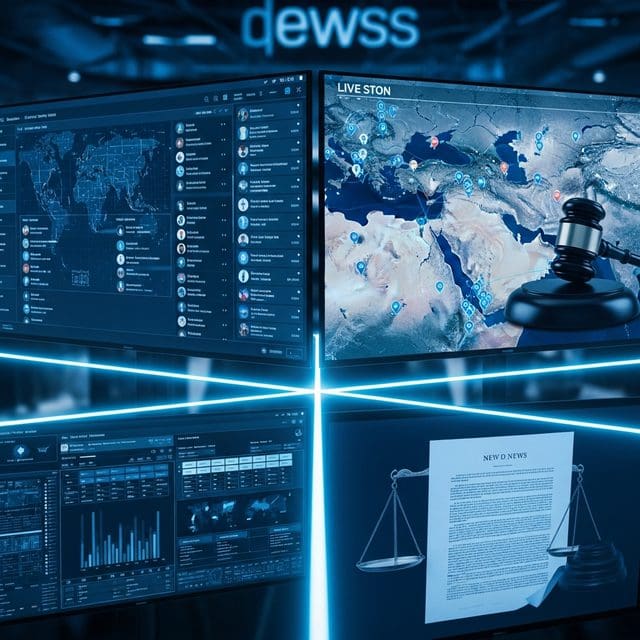
As Middle East conflicts escalate and legal penalties mount for media figures, traditional journalism is being replaced by high-stakes influencer narratives and platform-driven engagement.
The American media landscape in mid-2026 has reached a critical point where the line between political advocacy and objective journalism has vanished. As the nation grapples with an expanded conflict in the Middle East and a high-stakes domestic political season, information delivery is increasingly dominated by personalities rather than editorial standards. This represents a fundamental restructuring of how Americans perceive truth in an era of synthetic media and platform-driven engagement.
Recent reporting from The Daily Beast highlights this shift through Mike Lindell, the Minnesota GOP gubernatorial candidate and Trump ally. Since April 7, 2026, Lindell has faced nightly $500 contempt fines for defying a $56,369 Smartmatic defamation judgment. By July 30, these fines reached $56,500, exceeding the original judgment. Lindell serves as a case study for the modern media desk: a figure who remains a central influencer and endorsed candidate despite financial penalties that would have traditionally sidelined a political aspirant.
While legacy outlets like The Atlantic analyze the “weird state” of the influencer, noting that creators have never been more scrutinized, the political application of this power is evident in the spread of QAnon-style narratives. Truth Social recently became a flashpoint for moderation ethics after delaying the removal of high-tech fabricated content involving former President Barack Obama. These narratives often originate in late-night social media blitzes before being amplified by partisan outlets like Raw Story. Even when mainstream outlets provide fact-checks, the initial viral surge often shapes public opinion more than the subsequent correction.
The challenge for information integrity is compounded by the gravity of Middle East developments. While the public seeks clarity on the U.S.-Iran memorandum of understanding, the reopening of the Strait of Hormuz, and the 60-day ceasefire, the digital space is often filled with distractions. For instance, Raw Story coverage of Kimberly Guilfoyle recently focused on her fashion choices at a Greek monastery, labeling them “tone deaf.” This tendency toward trivialization, combined with aggressive ideological framing, leaves a vacuum where objective foreign policy reporting once stood. The contrast between serious Iranian missile attacks and superficial influencer reporting highlights a growing disconnect in the press.
As Senate Republicans block resolutions regarding troop withdrawals and President Trump navigates negotiations with Tehran, the reliance on monetized followings creates a “post-fact” environment. In this ecosystem, narrative success is measured by reach within an echo chamber rather than adherence to ground truth. The role of figures like Lindell demonstrates how persistent narratives coexist with legal punishment as long as the platform remains intact. Reclaiming the American story requires a return to intellectual honesty, moving past manufactured consensus to prioritize objective truth.
Current media concentration and the lag in platform moderation suggest the press is no longer just reporting the news but actively shaping the reality of the 2026 cycle. With Jay Clayton nominated for Director of National Intelligence and the U.S. war with Iran expanding, the need for a press corps that values integrity over viral engagement is urgent. Until the social costs of misinformation outweigh the benefits of influencer status, the public will continue to navigate a fragmented and contradictory information reality.
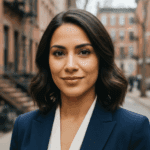
Chloe Foster serves as a Staff Writer for Just Right News, where she spearheads the outlet’s coverage of Media, Culture, and Information Integrity. In an era defined by rapid-fire digital communication and shifting societal norms, Chloe has distinguished herself as a vital voice for readers seeking clarity amidst the noise. Her signature feature series, “The Story Wars,” has become a cornerstone of the publication, offering a deep dive into the ideological battles currently shaping American life and the ways in which mainstream narratives are constructed, disseminated, and often manipulated.
Chloe’s unique perspective is informed by a life lived in two of the nation’s most influential cultural hubs. Raised in Los Angeles, California, she grew up in the shadow of the world’s most powerful media and entertainment apparatus. This upbringing provided her with a front-row seat to the “dream factory,” allowing her to observe firsthand how cultural exports are crafted and how they often diverge from the lived experiences of everyday Americans. Her time in Los Angeles instilled in her a healthy skepticism of manufactured consensus and a passion for uncovering the truths that lie beneath polished public relations campaigns.
Today, Chloe operates from Brooklyn, New York, a vantage point that places her at the epicenter of the modern media landscape. Living and working in a deep-blue urban environment as a conservative journalist has sharpened her reporting, requiring a rigorous commitment to intellectual honesty and a steadfast defense of traditional values. Her base in Brooklyn allows her to engage directly with the institutions and influencers who drive the national conversation, providing Just Right News readers with an “on-the-ground” look at the cultural shifts originating in the Northeast.
As a Hispanic woman, Chloe brings a nuanced understanding of community and heritage to her beat. She frequently explores how media portrayals of the Latino community often overlook the deep-seated faith, entrepreneurial spirit, and family-centric values that define it. Her work challenges the monolithic labels often applied by mainstream outlets, instead highlighting the diversity of thought and the conservative principles that resonate within her community.
In her role at Just Right News, Chloe views “Information Integrity” not merely as a buzzword, but as a mission. She believes that a healthy republic requires a media landscape where facts are prioritized over agendas and where the public is empowered to think for themselves. Through “The Story Wars,” she deconstructs the framing of major news events, exposing bias and providing the context necessary for readers to understand the broader cultural implications of the day’s headlines.
Chloe Foster’s reporting is more than just a collection of articles; it is a sustained effort to reclaim the narrative for those who feel sidelined by the prevailing media establishment. By bridging the gap between her West Coast roots and her East Coast base, she continues to provide essential commentary on the forces that define our shared American culture.