

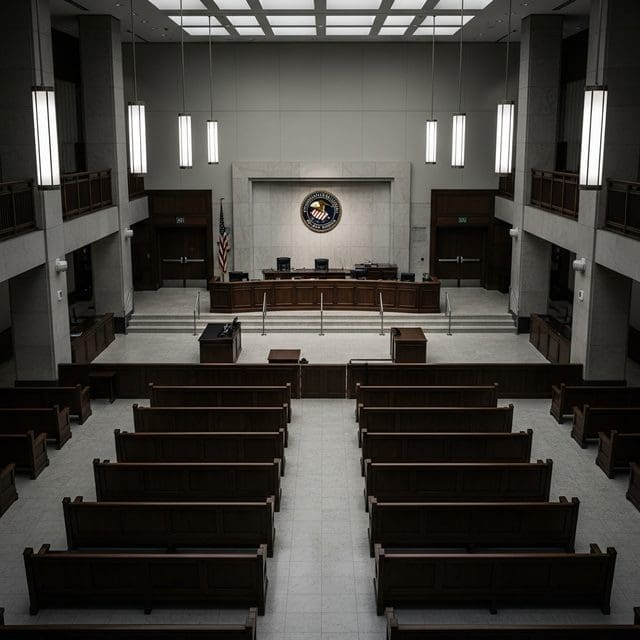
A new federal rule bypasses initial asylum interviews, sending hundreds of thousands of cases directly to immigration courts to expedite potential removal orders.
The Trump administration has enacted a significant structural overhaul of the American asylum system, issuing a rule effective July 27, 2026, that permits U.S. Citizenship and Immigration Services (USCIS) to transfer hundreds of thousands of asylum applications directly to the immigration court system. By bypassing the traditional initial interview with an asylum officer, the administration is effectively moving applicants straight into adversarial proceedings before the Department of Justice (DOJ), a shift that legal experts suggest will dramatically increase the frequency of removal orders for those who entered the country legally or have not yet been charged with immigration violations.
This administrative pivot is grounded in a June 25, 2026, Supreme Court decision that upheld federal authority to turn away asylum seekers when border crossings are deemed to have overburdened national infrastructure. That ruling provided the necessary legal cover for the administration to implement this new processing strategy, which officials argue is necessary to manage the administrative load on USCIS. However, critics and data analysts note that shifting these cases to the DOJ is likely to swell an already historic backlog in the immigration courts, where dockets are already strained by years of pending litigation.
Parallel to these procedural changes, the Department of Homeland Security (DHS) and Customs and Border Protection (CBP) have launched a coordinated communications campaign. In mid-July updates, the agencies touted “14 straight months of zero releases at the border,” reinforcing a narrative that the southern border is functionally closed. This enforcement posture is further supported by a DOJ proposal updated in July 2026 to lengthen the mandatory wait for asylum-based employment authorization to 365 days. The proposal also includes provisions to pause work permit filings entirely when affirmative processing times exceed 180 days, creating significant economic pressure on those awaiting status determinations.
On Capitol Hill, Republican lawmakers are working to solidify these executive actions through the “Permanent Trump Secure Border Act.” Recently advanced out of committee to the House floor, the legislation seeks to codify strict limits on asylum and parole. Key provisions of the bill would raise the “credible fear” standard to a “more likely than not” threshold and narrow eligibility exclusively to those who arrive at legal ports of entry. Notably, the act also proposes to criminalize visa overstays that exceed 10 days, a move that would transform a civil violation into a criminal offense, fundamentally altering the legal landscape for millions of temporary residents.
The domestic policy shifts occur against a backdrop of complex international migration trends and geopolitical developments. While the administration manages border enforcement, it is also navigating high-stakes foreign policy, including a 10-day ceasefire between Israel and Lebanon and an agreement with Iran to keep the Strait of Hormuz open for transit. These regional stabilities are often cited by policymakers as essential for managing global migration flows at their source. However, the immediate pressure remains visible globally; in the Spanish enclave of Ceuta, over 1,500 migrants recently attempted to swim from Morocco, overwhelming local reception centers after a Spanish court ruled that sea arrivals could not be summarily returned.
As the 2026 midterm elections approach, the impact of these policies remains a central point of contention. While the administration prioritizes the integrity of the social contract through strict enforcement and the rule of law, polling suggests the public remains weary of broader international engagements. A late July CBS News/YouGov poll found that 78 percent of respondents believe the ongoing conflict in Iran has been more difficult than the administration anticipated, suggesting that while border security remains a priority, the administration’s broader geopolitical and demographic strategies are under intense public scrutiny.

Julie Harris serves as a Staff Writer for Just Right News, where she tackles some of the most pressing and complex issues facing the nation today. As the lead reporter for the Migration, Demographics & Cultural Shifts beat, Julie provides a grounded, principled perspective on how the movement of people and the changing makeup of communities are reshaping the American landscape. Her work is defined by a commitment to exploring the long-term consequences of social change, prioritizing the stability of local institutions and the preservation of national identity.
Her deep understanding of these issues is rooted in her upbringing in Tucson, Arizona. Growing up in a prominent border state, Julie witnessed firsthand the intricate realities of migration and the profound impact it has on local infrastructure, law enforcement, and the social fabric. This early exposure instilled in her a respect for the rule of law and a keen awareness of the challenges that arise when federal policies fail to align with the needs of border communities. Her reporting often reflects this lived experience, bringing a necessary level of nuance to topics that are often treated with abstraction in coastal newsrooms.
Now based in Santa Fe, New Mexico, Julie continues to report from the heart of the American Southwest. Her location provides a unique vantage point to observe the intersection of traditional regional cultures and the modern shifts brought about by both internal and external migration. In Santa Fe, a city defined by its rich history and distinct cultural heritage, she finds a perfect environment to explore how communities strive to maintain their character while navigating the pressures of a rapidly changing world. This perspective allows her to bridge the gap between policy debates in Washington and the reality of life in the high desert.
At Just Right News, Julie’s work is characterized by a dedication to examining the data and the human stories that define the “New Mosaic” of America. Her signature feature series, “The New Mosaic,” has become a cornerstone of her reporting. Through this series, Julie explores the evolving social architecture of the United States, documenting how shifts in population affect everything from local economies to the political landscape. She brings a critical eye to the narrative of demographic inevitability, instead asking how these shifts impact the average citizen’s sense of belonging and the integrity of the American social contract.
Julie’s background and her dedication to conservative principles make her a vital voice in contemporary journalism. She understands that demographics are more than just numbers on a spreadsheet; they represent the future of the American family and the nation’s enduring legacy. Through her diligent reporting and insightful analysis, Julie Harris ensures that her readers are informed about the forces shaping their world, providing a perspective that is as thoughtful as it is necessary for the modern era.