

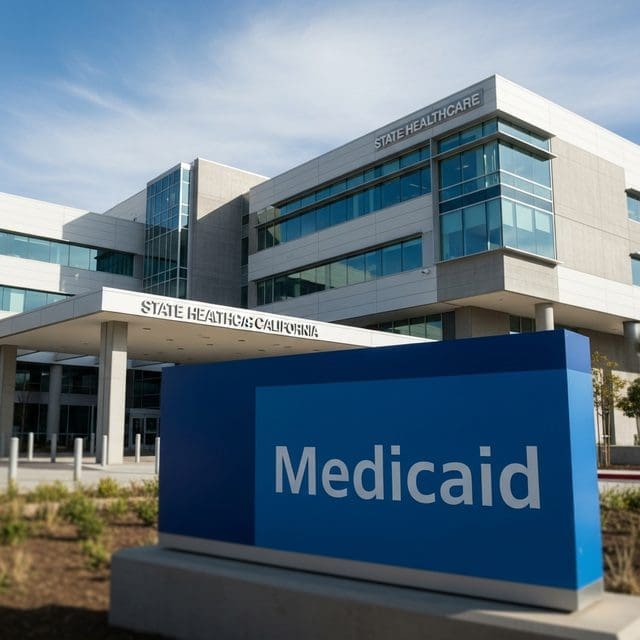
HHS Secretary Robert F. Kennedy Jr. and CMS head Dr. Mehmet Oz are withholding $867.5 million from California, citing a crackdown on home-care fraud.
The Department of Health and Human Services (HHS) has moved to freeze $867.5 million in federal Medicaid payments to California, signaling a sharp escalation in the federal government’s scrutiny of state-run healthcare programs. HHS Secretary Robert F. Kennedy Jr. and Dr. Mehmet Oz, who leads the Centers for Medicare & Medicaid Services (CMS), characterized the deferral as a necessary step to protect taxpayer dollars from waste and fraud. This action is part of a broader “war on fraud” that has also seen $199 million deferred from Minnesota, totaling an unprecedented $3 billion campaign against Democratic-led states in 2026.
The freeze specifically targets California’s home- and community-based services, a sector that has seen spending grow by 24 percent over the last two years—double the national average. Federal regulators identified 14 high-risk service areas, including $221 million in claims linked to beneficiaries with unsatisfactory immigration status and various payments made for services billed after a patient’s death. Dr. Oz defended the aggressive posture, stating that if a claim appears fraudulent, the federal government will no longer provide immediate reimbursement. This shift to “stop the fraud before it happens” represents a significant departure from previous pay-and-chase models of federal oversight.
This fiscal tightening arrives as California and Minnesota face a combined withholding of more than $3 billion in Medicaid funds throughout 2026. While the administration frames these actions as temporary pauses pending better documentation, health policy analysts warn that the move could destabilize the infrastructure for in-home care. For many elderly and disabled residents, these programs are the only alternative to more expensive institutional nursing home care. Critics argue the move punishes states that have prioritized home-based independence over traditional hospital settings, potentially leaving millions of beneficiaries and safety-net providers at risk if the pause converts to permanent disallowances.
Simultaneously, the nation’s public health apparatus is facing a mounting crisis on a different front. The Centers for Disease Control and Prevention (CDC) reports that measles cases have reached 2,318 this year, the highest burden in 35 years. Former public health officials have expressed alarm over the surge, noting that the CDC has lacked a permanent director for much of the current term. They point to a January 2026 revision of the childhood vaccine schedule, ordered by the administration despite a lack of new clinical data, as a factor in declining vaccination coverage. Experts have labeled the surge a “profound moral failure,” noting that cases in the last 18 months have exceeded the previous 25 years combined.
While federal leadership focuses on fiscal integrity and rooting out Medicaid fraud, the “canary in the coal mine” of the measles outbreak suggests a broader unraveling of public health capacity. The administration has overseen significant staffing and funding cuts to prevention programs, shifting the focus toward individual responsibility and market-based health solutions. This occurs as the country confronts a simultaneous rise in other threats, including bird flu, whooping cough, and cyclosporiasis, the latter of which recently saw 2,500 new cases reported across four additional states.
In other health developments, the FDA recently authorized a new coronary inflammation biomarker, CaRi-Heart, which aims to identify cardiovascular mortality risk up to a decade in advance. Additionally, the National Organization for Rare Disorders expanded its network of Excellence Centers to include new institutions in California, New York, and North Carolina. Private philanthropy also continues to fill gaps, with the Harry T. Mangurian, Jr. Foundation committing an additional $4 million to blood cancer research. These private-sector innovations highlight the continued push for medical advancement even as the federal government tightens the purse strings on state-administered programs.

Susan Carter serves as a Senior Correspondent for Just Right News, where she leads the network’s comprehensive coverage of Health, Medicine, and Public Policy. With a career dedicated to dissecting the complexities of the American healthcare system, Susan brings a principled perspective to the most pressing debates of the day. Her reporting is characterized by a commitment to individual liberty, fiscal responsibility, and a healthy skepticism of government overreach, making her a vital voice for audiences seeking clarity in an increasingly regulated landscape.
Raised in Minneapolis, Minnesota, Susan’s professional outlook is deeply informed by the values of the American heartland. Growing up in the Twin Cities, she witnessed firsthand the importance of community-driven solutions and the resilience of the individual. This Midwestern foundation instilled in her a firm belief that the best answers to public policy challenges often come from local innovation and personal responsibility rather than top-down federal mandates. Her background allows her to translate complex legislative jargon into stories that resonate with families who value common sense and local autonomy.
Now based in Baltimore, Maryland, Susan operates from a unique vantage point at the intersection of medical innovation and urban policy. Living and working in a city renowned for its world-class medical institutions and significant public health challenges, she has a front-row seat to the realities of the modern healthcare landscape. Her proximity to these hubs of research and policy allows her to scrutinize how government intervention affects the quality of care and the freedom of medical professionals. In Baltimore, she sees the tangible results of policy decisions, using the city as a lens through which to examine the broader national health debate and the impact of federal spending on local communities.
As the lead for the acclaimed feature series “The Cost of Care,” Susan dives deep into the economic realities facing patients and providers alike. Her work focuses on the necessity of price transparency, the benefits of market competition, and the preservation of the sacred doctor-patient relationship. She is a staunch advocate for the idea that a well-informed public is the best defense against bureaucratic inefficiency. Through this series, she has exposed the hidden drivers of rising medical expenses, always seeking to empower the individual consumer over the massive institution.
Susan’s reporting on public policy is characterized by a commitment to rigorous inquiry and a focus on constitutional limits. Whether she is analyzing new pharmaceutical regulations, investigating the impact of federal health mandates, or exploring the future of medical technology, her goal remains the same: to provide Just Right News audiences with the facts they need to navigate a complex world. By blending her Midwestern sensibilities with the insights gained from her base in Maryland, Susan Carter has become a trusted authority for those who believe that personal freedom and public health are inextricably linked. Her work continues to challenge the status quo, advocating for a system that respects the taxpayer and prioritizes the patient.