

Infrastructure failures at Gatwick and unilateral border projects in Canada highlight increasing friction within global supply chains as national interests and domestic manufacturing take center stage.
The intricate web bringing goods from distant factory floors to American shelves is facing structural and political tests that highlight the fragility of globalism. In the United Kingdom, a power outage at SES Water’s Bough Beech works led to a total loss of running water at Gatwick Airport. While flights remained operational, landside logistics devolved into a bottleneck. Passengers were left without sanitation, illustrating how easily a failure in local infrastructure can paralyze a critical node in international commerce. For the American observer, this is a cautionary tale regarding the vulnerability of trade hubs to off-site utility failures.
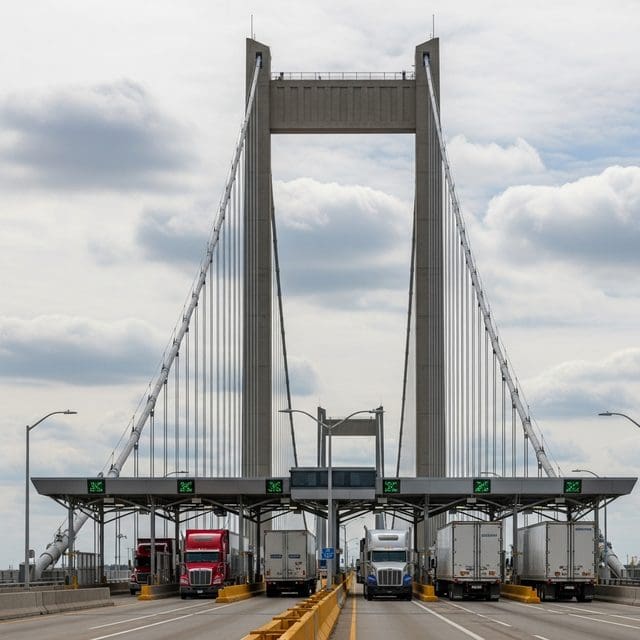
Across the Atlantic, the opening of the Gordie Howe International Bridge on July 24, 2026, serves as a monument to shifting North American trade. Canada proceeded with the project without United States participation after the Trump administration leveraged a 50 percent tariff threat on specific Canadian imports to protect domestic interests. President Trump’s assertion that the exclusion was “fine” reflects a commitment to national sovereignty over the multi-national projects favored by previous administrations. This bridge now stands as a symbol of a protective trade environment where the American worker’s leverage is the primary concern.
In London, the political landscape is shifting under Prime Minister Andy Burnham. Operating from “Number 10 North,” Burnham faces a cabinet crisis following his chancellor’s resignation over defense spending. Burnham has refused to set a firm date for raising expenditures to 3 percent of GDP, creating ripples across the Atlantic. Trade partners in India, who recently saw their national cricket team reclaim the top spot in ICC rankings, are watching these Western leadership shifts closely. The stability of maritime security and the enforcement of trade deals depend heavily on the fiscal and military commitments of these traditional powers.
The risks of over-extended supply chains are also found in the food supply. A Cyclospora outbreak linked to iceberg lettuce from central Mexico has expanded to nine states, including Michigan and Pennsylvania. This public health crisis serves as a reminder of the hidden costs of prioritizing corporate efficiency over local production. When we outsource food supply to regions with different regulatory standards, we trade safety for marginal savings. This outbreak reinforces the argument for a return to regionalized, high-standard production that honors the local farmer.
On the energy front, the landscape remains volatile. Oil prices saw a 10 percent drop following the announcement that the Strait of Hormuz would remain open under a new memorandum between the U.S. and Iran. This deal, including sanctions relief and a 60-day ceasefire extension in Lebanon, provides a temporary reprieve for shipping costs. However, the reliance on fragile diplomatic agreements for fuel movement underscores why energy independence is the cornerstone of national security.
Ultimately, the journey of things—from SpaceX rockets valued at $1.77 trillion to the humble head of lettuce—is becoming more complex. The era of blind faith in globalist efficiency is ending, replaced by a skepticism that prioritizes the dignity of the individual worker and the resilience of the local community. Whether it is a water crisis at a British airport or the unilateral construction of a Canadian bridge, the message is clear: the American supply chain must be secured through domestic strength.

Sean Bradley serves as the Senior Correspondent for Trade, Supply Chains, and Global Labor at Just Right News, where he brings a principled, clear-eyed perspective to the complex systems that power the modern world. With a focus on the economic forces that impact the American household, Bradley has distinguished himself as a leading voice in explaining how global shifts in manufacturing and logistics translate to the kitchen table.
Growing up in Long Beach, California, Bradley’s interest in the movement of goods was forged against the backdrop of one of the nation’s most vital maritime gateways. Raised in a community where the towering cranes of the port were a constant fixture on the horizon, he developed an early appreciation for the blue-collar industries that form the backbone of the American economy. This upbringing instilled in him a profound respect for the dockworkers, truckers, and laborers who keep the country moving, a sentiment that remains a cornerstone of his reporting today. For Bradley, trade is not merely a series of abstract figures on a spreadsheet; it is a human endeavor that sustains families and defines the strength of a nation.
Now based in Seattle, Washington, Bradley occupies a strategic vantage point in another of the country’s most significant trade hubs. His location allows him to witness firsthand the intersection of traditional industry and the evolving technological landscape of global logistics. From the Pacific Northwest, he monitors the flow of goods across the ocean, providing Just Right News readers with timely insights into how international tensions, regulatory hurdles, and labor disputes affect the availability and cost of essential goods.
His signature feature series, “The Journey of Things,” has become a staple for readers seeking to understand the intricate path products take from raw materials to the retail shelf. Through this series, Bradley pulls back the curtain on the global marketplace, often highlighting the risks of over-reliance on foreign adversaries and the importance of domestic manufacturing resilience. His reporting consistently emphasizes the conservative values of national sovereignty, free-market competition, and the protection of the American worker from unfair global practices.
As a journalist of Irish heritage, Bradley maintains a deep-seated respect for the dignity of the individual worker and the importance of community stability. He approaches his beat with a commitment to transparency, often questioning the status quo of globalist policies that prioritize corporate efficiency over local prosperity. Whether he is reporting from a warehouse floor or analyzing a new international trade agreement, his goal remains the same: to provide the American public with the truth about where their products come from and what it costs to get them there.
Throughout his tenure at Just Right News, Bradley has remained a steadfast advocate for economic common sense. His work serves as a vital resource for those who believe that a strong nation is built on secure borders, robust trade, and a respected workforce. By combining his local roots in Long Beach with his professional experience in Seattle, Bradley continues to offer a unique and necessary perspective on the forces that shape the American way of life.