

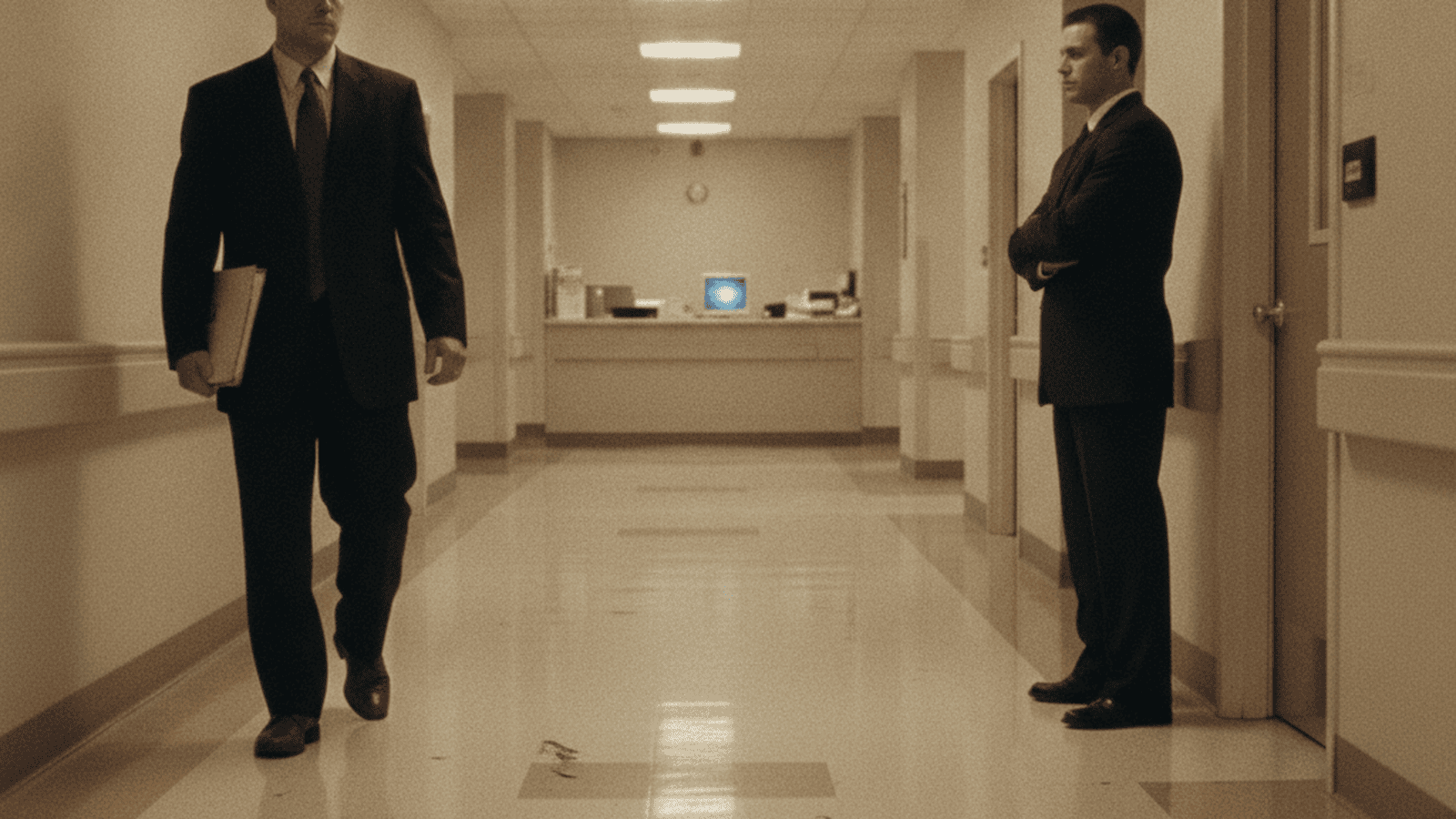
In March 2004, a high-stakes confrontation occurred at George Washington University Hospital between White House officials and the Department of Justice over the legality of a secret surveillance program. The event nearly triggered mass resignations within the Bush administration, highlighting a significant constitutional crisis in the United States regarding executive authority.
TLDR: In 2004, top Department of Justice officials threatened to resign over the White House’s attempt to bypass legal oversight for the “Stellar Wind” surveillance program. The standoff at Attorney General John Ashcroft’s hospital bed forced President George W. Bush to modify the program to comply with federal law.
In the late evening of March 10, 2004, a dramatic confrontation unfolded within the walls of George Washington University Hospital that would define the limits of executive power in the post-9/11 era. Attorney General John Ashcroft lay in intensive care, recovering from emergency surgery for acute pancreatitis. Because Ashcroft was incapacitated, Deputy Attorney General James Comey served as the Acting Attorney General. Comey had recently concluded that certain aspects of “Stellar Wind,” a highly classified domestic surveillance program authorized by President George W. Bush, lacked a sound legal basis. This program allowed the National Security Agency to intercept communications without traditional warrants, a practice the Department of Justice (DOJ) began to question under the leadership of Jack Goldsmith at the Office of Legal Counsel.
The conflict centered on the periodic reauthorization of the program. Comey, supported by the DOJ’s top legal minds, refused to sign the certification required for the program to continue, arguing it bypassed the Foreign Intelligence Surveillance Act (FISA). This refusal set the stage for a direct clash between the Department of Justice and the White House. White House Counsel Alberto Gonzales and Chief of Staff Andrew Card attempted to bypass Comey by visiting the hospitalized Ashcroft to secure his signature while he was under the influence of heavy medication. Upon learning of their plan, Comey rushed to the hospital with his staff, arriving just minutes before the White House officials.
Inside the darkened hospital room, a tense standoff occurred. Comey was joined by FBI Director Robert Mueller, who had instructed his agents not to allow Comey to be removed from the room if the White House officials attempted to interfere. When Gonzales and Card arrived with the reauthorization papers, Ashcroft rose from his bed and firmly stated that he deferred to Comey’s judgment as Acting Attorney General. The White House officials left without the signature, but the following day, the President reauthorized the program anyway, citing his inherent authority as Commander in Chief. This move prompted Comey, Mueller, and nearly thirty other top DOJ officials to prepare a mass resignation, arguing that the executive branch could not unilaterally ignore the legal findings of its own law enforcement agency.
President Bush met privately with Mueller and Comey on March 12 to resolve the impasse. Recognizing that a mass resignation of the nation’s top law enforcement officials during a time of war would be politically and legally catastrophic, the President agreed to modify the surveillance program to address the legal concerns raised by the DOJ. This compromise averted the crisis and brought the program back under a framework that the Department of Justice could legally certify. The event remained classified for years until Comey testified about the incident before the Senate Judiciary Committee in 2007, revealing the depth of the internal constitutional struggle.
The 2004 rebellion underscored the internal checks and balances that exist even within the executive branch of the United States. It demonstrated that the rule of law could serve as a constraint on presidential authority during times of national emergency. In the years following the standoff, the “Stellar Wind” program was eventually transitioned to the oversight of the Foreign Intelligence Surveillance Court. Congress later passed the FISA Amendments Act of 2008, which codified many of the legal standards that had been the subject of the 2004 dispute, providing a more permanent statutory framework for electronic surveillance while attempting to balance national security needs with constitutional protections.

Miles Harrington serves as the Senior Correspondent for Federal Systems & Executive Power at Just Right News, where he brings a disciplined, constitutionalist lens to the inner workings of the American government. With a focus on the mechanics of the federal bureaucracy and the limits of executive authority, Harrington has established himself as a vital voice for readers who value transparency, accountability, and the preservation of the separation of powers.
A native of Richmond, Virginia, Harrington’s perspective is deeply rooted in the traditions of the Old Dominion. Growing up in a city defined by its historical significance and its role as a center of American jurisprudence, he developed an early appreciation for the foundational principles of the Republic. His upbringing in Richmond—a place where the legacy of the Founding Fathers is woven into the landscape—instilled in him a belief that the federal government should remain within its constitutional bounds. This background informs his skepticism of centralized overreach and his commitment to reporting on the ways in which the administrative state impacts the lives of everyday citizens.
In his current role, Harrington specializes in the complexities of federal systems. He doesn’t just report on the headlines of the day; he digs into the structural shifts within the executive branch that often go unnoticed by the mainstream press. Whether he is analyzing the implications of a new federal regulation or investigating the expansion of agency jurisdiction, his work is characterized by a rigorous adherence to the facts and a dedication to the rule of law.
Harrington is perhaps best known for his signature feature series, “How Washington Works.” Through this ongoing project, he demystifies the often-opaque processes of the nation’s capital, pulling back the curtain on the “Deep State” and the unelected officials who wield significant influence over national policy. By breaking down complex legislative maneuvers and executive orders, he empowers Just Right News readers to understand the true levers of power in Washington. His reporting serves as a necessary check on the federal government, ensuring that the actions of those in power are held up to the light of public scrutiny.
Now based in Washington, D.C., Harrington operates at the epicenter of the political world, yet he remains intentionally distanced from the “Beltway bubble.” His proximity to the halls of power allows him to maintain a robust network of sources across the federal landscape, but his heart remains in the principled conservatism of his Virginia roots. He views his role not merely as a reporter, but as a steward of the public trust, dedicated to providing the clarity and context that conservative voters need to navigate an increasingly complex political environment.
Through his sharp analysis and unwavering commitment to the truth, Miles Harrington continues to be a cornerstone of the Just Right News team. His work ensures that the principles of limited government and executive restraint remain at the forefront of the national conversation, providing a crucial service to those who believe in a government that is truly of, by, and for the people.