

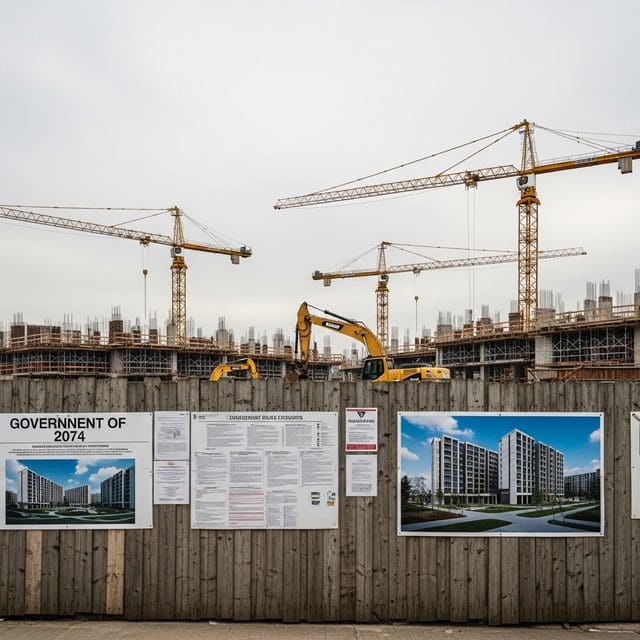
Housing Secretary Angela Rayner faces calls to return a £16,876 severance payment as she leads a massive post-war style council housebuilding initiative.
The reappointment of Angela Rayner as Housing Secretary has reignited a fierce debate over ministerial accountability and the ethical use of taxpayer funds. Rayner, who previously resigned from the post following a controversy regarding unpaid taxes, was brought back into the Cabinet this week by Prime Minister Burnham. However, her return has been overshadowed by an escalating row regarding a £16,876 severance payment she received upon her initial departure. Conservative critics have called for Rayner to return the funds, particularly given her history of criticizing similar payouts to members of the opposition.
Speaking to BBC Radio 5 Live, Rayner dismissed these demands, asserting that she will not repay the sum. She argued that the payment was a statutory entitlement for her period out of office, which lasted nearly a year. The payment, which appears in the 2025/26 accounts for the Ministry of Housing, Communities and Local Government (MHCLG), has become a focal point for those skeptical of the new administration’s commitment to fiscal discipline. For the American taxpayer and observer, this serves as a cautionary tale of how bureaucratic structures often prioritize administrative payouts even as the public faces a tightening cost-of-living squeeze.
Despite the political friction, Rayner is now the primary architect of what Burnham describes as the “biggest council housebuilding programme since the post-war period.” This market-altering strategy seeks to leverage vacant public land to bypass the traditional hurdles of private development. By focusing on public land, the administration hopes to drive down the cost of delivery, though critics remain wary of the long-term fiscal implications of such a massive expansion of the state’s role in the housing market. Burnham has also signaled a willingness to intervene directly in the private sector, refusing to rule out a freeze on private-sector rents as part of an early cost-of-living package.
This push for state-led housing comes at a time of significant economic volatility. While the UK government looks toward Finland’s “Housing First” philosophy to tackle homelessness—allocating an initial £340 million to combat rough sleeping—wider economic indicators suggest a deepening crisis for the average earner. Data from the Ludwig Institute recently revealed that real median weekly earnings declined year-over-year in the second quarter of 2026. Furthermore, functional unemployment saw an uptick in June, suggesting that the ability of the private sector to sustain current housing costs is eroding.
The challenges are not limited to the United Kingdom. In the United States, the intersection of policy and property rights remains equally fraught. The Trump administration recently paused over $1 billion in Medicaid payments to California and Minnesota, citing fraud concerns—a move that underscores the ongoing tension between federal oversight and state-level management of social safety nets. Additionally, the LexisNexis 2026 Home Insurance Trends Report highlights a troubling trend: while the frequency of insurance claims has declined, the severity of those claims has reached an all-time high. This suggests that even as fewer people file claims, the cost of maintaining and protecting private property is becoming prohibitively expensive for many households.
As Rayner settles back into her role at MHCLG, the tension between her ambitious building plans and her personal financial controversies will likely persist. For those concerned with local sovereignty and the preservation of market-driven solutions, the administration’s pivot toward rent freezes and massive public works represents a significant departure from traditional property rights. Whether these interventions will provide genuine relief to the working class or simply expand the reach of the administrative state remains the central question of Rayner’s second tenure.

Deborah Cole serves as a Senior Correspondent for Just Right News, where she spearheads the network’s coverage of Housing, Infrastructure, and Mobility. With a career defined by a commitment to rigorous reporting and a focus on the fundamental pillars of American community life, Deborah brings a principled perspective to the complex issues that dictate how and where we live. Her work is grounded in the belief that sound policy, fiscal responsibility, and respect for private property are the essential foundations of a prosperous society.
Originally from Boston, Massachusetts, Deborah’s upbringing in one of the nation’s oldest and most historically significant cities deeply influenced her professional trajectory. Growing up amidst the architectural legacy and dense urban planning of New England, she developed an early appreciation for the importance of durable infrastructure and the role of local tradition in shaping neighborhoods. Her perspective is informed by the classic American values of her hometown—hard work, community cohesion, and a healthy skepticism of top-down bureaucratic mandates that often overlook the unique needs of individual citizens.
Today, Deborah operates from her base in Austin, Texas, a city that serves as a primary laboratory for her reporting. Austin’s rapid expansion and its status as a hub for innovation and migration provide her with a front-row seat to the most pressing challenges in modern infrastructure and housing. From the Lone Star State, she chronicles the tensions between rapid growth and the preservation of the American Dream, often highlighting how market-driven solutions and deregulation can address the housing shortages that plague many of the country’s metropolitan areas.
At Just Right News, Deborah is perhaps best known for her signature feature series, “Where We Live.” Through this platform, she explores the intersection of public policy and private life, moving beyond mere statistics to tell the stories of families, small business owners, and local developers. Her reporting frequently highlights the importance of mobility—not just in terms of transportation and transit, but as a vehicle for economic opportunity and social stability. She remains a staunch advocate for the taxpayer, consistently scrutinizing government spending on large-scale projects and advocating for transparency in how infrastructure dollars are allocated.
Deborah’s beat is more than just a collection of policy topics; it is an investigation into the physical and legal structures that allow families to flourish. Whether she is reporting on the impact of zoning laws on suburban development or the necessity of maintaining the nation’s highway systems, her work is characterized by a dedication to the facts and a respect for the constitutional principles that protect the rights of homeowners.
As a Senior Correspondent, Deborah Cole continues to be a vital voice for Just Right News, providing the audience with the clarity and context needed to navigate an ever-changing landscape. Her reporting ensures that the values of individual liberty and local sovereignty remain at the forefront of the national conversation regarding the future of our cities and towns. Through her tireless efforts, she remains committed to informing the public on the issues that hit closest to home.