

The White House has shifted its strategy toward Tehran, linking infrastructure strikes to nuclear enrichment at Pickaxe Mountain while Ukraine deploys new long-range missiles.
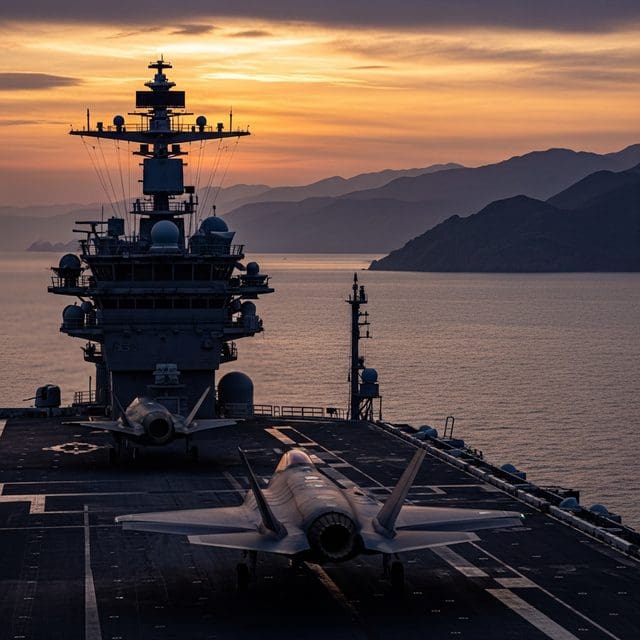
The U.S. air campaign against Iran entered its eleventh consecutive day on Wednesday, marked by a significant shift in the administration’s strategic objectives. President Trump has articulated a new ‘red line’ that moves beyond retaliatory strikes for maritime harassment, now linking the protection of commercial shipping in the Strait of Hormuz directly to Iran’s domestic infrastructure and its nuclear program. Under this new doctrine, the White House has vowed to destroy one Iranian bridge or power plant for every attack launched against vessels in the region. This policy of proportional infrastructure degradation represents a realist pivot toward imposing direct, tangible costs on the Iranian state for its proxy activities and maritime interference.
Central to this escalation is the underground facility at Pickaxe Mountain. U.S. and Israeli intelligence agencies believe Tehran has relocated thousands of uranium enrichment centrifuges to this deeply buried site to shield them from conventional bombardment. President Trump signaled a willingness to ‘heavily hit’ the facility, which has never before been targeted by U.S. or Israeli forces. This expansion of the target list to include civilian-use infrastructure, such as desalination plants and power grids, reflects a calculation intended to force Tehran into a diplomatic retreat through economic and structural exhaustion. Recent CENTCOM data suggests that U.S. strikes have already targeted between 80 and 140 military sites per wave, focusing on coastal surveillance, drone storage, and naval assets.
The human and economic costs of the campaign are mounting rapidly. Iranian reports indicate at least 50 deaths and damage to a desalination plant that has cut water supplies to approximately 10,000 people. On the American side, the military death toll from the broader regional conflict has reached 18, following the confirmation of a third soldier killed in an Iran-linked attack in Jordan. Global markets are reacting to the sustained instability; Brent crude has climbed toward $95 a barrel, while WTI futures surged to over $87. This volatility has driven significant gains for American energy giants like ExxonMobil, Chevron, and ConocoPhillips, as traders price in the risks of a sustained blockade in the Strait of Hormuz.
While the Middle East remains the primary focus of the Pentagon, the conflict in Eastern Europe is entering a new phase of technological parity. Ukraine has begun deploying the FP-5 ‘Flamingo’ cruise missile, a domestically produced weapon utilizing salvaged engines to strike targets deep within Russian territory for the first time. These long-range capabilities are forcing a recalculation of Russian air-defense posture and demonstrating Ukraine’s ability to maintain a high-intensity strike capability despite supply chain constraints. This development occurs as Germany recently approved a controversial French-Russian nuclear project, highlighting the complex and often contradictory alliances currently defining the European security landscape.
This period of global volatility coincides with domestic political shifts in the United States and Israel. Following the death of Senator Lindsey Graham, his sister, Darline Graham Nordone, has been appointed to his seat and announced her candidacy for a full term with the President’s endorsement, while facing a primary challenge from Representative Ralph Norman. Simultaneously, the Israeli parliament has dissolved ahead of October elections, complicating the prospects for a multinational stabilization mission in Gaza. As these geopolitical theaters converge, the administration appears committed to a ‘peace through strength’ approach that prioritizes the degradation of adversary capabilities over traditional multi-party consensus. The stakes for American power are now tied to whether these targeted strikes can deter Iran without igniting a full-scale regional war that would further destabilize global energy security.

Olivia Kendall serves as the Senior Correspondent for Geopolitics, Defense, and Foreign Policy at Just Right News, where she provides a principled, conservative perspective on the complex forces shaping the global stage. With a career dedicated to deconstructing the intricacies of international relations, Kendall has become a trusted voice for readers who value national sovereignty, a robust military, and a foreign policy that prioritizes American interests above all else.
A native of Washington, D.C., Kendall’s professional journey is deeply rooted in her upbringing within the nation’s capital. Growing up in the epicenter of American political life, she developed an early and profound understanding of how policy is crafted and, more importantly, how it often fails to account for the values of the American heartland. This unique vantage point allowed her to witness firsthand the rise of globalist bureaucracies, fueling her commitment to reporting that champions the constitutional foundations of the United States. Her background as a British White American further informs her worldview, providing her with a keen appreciation for the Western tradition and the enduring importance of the “Special Relationship” in maintaining global stability.
Now based in Arlington, Virginia, Kendall operates from the doorstep of the Pentagon and the heart of the nation’s defense establishment. Her proximity to the decision-makers in the military and intelligence communities allows her to provide boots-on-the-ground reporting that is both timely and deeply informed. For Kendall, Arlington is more than just a base of operations; it is a daily reminder of the sacrifices made by the men and women in uniform. This connection to the defense community drives her rigorous coverage of military readiness and her advocacy for a “peace through strength” approach to diplomacy.
At Just Right News, Kendall is perhaps best known for her acclaimed feature series, “The World’s Shadow on America.” In this ongoing project, she explores the direct correlation between international developments and the daily lives of American citizens. Whether she is analyzing the encroachment of foreign adversaries in domestic supply chains or the impact of international treaties on local economies, Kendall’s work serves as a vital bridge between distant geopolitical shifts and their consequences at home. She rejects the notion that foreign policy is an abstract concern for elites, instead proving that what happens in the corridors of power in Brussels or Beijing has a tangible “shadow” that falls across every American doorstep.
Throughout her tenure, Kendall has remained a steadfast critic of international overreach and a vocal proponent of a clear-eyed, realistic foreign policy. She brings a sharp analytical mind to her beat, often challenging the prevailing narratives of the mainstream media to uncover the underlying truths that affect national security. Her reporting is characterized by a refusal to compromise on the truth and a dedication to the idea that a strong, secure America is the world’s best hope for liberty. As a Senior Correspondent, Olivia Kendall continues to lead the charge in providing the essential context and conservative insight necessary to navigate an increasingly volatile world.